
Some fades look sharp in the barber’s chair and severe by the time you reach the car. The low taper is the fix: the shortest hair stays tucked around the ear and neckline, and everything above it keeps its weight. I’ve sat through enough “a little shorter on the sides” regrets to know why people want this cut. Below are 18 low taper fade haircuts, sorted by hair type, length and upkeep, so you can walk in with the right words. Ready? Let’s explore all 18 of them.
Quick Answer: For a first low taper, ask for a #2 guard fading to a #1 at the sideburn and nape, with 3-4 inches left on top. Round and square faces suit a textured crop or side part. Oval and long faces can carry more volume. Expect a barber visit every 3-4 weeks.
Why Low Taper Fade Haircuts Are Worth Your Time
A low taper fade starts its shortening just above the ear and around the nape, usually at roughly 1 to 1.5 inches above the natural hairline. Unlike a mid or high fade, it never climbs the side of the head. That’s why it passes at an office, a wedding and a gym without comment.
The practical benefit is grow-out. Because the sides shorten gradually, the cut looks intentional for two weeks longer than a skin fade does. You can stretch visits to 4-5 weeks if you’re happy with a slightly softer edge.
Here’s the lesser-known part: the taper is mostly about the neckline. A tapered nape grows in cleaner than a blocked one, so the back of your head looks tidy even when the top is overdue. Stylists often say the neck is where a haircut gets judged.
It’s ideal for anyone moving away from a heavy, all-one-length cut, men growing out a buzz, and people with cowlicks at the crown who want a controllable shape. It’s less ideal if you want a dramatic contrast. Then a mid fade does the job better.
At a Glance
- A low taper keeps skin exposure limited to the sideburns and nape, so it never looks stark.
- Guard sizes #1 to #3 cover nearly every version in this list.
- Straight, wavy, curly and coily hair all taper well with the right top length.
- Most versions need a barber visit every 3-4 weeks, but a few stretch to 6.
- You can pair it with a beard, a part, a fringe or full-length hair on top.
| Style | Best Face Shape | Hair Type | Maintenance | Length |
| Classic Scissor-Cut Top | Oval, square | Straight | Every 4 weeks | 3-4 in. |
| Textured Crop | Round, square | Straight, wavy | Every 3-4 weeks | 2-3 in. |
| Curly Top | Oval, oblong | Type 3 curls | Every 4 weeks | 3-5 in. |
| Side Part | Round, oval | Straight | Every 3 weeks | 3-4 in. |
| Mid-Length Quiff | Oval, long | Thick, straight | Every 4 weeks | 4-5 in. |
| Taper With Beard | Round, oval | Any | Every 3 weeks | 2-4 in. |
| Twist Sponge Top | Oval, heart | Coily | Every 3-4 weeks | 2-3 in. |
| Slick Back | Square, oval | Straight, thick | Every 4 weeks | 4-5 in. |
| Messy Fringe | Oval, long | Straight, wavy | Every 4 weeks | 3-4 in. |
| Brush Waves | Round, oval | Coily, wavy | Every 2-3 weeks | 1-2 in. |
| French Crop | Oval, square | Straight | Every 3 weeks | 1.5-2 in. |
| Buzz Top | Oval, square | Any | Every 2-3 weeks | 0.5-1 in. |
| Short Natural Top | Oval, round | Fine | Every 4 weeks | 1.5-2.5 in. |
| Comb Over | Round, square | Straight, wavy | Every 3 weeks | 3-4 in. |
| Modern Mullet Back | Oval, heart | Wavy, curly | Every 5-6 weeks | 4-6 in. |
| Locs | Oval, oblong | Coily | Every 4 weeks | Varies |
| Wavy Flow | Square, oval | Wavy | Every 4-5 weeks | 4-6 in. |
| Soft Part Line | Oval, square | Straight, wavy | Every 3 weeks | 3-4 in. |
1. Classic Low Taper Fade With a Scissor-Cut Top

The scissor-cut top is the safest starting point. It looks like ordinary hair that someone cared about, which is the whole appeal.
Ask for a #2 guard fading to a #1 at the nape, with 3 to 4 inches on top, cut with shears so the ends look soft instead of blunt. I once let a barber use clippers over comb on the top “to save time” and the ends came out chopped. Insist on scissors.
Style it with a pea-sized amount of matte paste worked through towel-dried hair. Skip high-shine gel, which pulls the look back toward harsh.
Read more on easy everyday men’s haircuts or check GQ’s grooming coverage for current barber trends.
Walk in with this one and you can’t really go wrong.
2. Low Taper Fade With a Textured Crop

A crop trades length for texture. Keep 2 to 3 inches on top, point-cut so it separates, and let the fringe sit forward.
It flatters round and square faces because the forward fringe breaks up width. The catch is that it needs some density. On very fine hair, the texture can read as patchy.
Work in a clay or fiber paste with dry hands, then push the hair forward and slightly sideways. A blow dryer for 60 seconds is what actually gives it body.
Pro Tip: Dry the roots first, then add product. Wax on damp hair weighs it down and kills the texture you paid for.
See our guide to textured haircuts for straight hair or Esquire’s grooming section.
Give it a month and the grow-out still looks deliberate.
3. Low Taper Fade With a Curly Top

Curls need weight, and this cut keeps it on top while the sides stay close. Leave 3 to 5 inches so curls can actually form instead of springing into a poof.
Tell your barber to cut the top dry or damp, not wet. Curly hair shrinks when it dries, and a wet cut leaves you shorter than planned. I learned that after a cut that looked perfect in the mirror and half an inch too short the next morning.
Apply a leave-in cream and a light gel to wet curls, scrunch, and air dry or use a diffuser.
It works best on loose to medium curls. Tight coils need a different approach, covered later.
Our piece on curly hair care for men goes deeper, and Byrdie’s hair section has product ideas.
Let the curls dry untouched and your cut will thank you.
4. Low Taper Fade With a Side Part

This is the cut for people who need to look put together by 9 a.m. The taper keeps the sides quiet, and the part gives the top a clear direction.
Find your natural part by pushing the hair back and letting it fall. Cutting against it never holds. Ask for a #2 to #1 taper with 3 to 4 inches on top.
Use a light cream or pomade with a comb, starting at the part line and sweeping outward.
- Do: use a comb with a wide tooth spacing.
- Don’t: use heavy gel, which turns a soft part into a hard stripe.
Browse office-ready hairstyles and Allure’s hair coverage for more.
A tidy part is the quickest upgrade a plain cut can get.
5. Low Taper With a Mid-Length Quiff
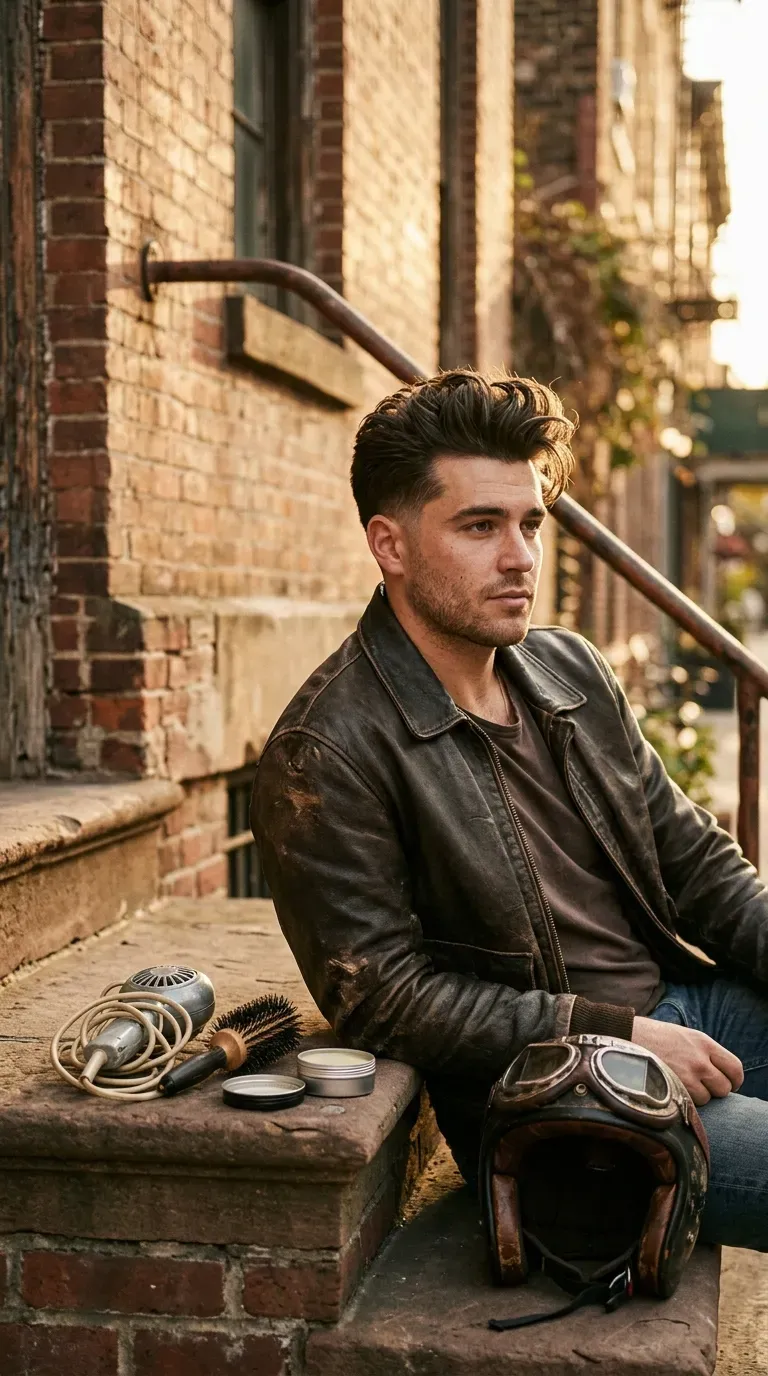
A quiff gives you height at the front with calm sides. Keep 4 to 5 inches at the front, blended back to about 2 inches at the crown.
The taper matters more here than on a short cut, because volume on top can make a blocky side look worse. A low taper lets the quiff stay the focal point.
Blow-dry upward and back with a round brush, then set it with a medium-hold paste. It takes about five minutes once you’ve done it a few times. My first attempts collapsed by lunchtime because I used too much product.
Pro Tip: Finish with a cool-shot from the dryer. The cold air sets the hair so it holds all day.
Look through men’s volume styling tips or the Esquire hair guide.
Practice twice and the routine becomes automatic.
6. Low Taper Fade With a Short Beard

The taper and a short beard share one trick: the fade should flow into the beard without a visible gap. Done well, the sideburn tapers into the cheek line with no abrupt switch.
Keep the beard at 3 to 6 mm and ask the barber to match the lower taper to your beard length. A beard that’s much longer than the fade makes the sides look too bare.
Trim your neckline yourself between visits, about one finger-width above the Adam’s apple.
- Beard under 5 mm: the low taper looks cleanest.
- Beard over 10 mm: ask for a slightly higher taper to keep balance.
See beard and haircut pairings or GQ’s beard coverage.
A smooth blend is the sign of a good barber.
7. Low Taper Fade With Twist Sponge Top

Twists on top with a low taper gives definition and a tidy frame. Work with 2 to 3 inches of coily hair and a #1 or #2 taper.
Twist the hair in small circles with a sponge on damp hair and a curl cream. It takes 10 to 15 minutes. Coily hair responds best to moisture, so skip alcohol-heavy gels.
Ask your barber to leave the hairline slightly soft instead of lining it razor-sharp. A hard edge on coily hair shows ingrown risk and looks harsher than the rest of the cut.
Bumps on the neckline can happen after close trims. If they persist, see a dermatologist or check the American Academy of Dermatology’s hair care guidance.
For more, see coily hair styles for men.
Keep the hair hydrated and the twists hold their shape for days.
8. Low Taper With a Slick Back

Slicked back hair is strong, and the low taper keeps it from feeling stiff. You need 4 to 5 inches on top and fairly thick hair, since fine hair separates into stripes.
Apply a water-based pomade to damp hair, comb back with a fine-tooth comb, then smooth with your palm. I used to over-apply and ended up with a helmet. A dime-sized amount is enough.
The taper keeps the sides close so the slick-back looks modern rather than retro.
Pro Tip: Blow-dry the hair back first, then add pomade. It gives lift at the front, so the style doesn’t sit flat on the forehead.
See slicked-back hair for men and Esquire’s grooming picks.
It’s formal without trying too hard.
9. Low Taper Fade With a Messy Fringe

This cut looks casual because it is. The fringe falls forward at 3 to 4 inches, and the taper at the sides keeps it from looking unkempt.
It works best on straight to wavy hair and suits oval and long faces, where a fringe shortens the forehead. Round faces can pull it off too, if the fringe is swept slightly sideways.
Style with sea-salt spray, scrunch, and let it dry. No comb required. One caveat: a messy fringe still needs trimming. Once it hits your eyelashes, it’s no longer styled, it’s just in the way.
See fringe haircuts for men or Byrdie’s hair ideas.
The look gets better on day two.
10. Low Taper Fade With Brush Waves

Waves need short hair and daily care. Keep 1 to 2 inches of coily hair, brushed in a circular pattern, with a low taper framing the edges.
Brush for at least 5 to 10 minutes, a few times a day, ideally with a medium-bristle brush. Wear a durag at night. It’s honestly a commitment; if you skip the routine for a week, the pattern fades.
The low taper gives the waves a tidy border without the severe look of a skin fade.
- Beginner: start with a cut and brush twice daily for 4 weeks.
- Advanced: add a wave cream, steam and nightly durag.
Learn more with wave haircut guides or GQ’s grooming advice.
Stay consistent and the pattern deepens.
11. Low Taper With a French Crop
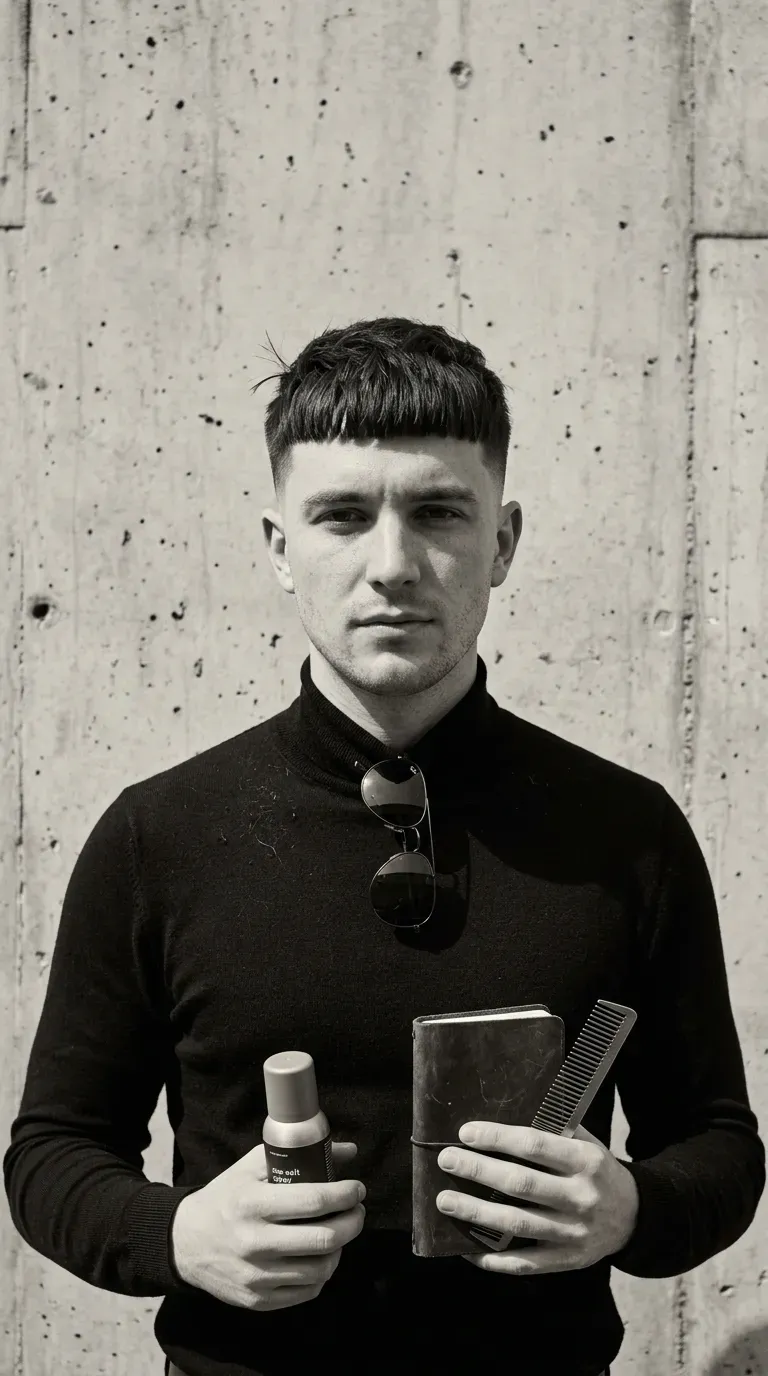
The French crop is short and blunt at the front, usually 1.5 to 2 inches on top with a fringe cut straight across the forehead. A low taper adds polish.
It suits oval and square faces, and it hides a receding hairline gracefully by sitting forward. For very high foreheads, ask for the fringe slightly longer.
Use a matte clay and press it forward with your fingertips. It dries into a firm shape. Trim every 3 weeks, because the shape loses its edge fast as it grows.
Pro Tip: Ask for the fringe to be point-cut, not cut straight. A straight line looks like a bowl cut; point-cutting adds a natural break.
See short haircuts for men or Allure’s hair section.
Short and sharp can still be soft.
12. Low Taper Fade With a Buzz Cut Top

For people who want near-zero styling. Run a #3 or #4 guard on top, with the taper going down to a #1 at the sides and nape.
The taper is what keeps a buzz from looking like a military default. The tiny gradient gives the head shape and keeps the neckline neat.
You can do the top at home with clippers, but leave the taper to the barber. I tried tapering my own sides once and left a visible step behind the ear. A $20 to $35 barber visit fixed it in ten minutes.
It’s best for oval and square heads with an even skull shape, since a buzz shows every bump.
Read on at low-maintenance haircuts or see Esquire’s buzz cut ideas.
It’s the fastest morning routine of any cut on this list.
13. Low Taper Fade With a Short Natural Top for Fine Hair

Fine hair looks fuller when the sides are shorter than the top, and a low taper creates that contrast without much skin showing. Keep 1.5 to 2.5 inches on top.
Skip heavy pomades, which clump fine hair and show more scalp. Use a texture powder or light sea-salt spray, then blow-dry upward at the front.
Choose a cut with soft layering on top rather than a blunt line. If you’re worried about thinning, that’s a question for a dermatologist or trichologist, not a haircut.
The cut also works well in summer, when hair tends to lie flatter.
Discover more with haircuts for fine hair or Byrdie’s fine hair tips.
A shorter top often looks thicker than a longer one.
14. Low Taper With a Comb Over

The modern comb over is a cleaner version of the old classic. Keep 3 to 4 inches on top, combed to one side, with a low taper keeping the sides discreet.
The difference from older versions is the soft part. Ask for a natural part, not a razor line, and keep the transition subtle.
Use a light cream and a comb, drying the hair to the side as you comb. It works on straight and wavy hair and suits round and square faces by adding length on top.
- Works: slight volume at the front.
- Avoid: a flat, wet-look finish that makes it look dated.
Browse classic men’s haircuts or GQ’s classic cuts.
Subtle changes make an old style new.
15. Low Taper With a Modern Mullet Back

A modern mullet has a softer back than the 80s original. Keep the sides tapered low and let the back grow to 4 to 6 inches, just over the collar.
It suits wavy and curly hair best, where the length forms natural shape. Straight hair needs layering or it hangs flat.
Ask for the nape to be tapered up slightly so the back isn’t heavy, and have the top layered into the back. If it looks too bold, a shorter version with just 3 inches at the back is a gentle test.
Pro Tip: Use a curl cream on the back and scrunch while damp. It keeps the length from looking stringy.
Look at mullet hairstyle ideas and Esquire’s take on trends.
It’s bold, but the taper keeps it wearable.
16. Low Taper Fade With Locs

Locs with a low taper keep a neat frame. The tapered sides and nape stop the style from looking heavy.
Ask your barber to taper the sides and neck only, leaving the locs untouched. The taper needs touching up every 3 to 4 weeks, while loc maintenance depends on your loc stage and your loctician’s schedule.
Keep the scalp moisturized with a light oil, and avoid heavy waxes that build up in the locs. If you tie them up, avoid tight styles that pull at the edges.
A tapered edge makes both short and long locs look clean.
See loc styles for men or Allure’s hair advice.
A neat frame lets the locs speak for themselves.
17. Low Taper Fade for Wavy Hair With Natural Flow

Wavy hair with length benefits from a taper because it removes bulk at the sides. Keep 4 to 6 inches on top and let the waves fall naturally.
The taper is a counterbalance. Wavy hair expands outward when long, and without a taper the shape looks triangular. A low taper trims that out while keeping the flow.
Use a salt spray or light cream on damp hair and diffuse or air dry. Skip brushing when dry, which turns waves into frizz.
Trim every 4 to 5 weeks. The length gives you flexibility to stretch visits.
Check wavy hairstyles for men or Byrdie’s wavy hair guide.
Let it dry on its own, and the waves usually behave.
18. Low Taper With a Soft Part Line

A razored part adds one precise detail to an otherwise soft cut. Ask for a faint line, not a deep one, so the part reads as a hint of definition.
Keep 3 to 4 inches on top and a low taper on the sides. The line sits at your natural part, about an inch long.
It needs frequent upkeep. The line grows out within 10 to 14 days, so book every 3 weeks if you want it crisp. A mistake I see often is a line cut too deep, which looks severe, the very thing this list is trying to avoid.
Pro Tip: Ask for the line to be cut with a trimmer, not a razor, for a softer edge that blends faster.
Find part styles for men or GQ’s grooming advice.
One small detail can make the whole cut feel designed.
Getting Started With Low Taper Fade Haircuts
The easiest first step is a consultation before the clippers come out. Tell your barber you want a low taper, not a mid or high fade, and ask them to show you where the fade will start. Pointing to a spot just above the ear removes most of the guesswork.
The most common beginner mistake is asking for “a fade” without specifying the height. Many barbers default to a mid fade, and you end up with more skin than you wanted. Bring a photo and say “low taper, no skin fade” if you want to be safe.
For the first cut, book a barber instead of buying clippers. A professional cut costs about $25 to $50 depending on your area, and you can learn the shape before attempting touch-ups at home. A matte paste or clay, around $15 to $25, is the one product worth buying first.
Expect the cut to look best in the first two weeks, hold well until week four, and need a refresh by week five. If you’re growing out a longer top, you can stretch a little further, but the nape will go first.
Frequently Asked Questions
What is a low taper fade haircut?
A low taper fade is a haircut where the sides and back gradually shorten, starting low near the ear and neckline. It usually runs from a #2 or #3 guard down to a #1 or skin at the very edge. It’s softer than mid or high fades because the contrast stays close to the hairline.
How often do you need a trim with a low taper fade?
Most people need a trim every 3 to 4 weeks to keep the edges clean. If you don’t mind a softer look, you can stretch to 5 or 6 weeks. Skin tapers grow out faster than guard-based ones.
What’s the difference between a low taper and a low fade?
A taper is a gradual shortening limited to the sideburns and neckline, while a low fade goes all the way down to skin with more visible contrast. Low tapers usually keep more length at the edges. Many barbers use the terms loosely, so show a photo.
Is a low taper fade good for thick or curly hair?
Yes, it works well on thick and curly hair because it removes bulk at the sides without removing the shape on top. Leave 3 to 5 inches for curls to form. Tight coils may need a shorter top for neat definition.
What guard sizes should I ask for with a low taper fade?
A common starting point is a #2 at the upper taper, blending into a #1 at the sideburn and nape. If you want a softer result, ask for a #3 to #2 instead. Your barber can adjust based on your hairline and head shape.
A Few Final Thoughts
These 18 low taper fade haircuts prove that clean doesn’t have to mean severe. Whether you choose a textured crop, a flowing wave or a neat set of locs, the taper does the quiet work of tidying up the edges. Pick one style, bring a photo, and be specific about the height you want. A small change at the sides and neckline can change how the whole cut reads. Book the appointment, and you may be surprised how little it takes.