
Nobody warns you that the hardest part of going short is the twenty minutes of staring at reference photos, wondering whether that cut will survive your cowlick. Feminine pixie cuts ease most of that worry, because a good one is built around your face shape, hair density, and daily patience rather than a single template. Below are 25 of them, each with the face shape it flatters, the texture it needs, and the honest upkeep cost. You’ll find soft fringes, curly crops, undercuts, silver and copper shades, and a grown-out pixie for when you’re mid-transition. Ready? Let’s explore all 25 of them.
Quick Answer: For fine hair, start with the textured layered pixie (#2). For round faces, try the height-on-top pixie (#17). For thick or curly hair, the undercut (#5) or curly pixie (#4) works best. If you want the lowest upkeep, the grown-out pixie (#20) and the blonde with shadow roots (#6) go longest between salon visits.
Why Feminine Pixie Cuts Are Worth Your Time
A short cut removes weight, and weight is what flattens most hair. That’s why a pixie cut for fine hair so often looks fuller than the same hair at shoulder length: there’s less length pulling it down at the root.
The practical benefits are real. Wash-and-dry time drops to about ten minutes, heat damage shrinks because you’re styling less hair, and a single small pot of product lasts months. The trade-off is salon frequency. Hair grows roughly 1.25 cm (½ inch) a month, and a pixie loses its shape faster than any other length, so most cuts need a trim every 4-6 weeks.
Here’s a lesser-known fact: pixie cuts are highly adjustable. The same base cut can read soft with a side-swept fringe or edgy with a tapered undercut, so you can change the mood without changing the length.
These cuts suit anyone who’s tired of tying their hair back, anyone with a fast-growing or heat-damaged length they want to reset, and anyone curious enough to try a pixie cut with bangs before committing. If you refuse to visit a salon more than three times a year, a longer bixie or a grown-out pixie is the safer choice.
At a Glance
- Fine hair gains visible volume from strategic layering and a tapered nape.
- Round and square faces both work, but they need opposite fringe strategies.
- Curly and coily textures can carry a pixie beautifully when cut dry or in shape.
- Silver, copper, and blonde shades let a short cut do double duty as a color statement.
- Expect to budget for a trim every 4-6 weeks, or plan a grow-out cut that forgives longer gaps.
Comparison Table
| # | Cut | Best Face Shape | Hair Type | Upkeep | Styling Time |
| 1 | Soft Side-Swept Bangs | Oval, heart | Fine to medium | Trim every 4 wks | 5 min |
| 2 | Textured Layered | Round, oval | Fine, straight | Every 5 wks | 5 min |
| 3 | Long Tapered Nape | Oval, diamond | Medium | Every 8 wks | 8 min |
| 4 | Curly Rounded Crown | Round, oval | Curly | Every 6 wks | 5 min |
| 5 | Undercut, Long Top | Square, oval | Thick | Every 4 wks | 6 min |
| 6 | Blonde, Shadow Roots | Any | Any | Color every 10-12 wks | 5 min |
| 7 | Bixie Hybrid | Oval, long | Medium | Every 8 wks | 7 min |
| 8 | Gamine Micro Fringe | Oval, heart | Fine to medium | Every 3 wks | 3 min |
| 9 | Curtain Bangs | Heart, long | Medium | Every 6 wks | 8 min |
| 10 | Silver Pixie | Any | Any | Toning weekly | 5 min |
| 11 | Wavy, Soft Volume | Oval, round | Wavy, medium | Every 6 wks | 6 min |
| 12 | Sleek Side Part | Oval, square | Straight | Every 5 wks | 10 min |
| 13 | Feathered Nape | Oval, heart | Fine to medium | Every 5 wks | 5 min |
| 14 | Asymmetrical | Oval, square | Straight | Every 4 wks | 6 min |
| 15 | Babylight Highlights | Any | Fine to medium | Toner every 6-8 wks | 6 min |
| 16 | Copper Pixie | Oval, heart | Medium | Gloss every 2 wks | 5 min |
| 17 | Height-on-Top | Round | Medium to thick | Every 5 wks | 8 min |
| 18 | Soft-Fringe for Square Jaw | Square | Medium | Every 6 wks | 6 min |
| 19 | Full-Fringe for Long Faces | Long, oblong | Medium | Every 5 wks | 5 min |
| 20 | Grown-Out Pixie | Any | Any | Every 10-12 wks | 5 min |
| 21 | Tapered Coily Crop | Round, oval | Coily 4A-4C | Every 3 wks | 4 min |
| 22 | Slicked Wet-Look | Oval, square | Straight, thick | Every 5 wks | 5 min |
| 23 | Volumizing for Thinning | Oval, round | Fine, thinning | Every 6 wks | 6 min |
| 24 | Face-Framing Tendrils | Heart, square | Fine to medium | Every 5 wks | 6 min |
| 25 | Pastel Rose | Any | Bleach-tolerant | Refresh every 4-6 wks | 5 min |
1. Soft Feminine Pixie with Wispy Side-Swept Bangs

This is the pixie for people who want short hair that still looks obviously soft. Bangs long enough to brush the eyebrow break up the forehead so the crop never reads severe. Ask for two to three inches on top, blended into a tapered nape, with point-cut ends so the fringe moves.
It flatters oval and heart-shaped faces best. I once let mine grow past the brow and spent a week pinning it back, so book the fringe trim at week four, not week eight.
Pro Tip: Blow-dry the fringe first, while your roots are still damp. The direction you set it in is the direction it holds all day.
Our guide to styling creams for short hair covers what to use, and this face-shape guide explains how fringes change your proportions. Small trims here make the biggest difference.
2. Textured Layered Pixie for Fine Hair

Fine hair fights gravity, and layering is how you win. A textured pixie uses short, disconnected layers on top so the roots lift instead of collapse, while the sides stay close to avoid a bell shape.
Ask your stylist to razor or point-cut the top, never thin it. Thinning removes the little density fine hair has. Work a root-lifting spray ($8-15) into damp roots, then blow-dry upward with your fingers.
In my experience, fine hair looks its best on day two, once natural oils give the layers a little grip.
- Works best: straight to slightly wavy fine hair, oval or round faces
- Avoid: heavy oils or balms, which weigh layers flat within an hour
For more, see our volume tips for fine hair and dermatologist-backed hair care. Fine hair can look full when the cut does the work.
3. Long Feminine Pixie with a Tapered Nape

If you’re nervous about going all the way short, this is the gateway. The top stays four to five inches, so you can still tuck it behind your ears or sweep it to one side, while the tapered nape keeps the back neat.
It works on nearly every texture, and it’s the most forgiving pixie for a cowlick since there’s length to work with. Use a light styling cream and finger-comb to shape.
The mistake I see most often is skipping the nape trim. The back grows out first, so schedule maintenance every eight weeks.
Pro Tip: Tuck the sides behind your ears before you decide on the length. If they stay put, the cut will work on you.
Try our grow-out-friendly cut guide and this hair overview from Harper’s Bazaar. Length gives you room to change your mind.
4. Curly Pixie with a Rounded Crown
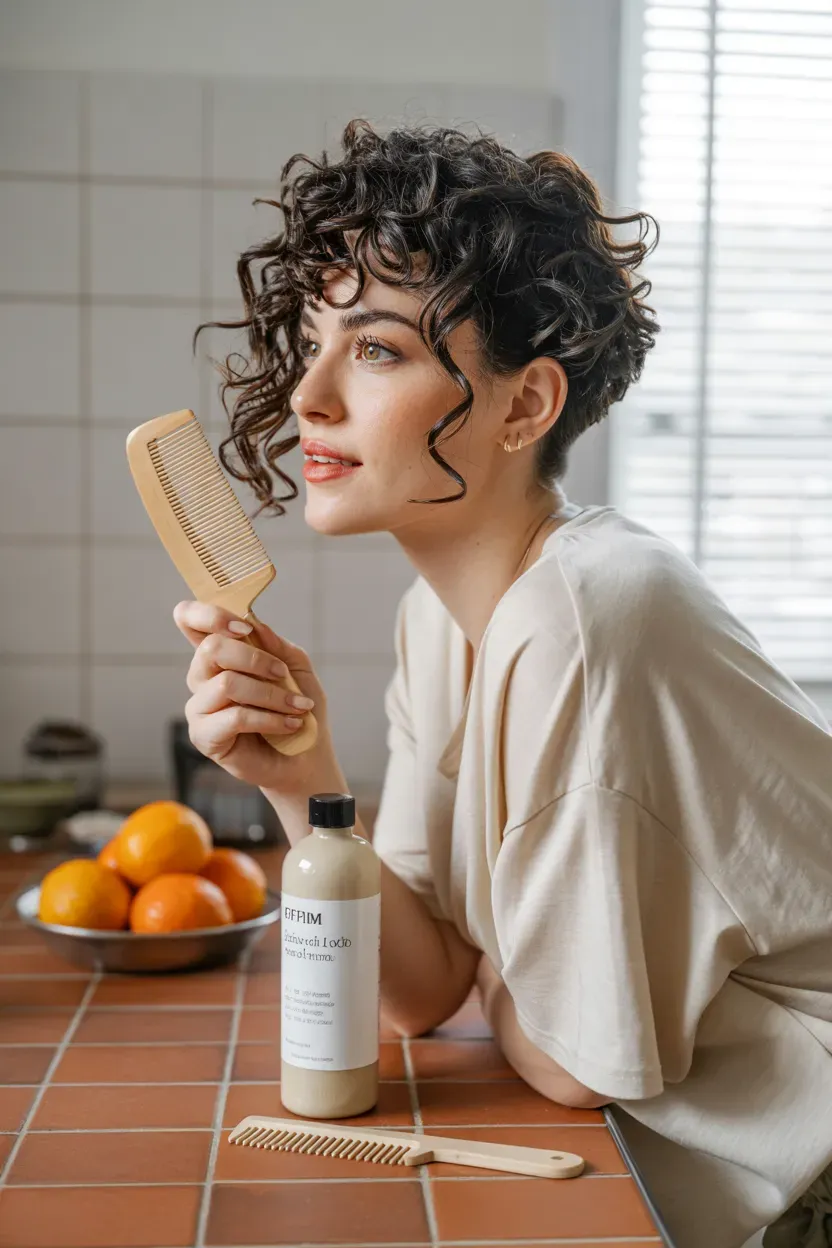
Curls and pixies are a natural pair. A round shape follows the way curls stack, so the crown looks like a deliberate silhouette instead of a bush.
Ask your stylist to cut it dry, or at least curl by curl. Curly hair shrinks by roughly a third once it dries, so a wet cut is a guess. Keep the sides shorter so the volume stays on top.
I learned this the expensive way after one wet cut left me with an inch less than I wanted. Style with leave-in conditioner and scrunch, then diffuse on low heat.
For more, read our curly haircare basics and why textured hair needs moisture. Let the curls set the shape.
5. Undercut Pixie with a Long Top
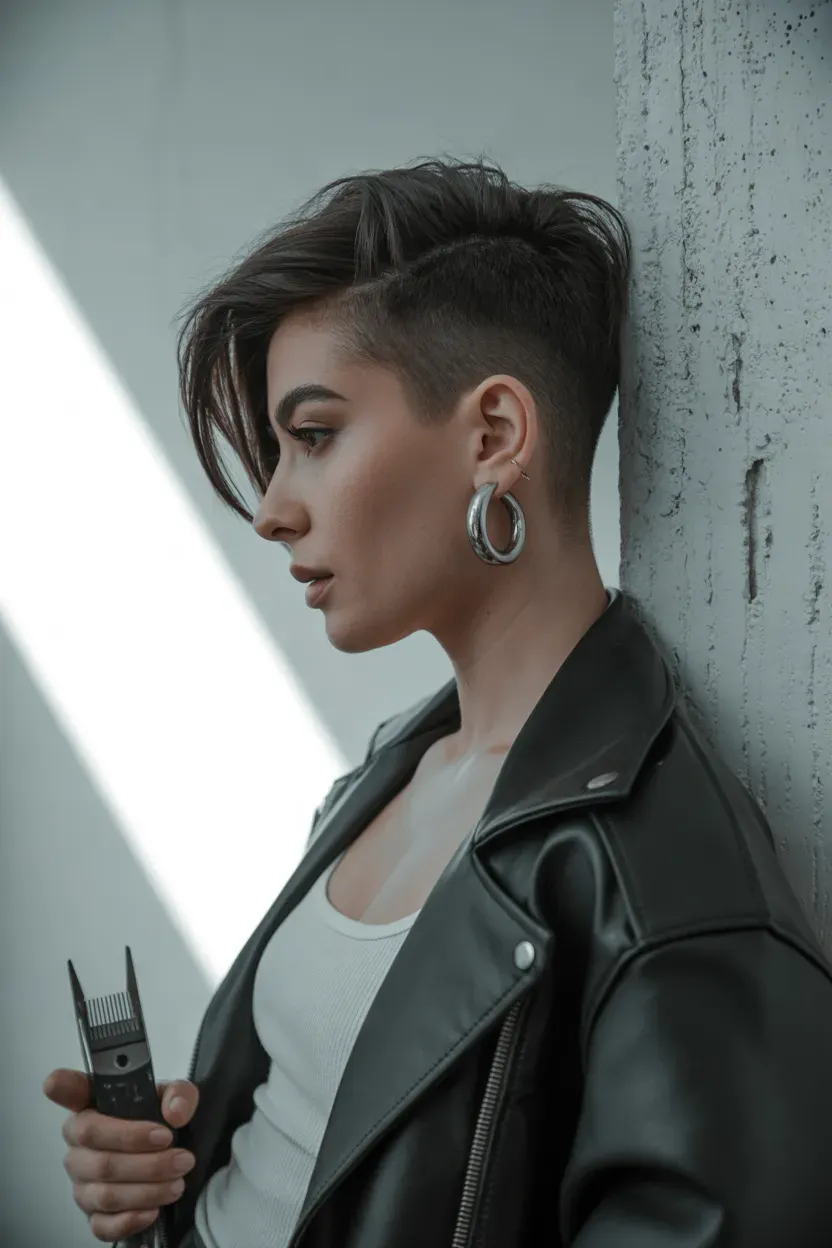
Thick hair can feel like a helmet at pixie length. The undercut removes bulk from the sides and nape while leaving enough on top to sweep, flip, or slick back.
Ask for a #2 guard (about 6 mm) on the sides, blended up into the top. It flatters square and oval faces because the clean sides sharpen the jaw.
Pro Tip: Keep the top at least three inches so it covers the undercut when you want it to. You can hide it in a meeting and show it at night.
Clippers grow out in about four weeks, so plan a quick tidy-up. See our guide to bold short cuts and this Allure hair section. Heavy hair finally has somewhere to go.
6. Blonde Pixie with Shadow Roots
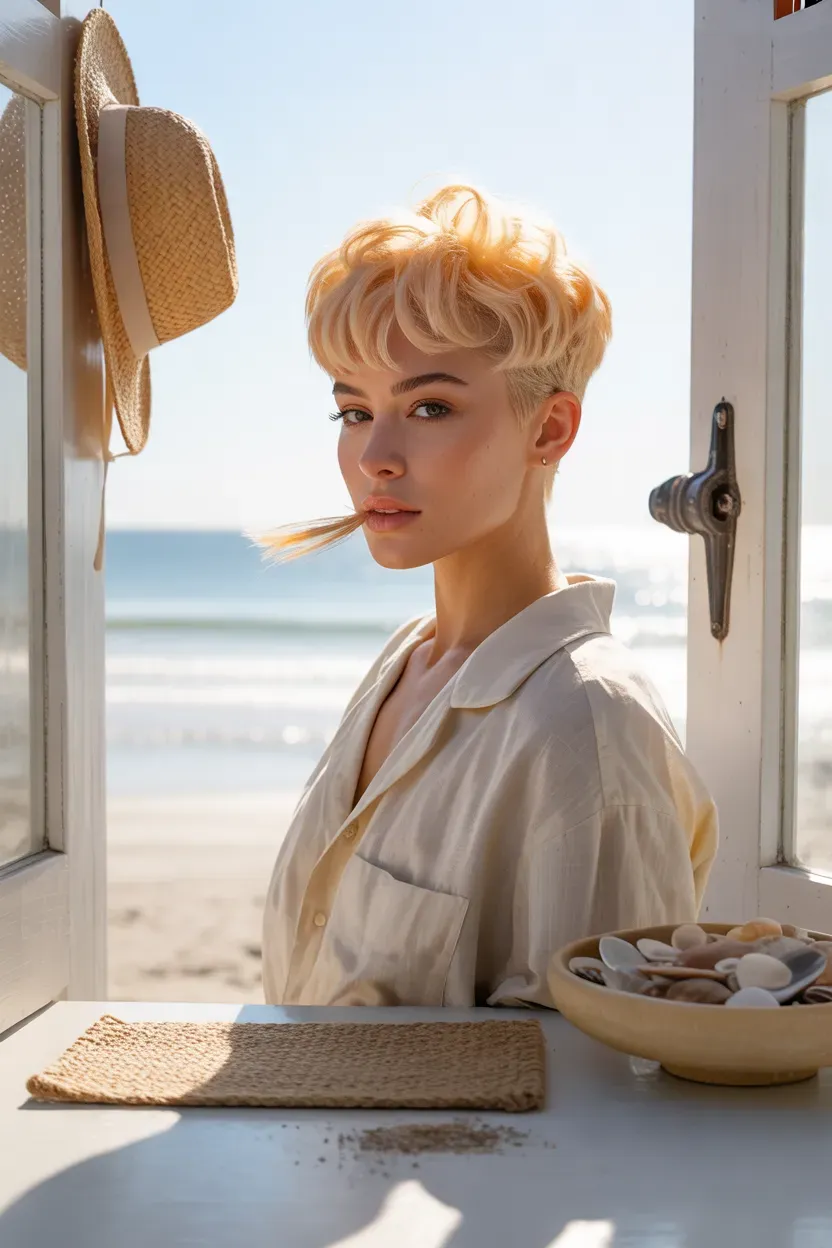
A shadow root is a deliberate blend from a deeper root into blonde ends. On a pixie it gives you a lower-maintenance color, because regrowth becomes part of the design instead of a problem.
Your colorist can go 10-12 weeks between touch-ups instead of the usual six. You still need a purple shampoo once a week to keep brass at bay, and it works best on light to medium brown natural hair.
- Beginner: one single-process blonde with a root smudge
- Advanced: multi-tone babylights with a deeper root
On very dark hair, expect two salon sessions. See our blonde toning guide and expert color care. Let the roots do part of the work.
7. Bixie: The Pixie-Bob Hybrid

The bixie sits between a pixie and a bob. The nape stays short at about 1.5 inches, while the top runs around four inches and the sides sweep to the chin.
It suits oval and long faces well and gives you tuck-behind-the-ear versatility a true pixie doesn’t. Ask for choppy layers on top so the bob edge doesn’t look heavy.
It also takes longer between trims, because the sides don’t lose their shape as fast. I kept mine at eight weeks between cuts, which felt luxurious.
Pro Tip: A sea-salt spray on damp hair adds the choppy grip the layers need, since a plain blow-dry tends to make this cut look flat.
Read our pixie vs. bob comparison and this hair inspiration hub. The middle path is a good one.
8. Gamine Pixie with a Micro Fringe

Short, precise, and unapologetic. The micro fringe sits about an inch above the brow and emphasizes the eyes, while the cropped sides keep the whole cut sleek.
It looks best on oval and heart-shaped faces with defined features. If you have a strong widow’s peak or a low hairline, ask your stylist to test the fringe position before cutting.
The catch is upkeep. A micro fringe looks off within three weeks, so I’d only pick it if you enjoy quick salon stops. Style with a tiny bit of pomade rubbed between your palms.
For upkeep, see our short-fringe styling notes and this dermatologist guide to scalp health. Precision is the whole point here.
9. Feminine Pixie with Curtain Bangs

Curtain bangs part in the middle and fall to each side, framing the cheekbones. On a pixie, they add softness right where a short cut can feel stark.
They suit heart and long faces best, because the side-swept length adds width at the cheeks. Have the bangs cut to cheekbone length, then blended into the sides so they don’t look like a separate piece.
I found they need a round brush and about eight minutes to shape well, and they get greasy first, so a little dry shampoo helps by midday.
Pro Tip: Pin the fringe back while you wash your face. Wet bangs dry into whatever shape they’re forced in.
See our curtain bang styling and Allure’s fringe advice. A soft frame does a lot of work.
10. Silver Pixie with Purple-Toned Care

Silver looks stunning on a pixie, and short hair means less bleach and fewer regrowth lines. It can come from natural gray, or from lifting and toning brown hair to a pearly silver.
Natural silver often has a coarser texture, so use a hydrating mask every week. A purple shampoo once a week for three to five minutes keeps yellow tones away, but overuse turns silver dull lavender.
- Natural gray: protect with UV-protectant products
- Colored silver: budget for toner every 6-8 weeks
Gloss is your friend here. Read our going gray gracefully guide and expert hair-care basics. Shine matters more than shade.
11. Wavy Pixie for Soft, Natural Volume

Waves give a pixie movement without any styling effort. A soft wave adds volume at the crown and curls slightly at the ends, so the cut looks intentional even on lazy days.
Ask for a slightly longer top, three to four inches, so the wave has room to form. A curl-friendly cut works better than a blunt one because layers help waves separate.
Pro Tip: Scrunch mousse the size of a golf ball into damp hair and air-dry it for ten minutes before you diffuse. Touching it while it dries makes frizz.
For more, see our wavy hair product picks and natural texture care. Work with the wave, not against it.
12. Sleek Pixie with a Deep Side Part
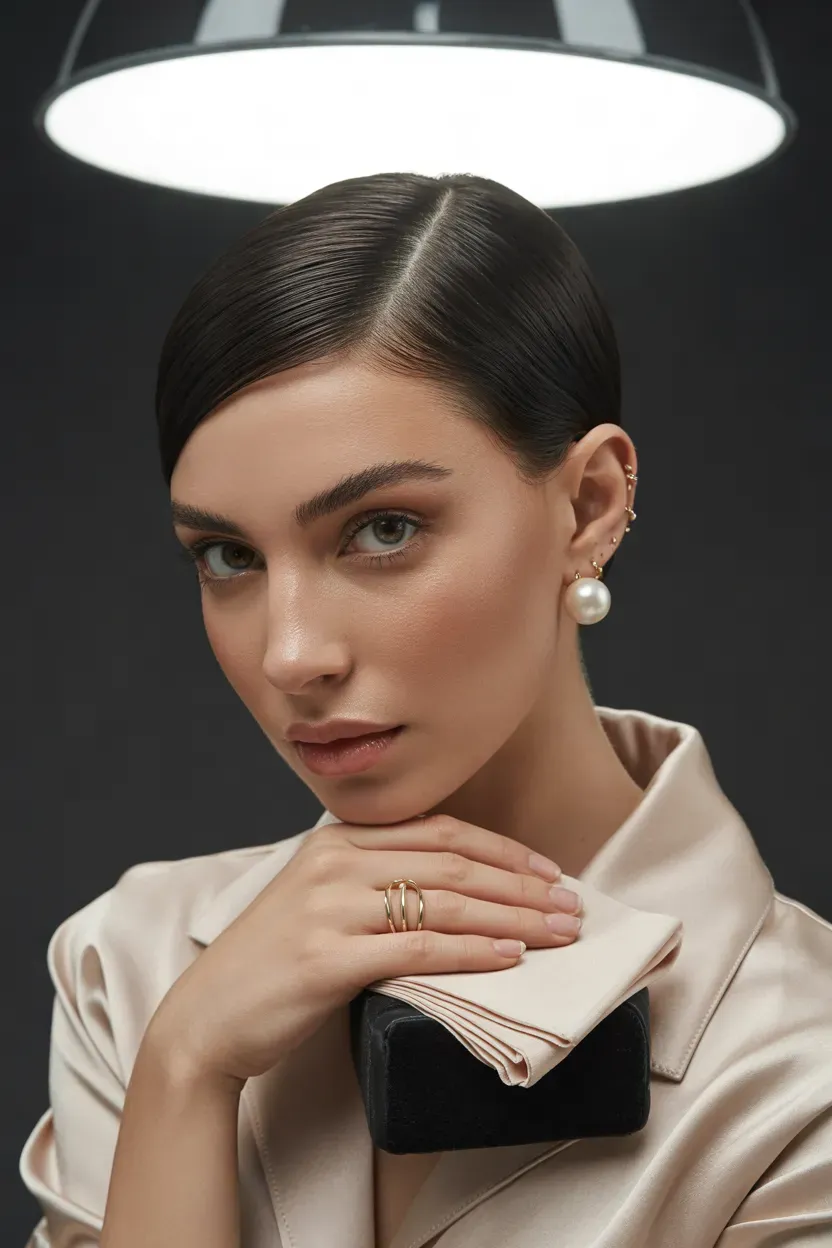
Sleek hair reads formal even at two inches. A deep side part with a smoothed top gives you a polished look that’s especially good for work settings or evenings.
It suits straight hair best, and it works on oval and square faces. Blow-dry with a paddle brush, then use a flat iron at 300-330°F (150-165°C) for fine or color-treated hair to avoid burning.
The trade-off is that sleek styles show every imperfection. A frizzy day can undo the whole look, so a lightweight anti-frizz serum helps.
- Do: use heat protectant every time
- Skip: heavy waxes that leave a greasy sheen
See our glossy hair routine and this beauty roundup. Polish takes patience.
13. Pixie with a Feathered Nape

The back of a pixie is where a lot of the charm lives. A feathered nape uses short, soft layers that taper into the neck instead of ending in a hard line.
Ask for a scissor-over-comb taper, roughly half an inch at the base. It looks fresh from behind and doesn’t grow out into a blunt shelf.
Pro Tip: Ask your stylist to show you the back with a hand mirror before you leave the chair. Most people only see the front and get surprised later.
This is a good pick for oval and heart faces, and it works with fine to medium hair. Use a small amount of texturizing cream on the nape for separation. See our back-view haircut ideas and Allure’s cut breakdowns. The details show from behind.
14. Asymmetrical Pixie with Uneven Lengths

Asymmetry turns a simple pixie into something you notice. One side stays short and tucked, while the other sweeps longer, and the contrast makes the whole cut feel more designed.
A difference of about two inches between sides is enough. Any less looks like a mistake, and much more starts to look extreme. It works best on straight hair, and oval and square faces carry it well.
I’d go for the longer side on the same side as your natural part. Fighting a cowlick with asymmetry is a losing battle.
- Works for: straight or slightly wavy hair
- Avoid if: your hair has multiple cowlicks near the front
Read our asymmetrical cut guide and more cut ideas. Balance comes from the contrast.
15. Pixie with Babylight Highlights
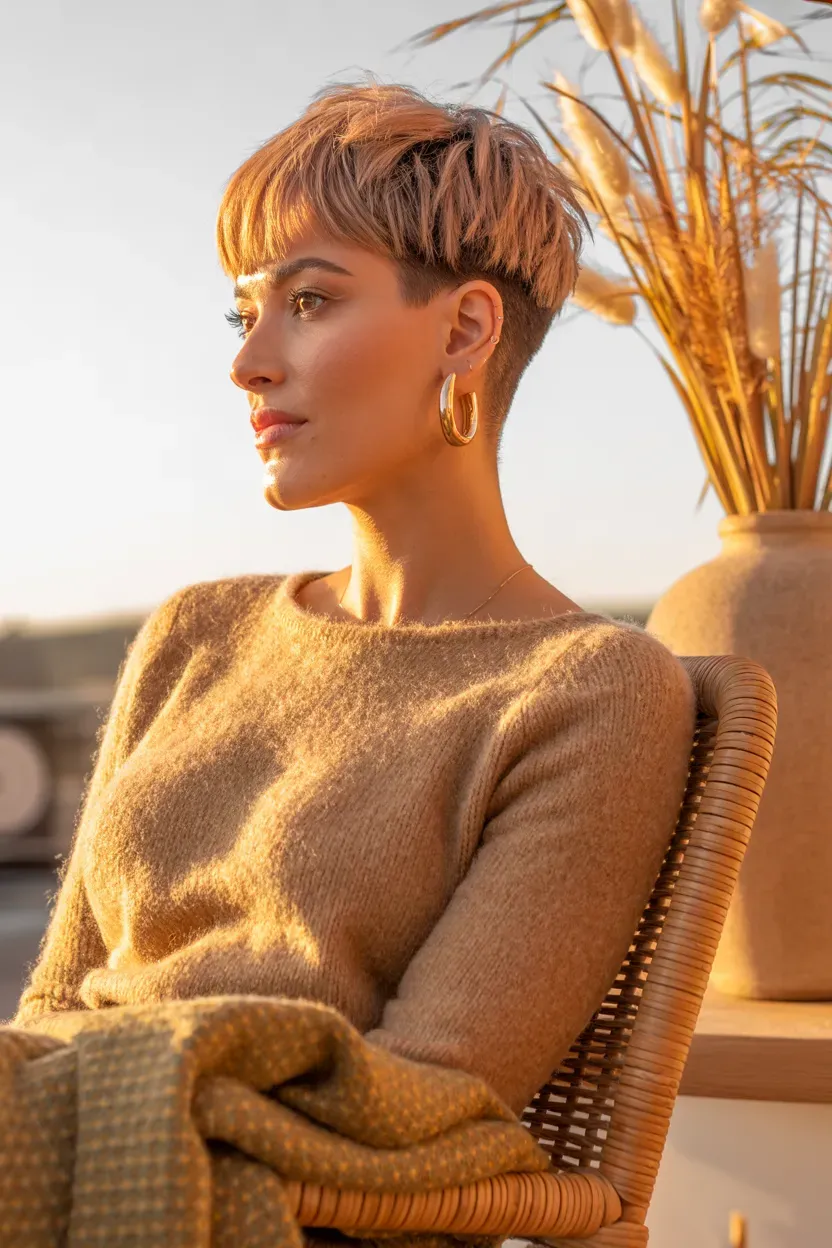
Babylights are ultra-fine highlights that add depth without a stripey look. On short hair they reflect light across the layers, making a pixie look thicker and more dimensional.
Ask for foil work with a soft, close-to-natural shade. Expect a toner refresh every 6-8 weeks, since warm tones fade fast on porous hair. A color-safe, sulfate-free shampoo slows that fading.
I like this best on fine hair because the multi-tone effect fakes density. On very dark hair, plan for more than one session to lift properly.
For more, see our highlights for short hair and color-care advice. Subtle color adds real depth.
16. Copper Pixie for Warm, Bold Color

Copper suits a pixie because the short length keeps the color looking fresh and concentrated. It flatters oval and heart faces and warms up fair to olive skin tones.
The catch is fading. Copper is among the fastest colors to wash out, so wash in cool water and use a color-depositing conditioner every two weeks. A gloss at the salon every six weeks helps too.
I’ve seen copper lose its punch in three weeks with hot showers, so it’s worth changing your habits.
Pro Tip: Rinse with cool water at the end of every wash. It closes the cuticle and locks in pigment much longer than hot water.
Check our red hair maintenance guide and more color ideas. Bold color fits a short cut well.
17. Height-on-Top Pixie for Round Faces

A pixie cut for a round face works when the cut adds height instead of width. Keep three to four inches on top, styled upward, with tapered sides that stay close to the cheeks.
Avoid blunt, chin-length edges and full fringes that cut across the widest part of your face. Use texture powder at the roots and tease gently with a comb for lift.
Pro Tip: Lift the top with your fingers as you blow-dry, then set it with a cool shot. Cool air locks the shape and holds it much longer.
I found that a side-swept, slightly off-center fringe stretched the face better than a straight one. Read our round face haircut guide and more hair advice. Height makes all the difference.
18. Soft-Fringe Pixie for a Square Jaw

A square jaw is a strong feature, and a pixie can either fight it or flatter it. Soft, wispy fringe and feathery layers around the ears round off the angles without hiding them.
Keep the sides slightly longer, over the tops of the ears, so the cut doesn’t emphasize the jawline further. A wispy, side-swept fringe softens the forehead too.
I’d steer clear of blunt, geometric cuts here, since they mirror the angles of the jaw. Use a light cream for a soft, separated texture instead of a sculpted one.
Check our square face cut guide and more style ideas. Softness is the balancing act.
19. Full-Fringe Pixie for Long Faces

A full fringe shortens the appearance of a long face by breaking up the forehead. Cut it to the brow, slightly wispy at the edges, and let the pixie sides stay fuller over the ears rather than tapered.
Fuller sides add width, which balances a longer face shape. Avoid high, voluminous tops, which add extra height.
I’ve found a slightly rounded fringe, not a straight-across cut, looks less severe and grows out more gracefully. Use a light hold spray to keep it from splitting by mid-day.
Read our long face haircut ideas and expert tips. A fringe can reset the proportions.
20. Grown-Out Pixie for the Awkward Middle

Every pixie wearer hits this stage, where the sides get shaggy but the length isn’t quite a bob. It’s awkward, but you can manage it with a few tricks and a smart trim.
Book a shape-up every 10-12 weeks instead of every 4-6, and ask your stylist to keep the nape tidy while the top grows. Bobby pins and a tiny amount of clay are your best tools.
Expect roughly nine months to reach chin length. It felt endless the first time, so I took a photo each month to notice progress.
For more, see our grow-out survival guide and this hair hub. Patience is the only real tool.
21. Tapered Coily Crop for 4A-4C Hair

A tapered crop shows off coily texture and gives you a defined, sculpted shape. The hair is kept short on top with a clean taper at the sides and nape, and it works well on round and oval faces.
Coily hair loses moisture quickly, so use the LOC method (liquid, oil, cream) after washing. A satin bonnet at night prevents dryness and breakage. Trim every two to three weeks if you want the edges sharp.
I’ve noticed that dry hair holds a taper shape much better than freshly washed hair, so schedule cuts on day two or three.
For more, read our natural hair care basics and expert hair health tips. Texture is the style.
22. Slicked-Back Wet-Look Pixie

For an evening out, a wet-look pixie feels instantly dramatic. Comb the top straight back with a gel, and the short length shows off your cheekbones and neck.
Use a quarter-sized amount of a strong-hold gel on damp hair, then comb through with a fine-tooth comb. It works best on straight, thick hair, and oval and square faces suit it well.
- Do: rinse thoroughly the next day to avoid buildup
- Skip: alcohol-heavy gels, which flake and dry the scalp
I’ve found a quick blast with a cool hairdryer sets it without stiffness. See our party hair ideas and more hair ideas. It’s one product away from a whole new look.
23. Volumizing Pixie for Thinning Crowns
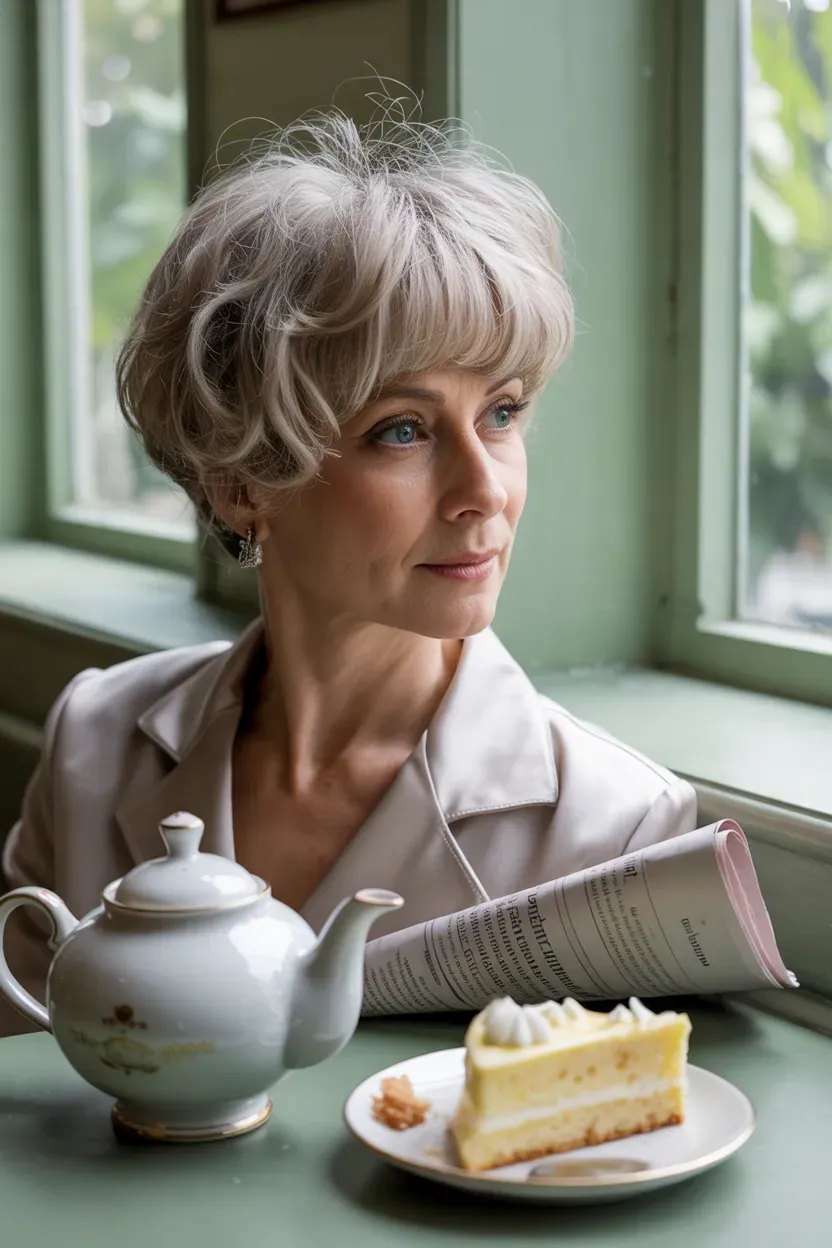
Thinning at the crown is common, especially with age or hormonal changes, and a pixie can disguise it well. Keep the top about three inches, with short, feathered layers that build fullness where you need it.
Part the hair off-center, or use a side sweep, since a center part makes thin areas more visible. A golf-ball-sized amount of volumizing mousse at the roots adds lift without weight.
Pro Tip: Dry shampoo on clean hair, not dirty, adds grip and hides the scalp. Spray it at the roots before styling, and brush through.
If shedding is sudden or heavy, see a doctor. The American Academy of Dermatology has a helpful overview, and our thinning hair styling tips cover cuts. A well-cut pixie reframes the problem.
24. Face-Framing Tendrils Pixie
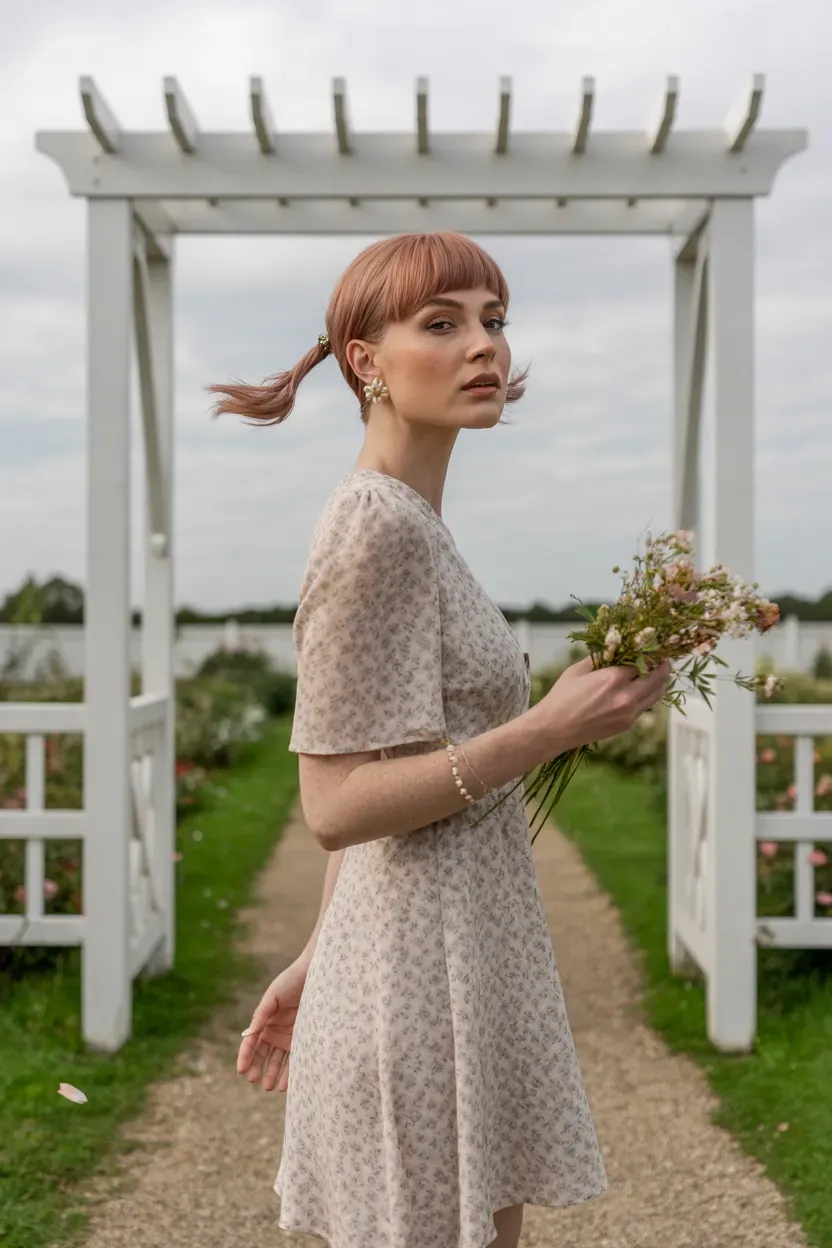
Tendrils are short, wispy strands left in front of the ears. They add a romantic touch, soften the edges of the face, and give you something to play with when styling.
Ask for two to three inches of length in front of each ear, blended into the rest of the cut. They suit heart and square faces because they soften the jaw and cheekbones, and work well on fine to medium hair.
I like curling them slightly with a small barrel iron for events. The catch is that they need reshaping every five weeks or they start to look scraggly.
Read our wedding guest hair ideas and beauty inspiration. A little wisp goes a long way.
25. Pastel Rose Pixie for Bold Color Fans
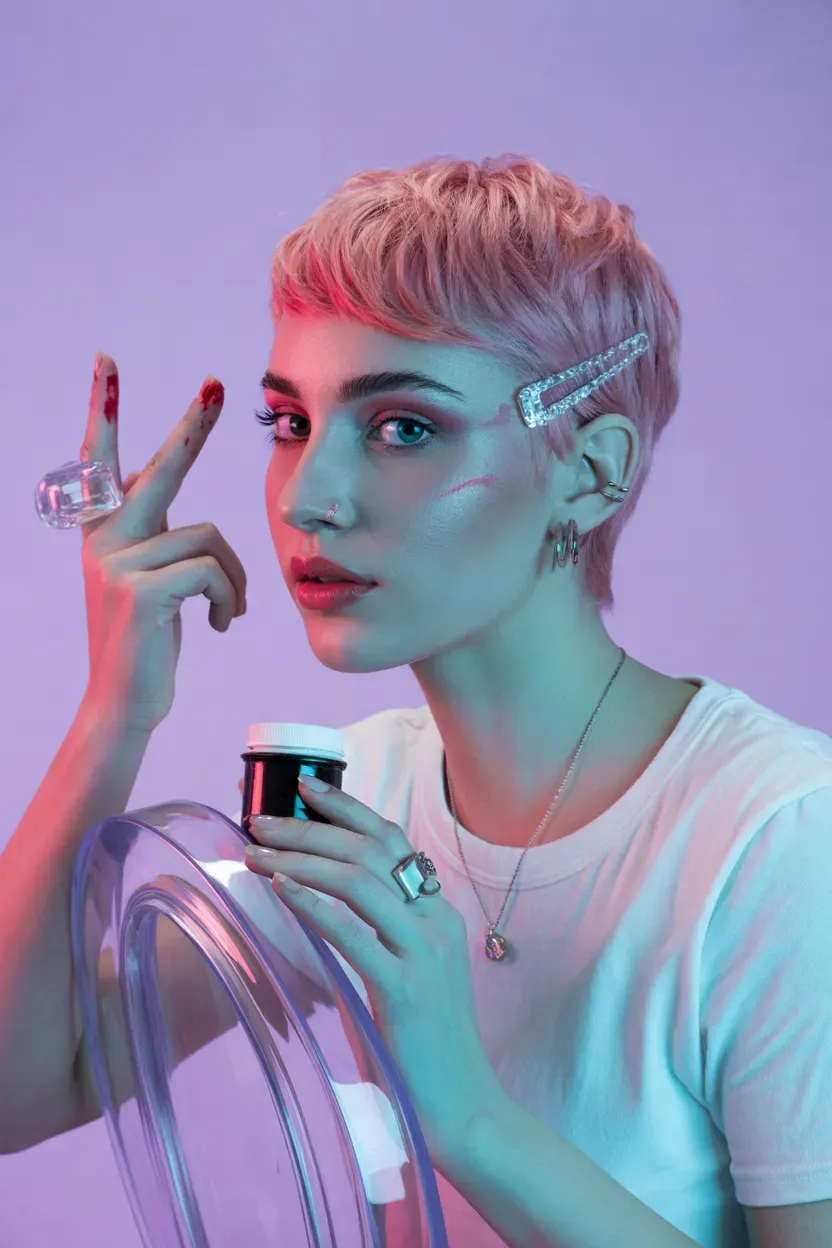
Pastel pink looks playful on a pixie because short hair takes less product and time to color. It works best on hair lifted to a pale blonde, level 9-10, before the rose tone goes on.
Pastel shades fade fast, often within four to six washes. Use a color-depositing conditioner in pink and wash in cool water to extend the color.
- Beginner: try a semi-permanent tint that washes out gradually
- Advanced: book a professional bleach-and-tone service
Bleach is hard on hair, so use a bond-repair treatment and skip heat styling where you can. See our pastel hair care guide and expert color advice. Color is where you get to play.
Getting Started With Feminine Pixie Cuts
The easiest first step is a consultation. Bring three photos of cuts you like, plus one of a cut you don’t, and ask your stylist to explain how each would work with your hairline, cowlick, and density.
The most common beginner mistake is choosing a cut for your ideal hair instead of your real hair. A cowlick at the front or a low nape hairline changes what’s possible, and a good stylist will tell you which cuts fight your natural growth.
For a first kit, buy one product, one tool, and one appointment: a lightweight texturizing cream ($12-25), a small round brush around one inch, and a trim booked at week five. That’s enough for most cuts.
Expect a short learning curve. Give yourself two weeks to figure out your styling routine, six weeks for the first maintenance trim, and about three months before the cut feels like it belongs to you.
Frequently Asked Questions
What is a feminine pixie cut?
A feminine pixie cut is a short style that keeps softness through longer layers on top, wispy fringes, or tapered edges instead of hard, blunt lines. Most versions leave two to four inches on top, with shorter sides and nape. The exact shape depends on your face shape and hair texture.
Do feminine pixie cuts suit round faces?
Yes, when the cut adds height on top and keeps the sides close to the cheeks. A side-swept fringe can also lengthen the face. Avoid blunt, chin-length edges that add width at the widest point.
How often should you trim a pixie cut?
Every four to six weeks for most pixie cuts. Fringes and tapered nape styles may need attention at week three or four, while a long pixie or bixie can stretch to eight. Waiting longer usually costs you the shape.
Are pixie cuts good for fine hair?
Yes, they often make fine hair look fuller because there’s less length weighing it down. Choose point-cut layers on top and avoid thinning shears. A root-lifting spray adds extra volume without stiffness.
How long does it take to grow out a pixie cut?
Expect roughly nine to twelve months to reach chin length, since hair grows about 1.25 cm (½ inch) per month. Regular shaping trims every 10-12 weeks make the in-between stages easier. Clips, pins, and a little clay help with the awkward phase.
A Few Final Thoughts
Feminine pixie cuts aren’t one look. These 25 range from a soft side-swept fringe to a coily taper to a pastel rose. The best cut is the one that fits your face shape and hair texture, and that you’re willing to maintain. Bring photos to your stylist, ask honest questions about your cowlick and hairline, and start with a version you can grow out if you change your mind. A small change in length can shift how you feel every morning, so choose one from the 25 and book that consultation this week.