Flat blonde is a funny thing. In the salon mirror, under those bright lights, it looks bright and clean and exactly right. Then you step outside, or you catch yourself in a photo, and suddenly your hair looks like one solid sheet of colour with no movement, no shadow, and no shape. For years my answer was always the same: go lighter, add more highlights, bleach a little more. It never fixed the problem, because my blonde had nothing to play against. Lowlights for blondes fix exactly that. A few carefully placed strands, just one or two shades deeper than your base, give your hair the shadow it needs to show off the light. This guide collects 12 lowlight looks that add depth without going dark, each with the base blonde it suits best, what to ask your stylist for, an honest grow-out time, and one mistake I have made so you do not have to.
Quick Answer: If your blonde looks flat, start with Honey Lowlights Woven Underneath (#1) or Beige Babylowlights (#5). For a warm fix, try Caramel Ribbon Lowlights (#2) or Golden Brown Face-Framing Lowlights (#4). For cool blonde, ask for Ash Brown Shadow Lowlights (#3) or Mushroom Brown Dimension (#6). Salon lowlights run $80-180, and most grow out softly for 8-12 weeks.
Why Lowlights Are Worth Your Time
Lowlights are the quiet heroes of blonde hair, and I think they are underrated because they do not photograph as dramatically as a fresh set of highlights. Highlights add light; lowlights add shadow, and shadow is what makes light visible. When a stylist weaves a strand that is one or two levels deeper than your blonde through the mid-lengths or underneath, your eye suddenly reads the blonde strands next to it as brighter, shinier, and more dimensional.
There are practical wins as well. Lowlights grow out far more gracefully than highlights, because the darker strand sits close to your natural root colour and there is no harsh line of regrowth. Most looks here last eight to twelve weeks, which means fewer salon visits, less bleach, and less money spent over the year. A demi-permanent lowlight also deposits a little conditioning back into the strand, smoothing the cuticle and adding shine. This guide suits any blonde whose colour has gone flat, whether you are platinum, golden, ash, or strawberry blonde.
At a Glance
- Five of these looks are subtle enough that most people will think your hair just looks better, not different.
- Grow-out times run from 8 to 14 weeks, because lowlights fade softly instead of leaving a hard line.
- Every base blonde appears here, from icy platinum to warm strawberry blonde.
- Salon prices run $80-180, while a demi-permanent gloss at home costs about $15-30.
- Tones include honey, caramel, ash brown, golden brown, beige, and mushroom.
| # | Look | Best Hair Type | Skill Level | Grow-Out Time | Occasion |
|---|---|---|---|---|---|
| 1 | Honey Lowlights Woven Underneath | Platinum blonde | Intermediate | 10-12 weeks | Everyday |
| 2 | Caramel Ribbon Lowlights | Golden blonde | Intermediate | 8-10 weeks | Date night |
| 3 | Ash Brown Shadow Lowlights | Ash blonde | Salon | 10-12 weeks | Office |
| 4 | Golden Brown Face-Framing Lowlights | Golden blonde | Intermediate | 8-10 weeks | Weekend |
| 5 | Beige Babylowlights | Platinum blonde | Intermediate | 10-12 weeks | Everyday |
| 6 | Mushroom Brown Dimension | Ash blonde | Salon | 12-14 weeks | Office |
| 7 | Toffee Lowlights on the Ends | Golden blonde | Beginner | 8-10 weeks | Autumn |
| 8 | Butterscotch Lowlights for Strawberry Blonde | Strawberry blonde | Intermediate | 8-10 weeks | Everyday |
| 9 | Chestnut Lowlights Under the Crown | Platinum blonde | Salon | 10-12 weeks | Evening |
| 10 | Warm Sand Lowlights | Ash blonde | Intermediate | 10-12 weeks | Brunch |
| 11 | Bronze Ribbon Lowlights | Golden blonde | Intermediate | 8-10 weeks | Date night |
| 12 | Soft Walnut Lowlights at the Nape | Ash blonde | Intermediate | 12-14 weeks | Everyday |
1. Honey Lowlights Woven Underneath

Honey lowlights woven underneath are the gentlest fix for flat platinum blonde, and the look I recommend first to anyone nervous about going darker. The honey strands sit in the underneath layers, so from the front you still look every bit as platinum as before. It is only when your hair moves, when you turn your head or the wind catches it, that the warm gold flashes through. That hidden depth makes the platinum on top look brighter by comparison, almost like your hair has a secret. I had this done after a winter of back-to-back bleach appointments left my platinum chalky and grey, and the difference was immediate. My hair looked creamy instead of flat, and strangers asked whether I had changed my colour, when all I had done was add warmth where nobody could see it directly.
Ask your stylist for a demi-permanent honey lowlight, one to two levels deeper than your platinum, placed only underneath and at the nape, in fine weaves rather than chunky slices. Foils should start about an inch from the root so there is no dark line at the scalp, and the colour should be true honey, warm gold with a touch of amber, not brassy orange. Ask for demi-permanent, not permanent, because demi fades gradually and will not leave a dark band as your hair grows. My mistake the first time was letting the stylist place honey through the crown too. On platinum, even a little gold on top reads as a stripe, and I spent six weeks with caramel highlights I never asked for. Underneath-only placement is the whole point of this look.
Grow-out is generous, usually ten to twelve weeks, because the underneath layers grow out hidden and demi-permanent colour fades softly rather than leaving a line. A gloss refresh around week eight will keep the warmth fresh, but you will not need a full reapplication. Cost runs about $90-140 in a salon, depending on your hair and how many foils the underneath section needs. A honey gloss at home costs around $20. See subtle hair colour ideas for blondes or how to ask your stylist for lowlights.
2. Caramel Ribbon Lowlights

Caramel ribbon lowlights are what I reach for when golden blonde starts to look washed out, like someone turned the saturation down on my hair. Thin ribbons of warm caramel are woven through the mid-lengths and ends, following the same pattern your highlights would, but in reverse. Instead of light on light, you get warm caramel sitting right next to golden blonde, and the contrast makes both colours look richer. It is the hair equivalent of a caramel drizzle on vanilla ice cream. The blonde stops looking like one flat sheet and starts looking like it has movement, especially on long layers where the ribbons catch the light as the hair swings.
Ask your stylist for a caramel lowlight one to two levels deeper than your golden base, applied in fine ribbons through the mid-lengths, with the colour concentrated from the ears down rather than at the roots. Ask them to alternate the caramel ribbons with your existing blonde, roughly one lowlight foil for every two highlight foils, so the caramel reads as an accent rather than taking over. You want a true caramel, warm and golden-brown, not a red copper and not a flat brown. If your blonde leans very yellow, ask for a caramel with a slightly cool, toffee base so the two do not merge into one brassy mass. My mistake was going too wide with the sections. Thick ribbons looked like brown stripes, not dimension. Fine ribbons, no wider than a pencil, are what make this look expensive.
Grow-out is eight to ten weeks, a little shorter than some looks here because caramel fades faster than ashier tones. You will notice the ribbons getting lighter around week six, which looks quite pretty, like a sun-faded caramel, but book a gloss refresh at week seven or eight if you want the contrast to stay strong. Cost is about $100-160 in a salon, since ribbon placement takes more foils than an underneath-only look. Wash in lukewarm water with a colour-safe shampoo to make the caramel last longer, and a weekly colour-depositing mask in a warm caramel shade will top up the tone. At home, a caramel demi-permanent gloss is around $15-25. See caramel hair colour ideas or how to keep warm blonde tones from fading.
3. Ash Brown Shadow Lowlights

Ash brown shadow lowlights are the answer for cool blondes who want depth without a single drop of warmth, and I say that as someone who spent years being told that every blonde needs warmth to look alive. It does not. If your blonde is ash, silver, or cool-toned, the right lowlight is a soft ash brown, the colour of wet bark or a shadow on snow, placed underneath and through the interior layers so it reads as shadow rather than colour. The effect is quiet and expensive-looking. Your ash blonde stops looking like a flat sheet of grey and starts looking like it has dimension, the way a cloudy sky has dimension, with darker clouds behind the lighter ones.
Ask your stylist for an ash brown demi-permanent lowlight, one to two levels deeper than your ash blonde, with a cool, almost taupe base and no red or gold in the formula at all. This is the detail that makes or breaks the look, because many brown dyes have warm undertones hiding in them, and on ash blonde even a little warmth will show up as a muddy, brassy stripe. Ask your stylist to show you the swatch and confirm it is a cool ash brown, and ask for fine weaves through the underneath and interior layers, leaving the top layer untouched so the ash blonde stays clean on the surface. My mistake was assuming any brown would do. My first attempt came out with a faint warm cast that clashed horribly, and it took a toner appointment to fix.
Grow-out is ten to twelve weeks, and ash brown is one of the longest-lasting lowlight tones because cool pigments fade more slowly than warm ones and blend beautifully with ash blonde regrowth. You will likely not notice any harsh line at all, just a gradual softening of the shadow. Cost runs about $90-150 in a salon, and a cool-toned gloss refresh around week ten will keep the ash from turning dull. Do not go more than two levels deeper, or the lowlight will read as black streaks. See ash blonde hair ideas or how to keep cool blonde from turning brassy.
4. Golden Brown Face-Framing Lowlights
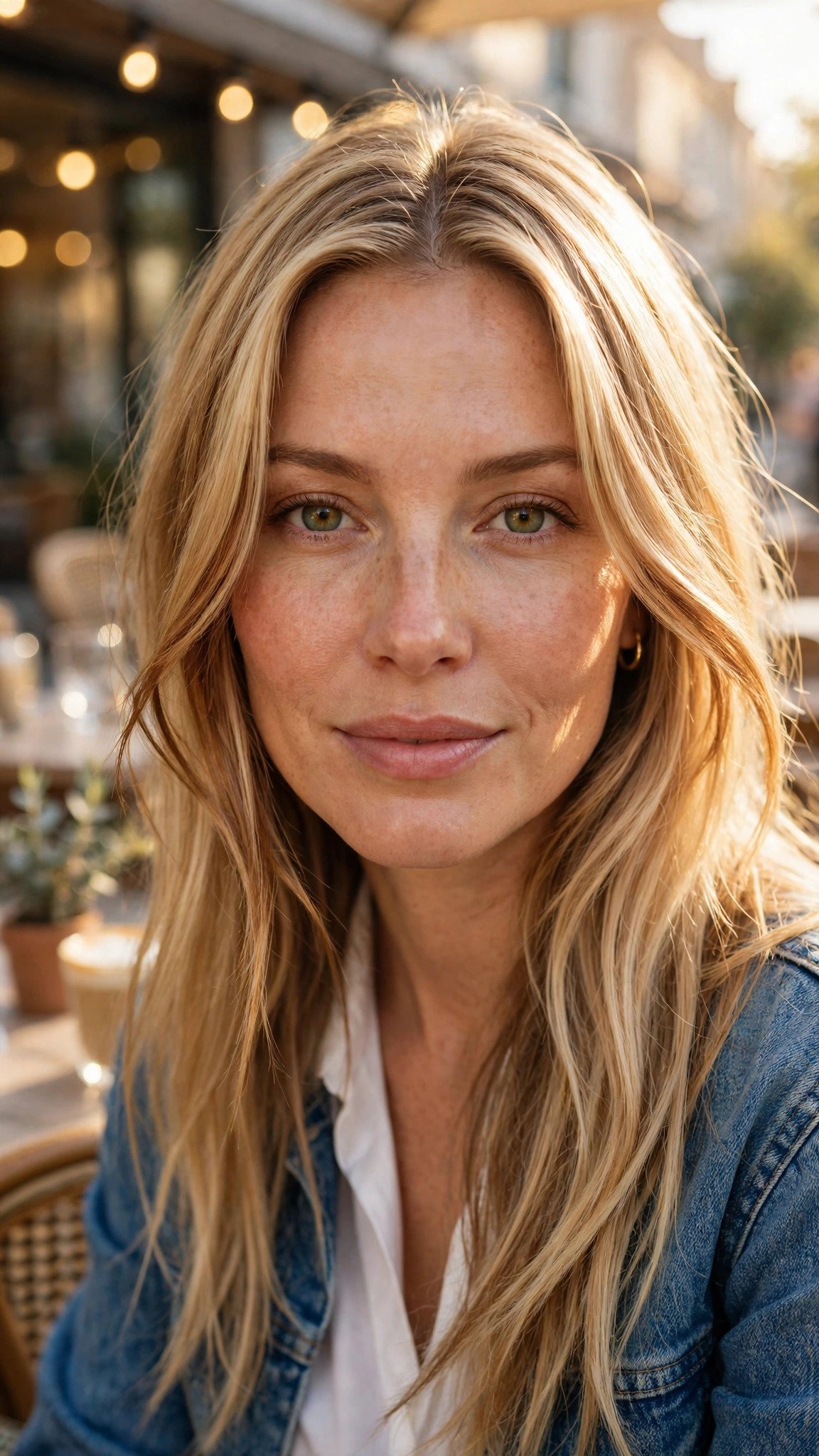
Golden brown face-framing lowlights are the lowlight version of the money piece, and they do something no other placement in this guide does: they change how your face looks, not just how your hair looks. Two or three strands of warm golden brown, placed right around the face, create a soft shadow that makes your features stand out and your skin look warmer, the way a little bronzer does. It is also the most visible lowlight look here, so if you want people to notice that you have done something different, this is the one to choose. I had this done before a wedding where I knew I would be photographed all day, and in every photo my face had a warmth and definition that my flat blonde had never given me.
Ask your stylist for a golden brown demi-permanent lowlight, one to two levels deeper than your golden blonde, placed in fine strands framing the face, starting at the parting and running down past the chin, with the darkest point around cheekbone level and the colour softening towards the ends. Ask for the strands to be no wider than a finger and blended with a few lighter pieces between them, so the framing looks like a gradient rather than a solid block. The tone should be a warm golden brown, like toasted hazelnut, not a red auburn and not a flat chocolate. My mistake was asking for strands that were too thick. They looked like brown curtains hanging on either side of my face and swallowed my blonde completely. Face-framing lowlights should be an accent, and the blonde should still be the dominant colour.
Grow-out is eight to ten weeks, a little shorter than the underneath looks because the face-framing strands sit on the surface and catch more sun, washing, and styling heat, all of which fade warm tones faster. You will notice the golden brown softening into a warm honey around week six, which still looks lovely, but book a gloss refresh at week seven if you want the contrast to stay crisp. Cost is about $80-130 in a salon, since only a small section is coloured, which makes this one of the most affordable looks in the guide. At home, a golden brown demi-permanent gloss is around $15-20, See face-framing hair colour ideas or golden blonde hair inspiration.
5. Beige Babylowlights
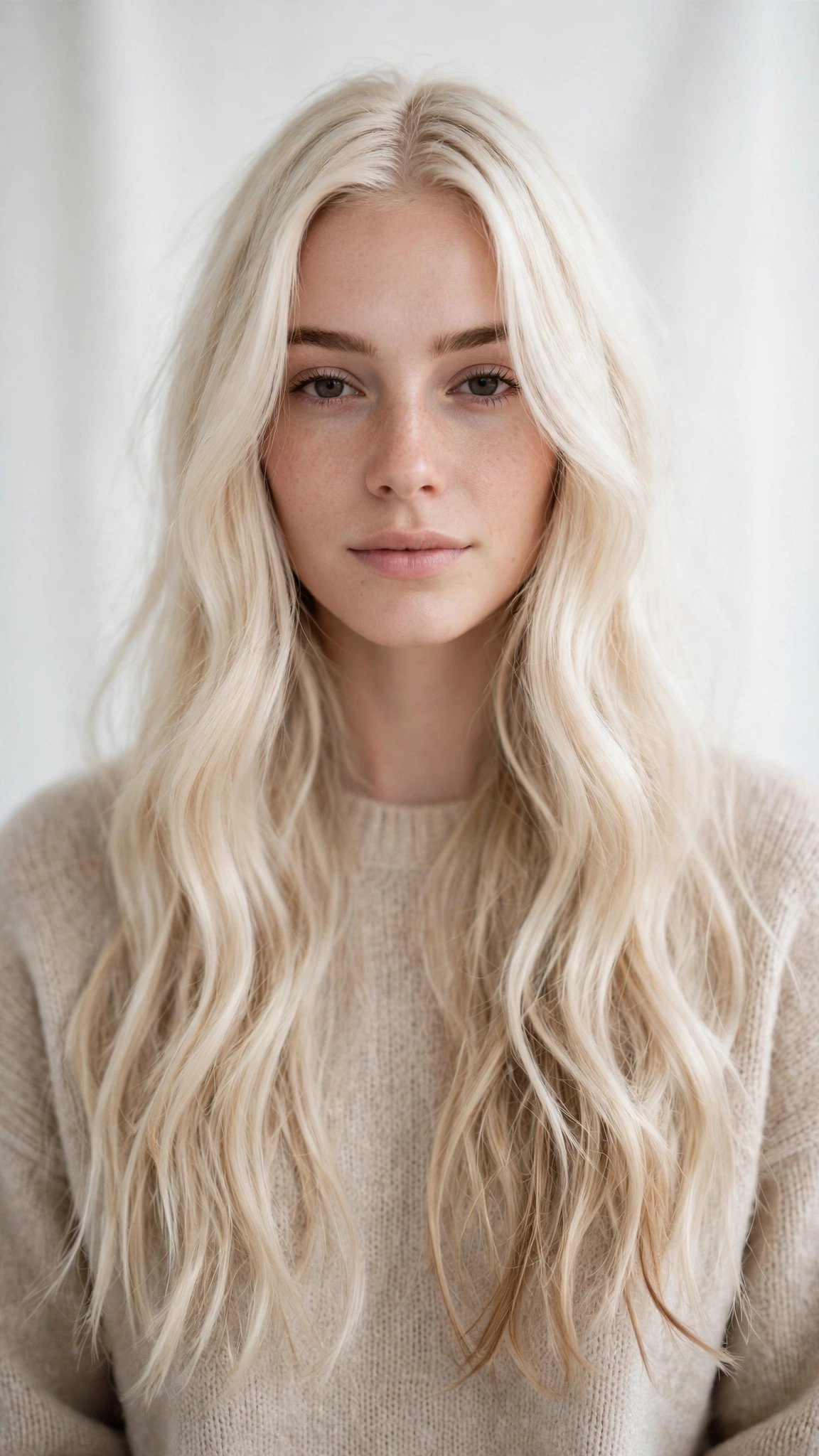
Beige babylowlights are the most subtle look in this entire guide, and that is exactly why I love them. Babylowlights are the lowlight version of babylights: extremely fine, almost thread-like strands, woven all through the hair in a soft beige that is barely a shade deeper than platinum. From more than a metre away, you cannot point to a single lowlight. What you see instead is hair that looks like it has depth, texture, and movement, as if your platinum suddenly learned how to catch the light properly. This is the look for blondes who do not want anyone to know they have had colour done at all, and for anyone whose platinum has gone flat and chalky from too much toner.
Ask your stylist for a beige demi-permanent lowlight, only one level deeper than your platinum, applied in superfine weaves, thinner than a shoelace, scattered through the mid-lengths and ends rather than concentrated in one place. Ask for a neutral beige, not gold and not ash, because the neutrality is what keeps it invisible against platinum. The foils should be very fine and very numerous, with a feathered root so there is no line at all. This is a time-consuming service, so expect your stylist to take longer than usual. If your stylist tries to talk you into thicker sections to save time, hold your ground, because thick sections will ruin this look and turn it into visible stripes. My mistake was expecting drama. I walked out thinking nothing had changed, and only saw the depth the next day, in daylight, with my hair moving.
Grow-out is ten to twelve weeks, and beige babylowlights have the softest grow-out of any look here, because the strands are so fine and so close to your base colour that there is simply nothing to grow out visibly. You may not even notice them fading, just a gradual return to flatness that tells you it is time for a refresh. Cost runs about $110-170 in a salon, higher than some looks here because the fine weaving takes more time and more foils. Do not judge this look in the salon mirror. Judge it outside, in daylight. See platinum blonde hair ideas or beige blonde hair colour inspiration.
6. Mushroom Brown Dimension

Mushroom brown dimension is the coolest, most modern lowlight look in this guide, and it is the one I recommend to ash blondes who want their hair to look expensive and editorial rather than just pretty. Mushroom brown is a soft, greyish brown, the colour of a mushroom cap, with no warmth at all, and when it is woven through ash blonde it creates a smoky, dimensional effect that looks like your hair has layers of fog and light in it. It is particularly beautiful on textured lobs and shags, where the mushroom strands peek out between the layers and make the cut look even more piecey. It does not look dyed.
Ask your stylist for a mushroom brown demi-permanent lowlight, one to two levels deeper than your ash blonde, with a cool, grey-brown base and absolutely no red or gold pigment in the formula. Ask for fine weaves through the interior layers and underneath, with a few strands brought up through the crown so the mushroom shows when your hair moves, but the top layer stays predominantly ash blonde. The placement should follow your haircut, with more mushroom where the layers are shortest, so the dimension sits where the texture already is. If your stylist has not worked with mushroom tones before, ask them to do a strand test first, because mushroom formulas vary a lot between brands and some run warmer than they look in the tube.
My mistake with mushroom brown was pairing it with the wrong makeup for the first week. Mushroom is a very cool, muted tone, and against my usual warm peach blush it made my skin look washed out until I switched to a cooler, rosy blush and a little more definition on my brows. Hair colour does not exist in isolation, and a cool lowlight can shift how your whole face reads. The other mistake is going too dark. Because mushroom is already muted and greyish, going more than two levels deeper will make it look grey rather than brown, and grey lowlights on ash blonde read as dull rather than dimensional. Grow-out is twelve to fourteen weeks, the longest in this guide, and cost runs about $100-160 in a salon. See mushroom blonde hair ideas or cool-toned blonde colour inspiration.
7. Toffee Lowlights on the Ends

Toffee lowlights on the ends are the easiest lowlight look to live with, and the one I suggest to blondes who are scared of commitment. Instead of weaving colour through the whole head, your stylist concentrates a warm toffee tone on the last few inches of your hair, where it acts like a shadow at the bottom of the lengths. The effect is a little like an ombre in reverse: your blonde stays bright and clean at the roots and through the mid-lengths, and then the ends deepen into a rich toffee that gives the whole style weight and finish. It is particularly flattering on long hair, because the toffee ends stop the lengths from looking thin and wispy, and it is the perfect autumn look, warm and golden like the season itself.
Ask your stylist for a toffee demi-permanent lowlight, one to two levels deeper than your golden blonde, applied to the bottom three to four inches of the hair with a soft, blended transition rather than a hard line. Ask for the colour to be feathered upward into the mid-lengths with a few fine strands, so the toffee fades into the blonde instead of stopping abruptly, and ask for a true toffee, warm and golden-brown like the sweet, not a dark chocolate and not a red copper. If your ends are damaged or porous from bleaching, tell your stylist, because porous ends grab colour more strongly and the toffee can come out darker than expected.
My mistake with toffee ends was washing my hair too often in the first two weeks. Warm tones on the ends fade quickly because the ends are the oldest, most porous part of the hair, and every wash strips a little more colour. I learned to wash twice a week instead of every day, to use dry shampoo in between, and to finish with a cool rinse, which seals the cuticle and holds the colour in. The other mistake is letting the toffee creep too high. Grow-out is eight to ten weeks, and cost is about $80-130 in a salon. See toffee blonde hair ideas or how to do a balayage on blonde hair.
8. Butterscotch Lowlights for Strawberry Blonde

Butterscotch lowlights for strawberry blonde are a match made in heaven, and I say that as someone who spent years watching strawberry blondes get the wrong advice. Strawberry blonde is already a warm, coppery colour, and the instinct is to add more copper or more red, but that just makes the whole thing louder. Butterscotch is different. It is a warm, golden-brown, the colour of melted butterscotch sauce, and when it is woven through strawberry blonde it deepens the colour without adding more red. The strawberry stays the star, bright and coppery on top, and the butterscotch sits underneath and between the strands like a warm shadow, giving the hair a richness that flat strawberry blonde never has. People will say your hair glows.
Ask your stylist for a butterscotch demi-permanent lowlight, one to two levels deeper than your strawberry blonde, with a warm golden-brown base and no additional red pigment, because your strawberry already brings all the red you need. Ask for fine weaves through the mid-lengths and underneath, with a few strands brought up around the face to warm up your complexion, and ask for the colour to start about an inch from the root so the regrowth stays soft. If your strawberry blonde is very light and pale, ask for a lighter butterscotch, almost a golden honey-brown, so the contrast stays gentle. If your strawberry is deeper and more coppery, you can go a touch deeper with the butterscotch and the result will still blend beautifully.
My mistake with butterscotch was assuming that because strawberry blonde is warm, any warm lowlight would work, and my first attempt used a copper lowlight that made my hair look red all over. Butterscotch works precisely because it is brown, not red, and that brown is what gives the strawberry its depth. The other mistake is overdoing the number of foils. Strawberry blonde is a delicate colour, and too many lowlights will swallow it, so ask for a light hand, roughly one lowlight foil for every three sections of blonde. Grow-out is eight to ten weeks, and cost runs about $90-150 in a salon. See strawberry blonde hair ideas or warm blonde hair colour inspiration.
9. Chestnut Lowlights Under the Crown

Chestnut lowlights under the crown are the boldest hidden look in this guide, and the one I choose when I want real contrast without anyone seeing it from the front. The chestnut strands sit under the crown, in the interior layers of the hair, so when your hair is lying flat you look like a straightforward platinum blonde. But the moment you put your hair up, or run your fingers through it, or let it fall forward, the rich chestnut shows through like a warm secret underneath. I had this done before a holiday where I knew I would be wearing my hair up most of the time, and every updo looked incredible, because the chestnut underneath gave the style a depth that plain platinum never has.
Ask your stylist for a chestnut demi-permanent lowlight, two levels deeper than your platinum, with a warm, reddish-brown base that reads as chestnut rather than chocolate. Ask for the lowlights to be placed in the interior layers under the crown and through the underneath section, with the top layer left completely untouched, and ask for the foils to be fine rather than chunky, so the chestnut reads as a soft shadow rather than a stripe when it does show. The key detail is the crown placement: the chestnut should sit just under the crown, not at the nape only, because that is where the colour will show when you move your hair or tie it up.
My mistake with chestnut under the crown was going too dark on the first attempt. Chestnut is already a rich colour, and on platinum hair, going more than two levels deeper makes it look almost black in indoor light, which is not the warm, expensive effect you want. Stick to two levels deeper and no more, and ask for a strand test if you are unsure. The other mistake is forgetting that chestnut is a warm tone, and warm tones fade. After about six weeks, my chestnut had faded to a soft warm brown, so a colour-depositing mask in a warm brown shade once a week kept the richness going. Grow-out is ten to twelve weeks, and cost runs about $100-160 in a salon. See chestnut blonde hair ideas or how to add depth to platinum blonde hair.
10. Warm Sand Lowlights

Warm sand lowlights are the peacemaker of this guide, and the look I recommend to ash blondes who love their cool colour but feel it has gone a little too cold, a little too grey, a little too flat. Warm sand is a soft, neutral-warm beige-brown, the colour of wet sand on a beach, and when it is woven through ash blonde it warms the hair up just enough to make it look alive again, without turning it golden or brassy. Your ash blonde stays ash, but it stops looking like a flat sheet of grey and starts looking like it has sunshine in it. I had this done in spring after a winter of cool toners had left my ash blonde looking almost silver-grey, and the warm sand brought it back to life in a way that felt natural,
Ask your stylist for a warm sand demi-permanent lowlight, one level deeper than your ash blonde, with a neutral-warm base that leans beige rather than gold. Ask for fine weaves through the mid-lengths and ends, with a few strands around the face to warm up your complexion, and ask for the colour to be feathered at the roots so there is no line. The tone is the critical detail: you want sand, not honey and not caramel, because sand is muted and understated, and that is what keeps your ash blonde looking cool while still giving it warmth.
My mistake with warm sand was asking for too many foils. Because the colour is so close to my ash blonde, I thought I needed a lot of it to make a difference, and my stylist quite rightly talked me down to a lighter application. Warm sand works because it is subtle, and a little goes a long way. Too much of it and your ash blonde starts to look beige all over, which defeats the purpose. The other mistake is using a purple shampoo too often afterwards. Purple shampoo is designed to cancel warmth, and it will strip the warm sand right out of your hair. Use it once a week at most. Grow-out is ten to twelve weeks, and cost runs about $90-140 in a salon. See sandy blonde hair ideas or how to warm up ash blonde hair.
11. Bronze Ribbon Lowlights

Bronze ribbon lowlights are the evening version of caramel ribbons, and the look I choose when I want my blonde to look rich, polished, and a little bit glamorous. Bronze is deeper and more metallic than caramel, with a warm, coppery-brown glow that catches the light like jewellery, and when it is woven through golden blonde in fine ribbons, the result is hair that looks lit from within. It is particularly stunning in evening light, under restaurant lamps or string lights, where the bronze ribbons seem to glow against the blonde. I had this done before a series of winter parties, and in every photo my hair had a warmth and a shine that my usual blonde never managed.
Ask your stylist for a bronze demi-permanent lowlight, one to two levels deeper than your golden blonde, with a warm, metallic brown base that has a hint of copper but is not outright red. Ask for the ribbons to be placed in fine sections through the mid-lengths and ends, following your layers so the bronze shows when the hair moves, and ask for the colour to be concentrated from the ears down rather than at the roots. The placement should be similar to a balayage, with the bronze feathered in softly at the top and getting stronger towards the ends, so the effect is a gradient of warmth rather than a set of stripes.
My mistake with bronze ribbons was letting them go too red. Bronze sits on the edge between brown and copper, and if the formula leans too far towards copper, the ribbons will look red rather than bronze, especially in sunlight. Ask your stylist to keep the formula brown-based with just a touch of copper, and to do a strand test if they are mixing a custom shade. The other mistake is heat styling without protection. Bronze is a warm, reflective tone, and it fades fast under high heat, so I learned to always use a heat protectant and to keep my straighteners below 180 degrees. Grow-out is eight to ten weeks, and cost runs about $100-160 in a salon. See bronze blonde hair ideas or warm metallic hair colour inspiration.
12. Soft Walnut Lowlights at the Nape

Soft walnut lowlights at the nape are the quietest, most low-maintenance look in this guide, and the one I recommend to blondes who want depth but do not want to think about their hair colour for months at a time. The walnut strands sit right at the nape, in the lowest layer of your hair, where they are almost completely hidden when your hair is down. They only show when you put your hair up, or when the wind lifts it, or when someone sees you from behind, and that hidden quality is what makes them so charming. I had this done when I was growing out a shorter cut and wanted my hair to feel interesting without committing to a colour I would have to maintain, and it was the easiest colour I have ever lived with.
Ask your stylist for a soft walnut demi-permanent lowlight, one to two levels deeper than your ash blonde, with a cool-neutral brown base that reads as walnut rather than chocolate. Ask for the lowlights to be placed only at the nape and the lowest underneath layer, in fine weaves, with the colour starting about an inch from the root so there is no line at the scalp. The tone should be a soft, muted walnut, not a dark espresso and not a warm chestnut, because the muted quality is what keeps it blending with ash blonde. Tell your stylist you want the effect hidden when your hair is down, because that is the entire point of a nape placement.
My mistake with walnut at the nape was forgetting it was there and then being surprised by it in photos, which is a silly mistake but a real one. The first time I saw the back of my head in a photo after getting this done, I thought something had gone wrong, because I had forgotten the walnut was even there. It had not gone wrong at all. It looked beautiful, soft and dimensional, exactly as intended. The lesson is to check the back of your head in the mirror before you leave the salon. The other mistake is choosing a walnut that is too dark. On ash blonde, a walnut more than two levels deeper will look like a dark patch at the nape. Grow-out is twelve to fourteen weeks, the longest in this guide, and cost runs about $70-110 in a salon. See walnut blonde hair ideas or low-maintenance blonde colour inspiration.
Getting Started
The easiest first step is to pick one tone, not one placement. Honey, caramel, ash brown, and mushroom behave very differently, and starting with the tone that matches your skin and your blonde will narrow the choice quickly. If your skin is warm and your blonde is golden, start with honey or caramel. If your skin is cool and your blonde is ash, start with ash brown or mushroom. If you are not sure, warm sand is the safest middle ground. Once you have the tone, the placement follows: underneath-only looks are the most forgiving for beginners, while face-framing and ribbon looks are better if you want the change to be visible.
The most common beginner mistake is asking for lowlights that are too dark. Lowlights should be one or two levels deeper than your base, not four, and the difference between two levels and four levels is the difference between dimension and stripes. Bring a photo, and be specific about the tone, the placement, and the depth. What to buy first: a colour-safe shampoo, a weekly deep conditioning mask, and a heat protectant spray, about $30-45 in total. A lowlight appointment takes about 60-90 minutes.
Frequently Asked Questions
Will lowlights make my blonde look darker overall?
No, not if they are done correctly. Lowlights should be one or two levels deeper than your base and placed in fine weaves, so your blonde stays the dominant colour and the lowlights read as shadow. The contrast actually makes your blonde look brighter. If your hair looks darker overall, the sections were too thick or the colour was too deep.
How long do lowlights for blondes last?
Most lowlights last eight to fourteen weeks. Cool tones like ash brown and mushroom last the longest, twelve to fourteen weeks, because cool pigments fade slowly. Warm tones like caramel and bronze fade faster, usually eight to ten weeks. Underneath and nape placements last longer than surface placements, because they get less sun and less washing.
Can I get lowlights if my blonde is very light platinum?
Yes, and platinum benefits from lowlights more than any other base, because it is the blonde most likely to look flat and one-tone. Choose a lowlight only one or two levels deeper than your platinum, such as honey, beige, or chestnut, placed underneath or in fine weaves. Avoid going more than two levels deeper, or the lowlights will look like dark streaks.
Do lowlights damage your hair?
Lowlights are one of the least damaging colour services, because they are usually done with demi-permanent colour, which deposits pigment without lifting the hair. Demi-permanent colour can actually make hair feel softer and shinier by smoothing the cuticle. Still, use a deep conditioning mask weekly and avoid overlapping lowlights on the same sections at every appointment.
How much do lowlights for blondes cost at a salon?
A partial lowlight service costs about $80-130, and a full service with more foils costs about $110-180, depending on your hair length, location, and foil count. Underneath-only and nape looks are the most affordable, usually $70-110. Ribbon and babylowlight looks cost more, $110-170, because the fine weaving takes more time.
A Few Final Thoughts
The best lowlights for blondes do not try to change your blonde. They give it something to stand next to, a little shadow that makes the light visible, a little warmth or coolness that makes the whole colour feel intentional. Across these 12 looks, the pattern is simple: a tone one or two levels deeper than your base, a placement that suits your haircut and your life, and a demi-permanent formula that fades softly. Pick one of the 12, bring the photo to your stylist this week, and enjoy watching your flat blonde turn into the kind of colour people ask about.