I have spent years watching brunettes walk out of salons looking either exactly the same as when they walked in, or so highlighted that the colour announced itself first. Soft balayage lives in the sweet spot between those two outcomes. It adds light where the sun would touch your hair, keeps your dark base doing most of the work, and grows out so gently you forget your last appointment. This guide collects 18 looks, each with what to ask for and one mistake I have made.
Quick Answer: For the most natural result, start with the Classic Caramel Melt (#1) or the Honey Face-Framing Ribbons (#2). For dark brunettes who want the subtlest change, try the Mocha Melt (#4) or the Mushroom Brown Dimension (#10). For the longest time between appointments, choose the Low-Maintenance Rooted Balayage (#18). Salon balayage runs $150–$350, with touch-ups every 3–6 months.
Why Soft Balayage Is Worth Your Time
Soft balayage works so well on brunettes because brown hair already has depth, and balayage simply organises that depth into light and shadow. Instead of foils starting at the root, your stylist hand-paints lighter pieces through the mid-lengths and ends. The result looks like months of summer sun, not an afternoon in a salon chair,
There are practical wins too. With no harsh regrowth line, you can stretch appointments to three to six months, making balayage cheaper over a year than traditional highlights. It works on almost every length and texture, from a bob to long curls, because placement adjusts to how hair falls.
Here is the part most people miss: soft balayage makes your hair look thicker. The contrast between dark base and lighter ribbons creates the illusion of movement and volume, especially on fine hair. A few pieces around the face can brighten your whole complexion.
At a Glance
- Five looks are subtle enough for a first colour appointment, with no bleaching to platinum.
- Grow-out runs 3 to 6 months, with no hard regrowth line.
- Salon prices run $150–$350; gloss refreshes cost $40–$80.
- Tones include caramel, honey, chestnut, mocha, ash brown, and golden.
| # | Look | Best Hair Type | Skill Level | Grow-Out Time | Occasion |
|---|---|---|---|---|---|
| 1 | Classic Caramel Melt | Long wavy | Intermediate | 4–6 months | Everyday |
| 2 | Honey Face-Framing Ribbons | Long straight | Beginner | 3–4 months | Everyday |
| 3 | Chestnut Babylights on a Bob | Short bob | Intermediate | 3–4 months | Office |
| 4 | Mocha Melt for Dark Brunettes | Long dark | Beginner | 5–6 months | Everyday |
| 5 | Golden Ends | Long straight | Intermediate | 4–5 months | Weekend |
| 6 | Ash Brown Cool Balayage | Medium wavy | Advanced | 3–4 months | Office |
| 7 | Toffee Ribbons on Curly Hair | Long curly | Advanced | 4–6 months | Date night |
| 8 | Subtle Copper Glow | Medium wavy | Intermediate | 3–4 months | Autumn |
| 9 | Espresso-Caramel Blend | Long wavy | Intermediate | 4–6 months | Everyday |
| 10 | Mushroom Brown Dimension | Medium straight | Advanced | 3–5 months | Office |
| 11 | Butterscotch Highlights | Medium layered | Beginner | 3–4 months | Brunch |
| 12 | Cinnamon Spice Balayage | Long wavy | Intermediate | 3–4 months | Autumn |
| 13 | Sandy Brunette Sun-Kissed | Long wavy | Beginner | 4–5 months | Summer |
| 14 | Chocolate-Caramel Ribbon Bob | Short bob | Intermediate | 3–4 months | Date night |
| 15 | Warm Honey Balayage | Long straight | Intermediate | 4–6 months | Wedding guest |
| 16 | Soft Bronde Blend | Medium wavy | Intermediate | 4–5 months | Everyday |
| 17 | Caramel Money Piece | Long wavy | Beginner | 3–4 months | Everyday |
| 18 | Rooted Balayage | Long wavy | Beginner | 5–6 months | Everyday |
1. Classic Caramel Melt on Long Wavy Hair

The classic caramel melt is the look most brunettes picture when they say balayage, and for good reason. Warm caramel ribbons start around the cheekbones and melt gradually into the ends, so there is no point where you can say the colour begins. On long wavy hair the waves do half the work, catching the lighter pieces on every crest and letting the darker base show in the valleys, which makes it look sun-kissed rather than salon-made.
Ask your stylist for hand-painted caramel balayage, two to three levels lighter than your base, with the lightest pieces concentrated from the mid-lengths down and softer, finer ribbons near the face. Bring a photo, and tell her how much change you want, because caramel can be dialled from a whisper to a glow. A gloss at the end is essential, since it blends the ribbons and adds the shine.
I once asked for caramel balayage and ended up with chunky stripes because the pieces were painted too thick and too evenly spaced. The fix: ask for varied ribbon widths and for the colour to be feathered upward, never painted in a straight line. Uneven placement makes balayage look natural, so do not let anyone paint your hair like foils.
Pro Tip: Use a purple-free, colour-safe shampoo and a weekly hair mask, because caramel fades brassy when hair gets dry. A gloss every eight to ten weeks keeps the tone honeyed rather than orange. This look costs about $180–$300 in a salon, and you can expect four to six months before you need a full touch-up, with only a toner in between.
See soft caramel balayage ideas or how to ask your stylist for balayage.
2. Honey Face-Framing Ribbons on Long Straight Hair

If you want people to notice that you look brighter without being able to say why, honey face-framing ribbons are the answer. Just two or three fine, golden pieces on either side of your face catch the light every time you turn your head, and the rest of your hair stays your natural brown. It is the smallest change with the biggest payoff, and my first recommendation for anyone nervous about colour at a first appointment.
Ask your stylist for face-framing balayage only, in a warm honey one to two levels lighter than your base, starting an inch or two below the root and feathered toward the ends. Keep the pieces finest at the hairline and slightly wider past your jaw, so they blend instead of forming a stripe. On straight hair, placement matters more, because no curls hide a mistake, so a good consultation is worth ten extra minutes.
The mistake I made the first time was going too blonde around my face, and instead of looking sun-kissed I looked like I had grown-out highlights from 2012. Honey, not platinum, is the key on brown hair, always. If your stylist suggests going lighter, ask her to show you the toner first, and remember you can always go lighter next time but you cannot easily undo a stripe that is too bright.
Pro Tip: Style the front pieces with a loose bend, because a slight curve shows off the honey tone far better than pin-straight hair. Heat fades honey to dull yellow, so use a heat protectant. This look costs about $150–$220, and it grows out beautifully for three to four months with almost no upkeep.
See honey balayage for brunettes or face-framing highlight ideas.
3. Chestnut Babylights on a Bob

Chestnut babylights are the quiet luxury version of balayage, and they suit a bob better than almost any other cut. The colour is only one level lighter than your base, painted in very fine, scattered pieces, so your bob looks like it has always had that warm chestnut shimmer. It adds movement to a blunt cut without changing the shape at all, and it is the easiest balayage to wear to an office, on weekdays and weekends alike.
Ask your stylist for fine balayage babylights in warm chestnut, scattered through the top layers and around the face, with nothing heavier than a pencil-width ribbon anywhere. Because a bob has less hair to hide behind, ask her to keep the lightest pieces in the interior layers rather than only on the surface, so the colour shows when you move but does not sit like a cap on top. A demi-permanent gloss will soften everything into one seamless shade.
I once made the mistake of asking for babylights and getting a full head of highlights instead, because I did not say the word scattered clearly enough. Babylights should look random, like the sun found your hair on holiday, not like a pattern. If your stylist starts sectioning in neat rows, that is your cue to speak up, because balayage should be painted freehand, not foiled in a grid.
Pro Tip: A bob shows regrowth faster, so book a gloss at eight weeks even without a colour touch-up. It keeps the chestnut warm and the ends looking fresh. It is worth it. This look costs about $160–$240, and it grows out softly for three to four months.
See chestnut hair colour ideas or balayage ideas for short hair.
4. Mocha Melt for Dark Brunettes

Dark brunettes often get told that balayage will not show on their hair, which is simply not true when the tone is right. A mocha melt uses a rich, cool-to-neutral brown just one or two levels lighter than near-black hair, so the dimension is visible in daylight and soft indoors. It is the most understated look here, perfect if you want thicker, glossier hair without anyone guessing you had it coloured.
Ask your stylist for a mocha balayage, painted in wide, soft sections through the mid-lengths and ends, with no blonde at all. The goal is a tone-on-tone effect, so the lighter pieces should read as chocolate and coffee rather than caramel. A gloss in a neutral mocha shade will lock in the shine and stop the colour from pulling warm, which is the main risk on very dark hair, where lift can turn orange if it is rushed.
The mistake I made here was letting a stylist lift my dark hair too quickly with strong bleach, and the mocha turned brassy within two weeks. Dark hair needs a slower lift and a proper toner, so ask about processing time and toning twice if needed. Patience in the chair saves you months of fighting orange tones at home with purple shampoo that was never meant for brown hair.
Pro Tip: Wash dark balayage in cool water and use a colour-depositing brown gloss mask once a month to keep the mocha rich. Avoid clarifying shampoos, which strip toner fast. This look costs about $170–$280, and because the contrast is so low, you can go five to six months between full appointments.
See mocha hair colour for brunettes or balayage for dark hair.
5. Golden Ends on Straight Long Hair
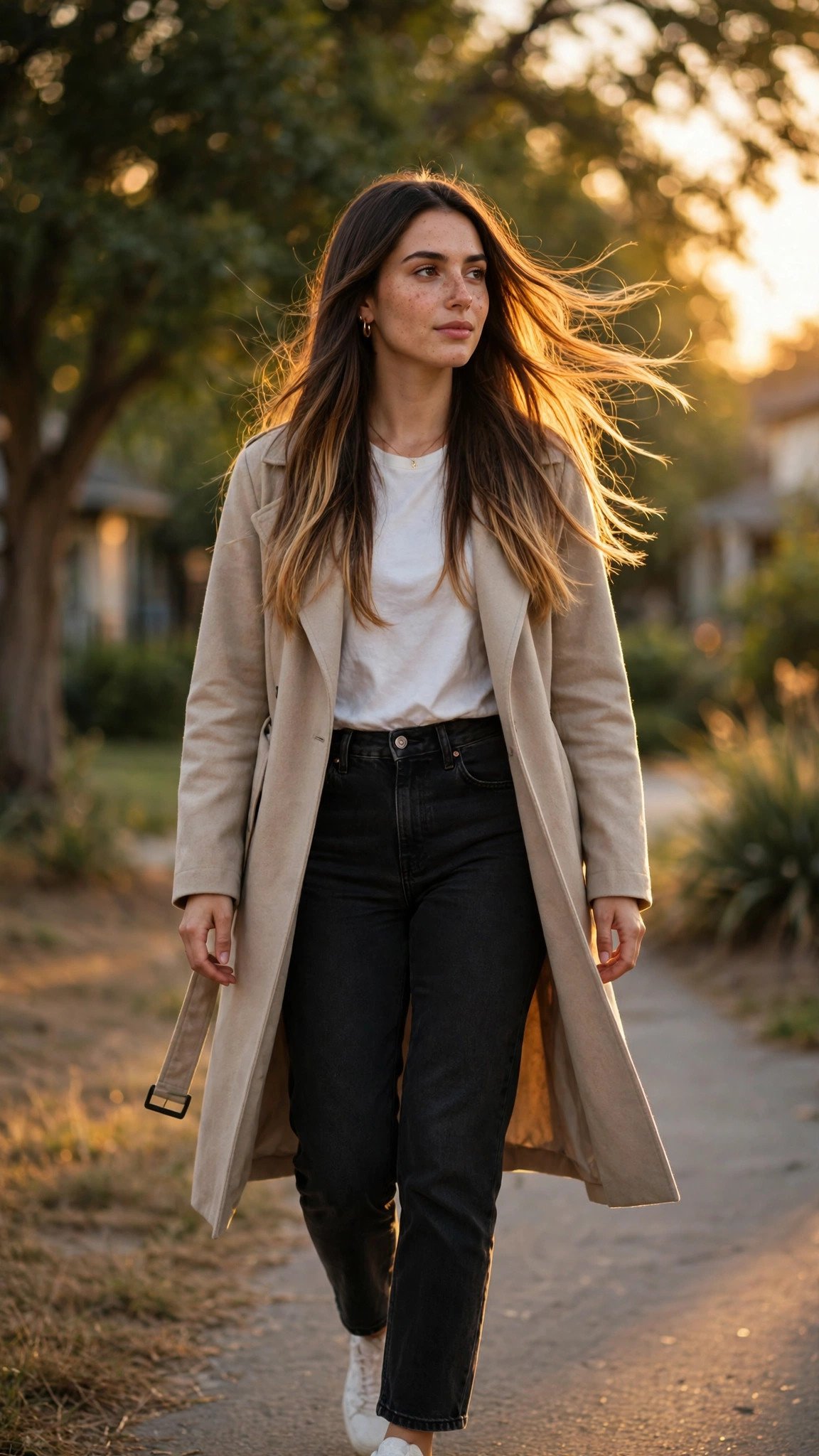
Golden ends are balayage at its simplest: your natural brown on top, and a wash of warm gold that appears gradually toward the bottom third of your hair. On long straight hair the effect is almost like a sunset gradient, because the straight fall shows the transition cleanly, and every step you take makes the gold catch the light. It suits anyone who loves dark roots and only wants lighter, softer, more playful ends.
Ask your stylist for a soft balayage that stays dark until the mid-lengths, then blends into golden ends about two levels lighter than your base. The transition should be diffused, not a line, so ask her to feather where the gold begins. A warm gold gloss keeps the ends honeyed, and a trim helps, because golden ends look best on healthy ends.
I once tried to get golden ends at home with a box kit, and the line where the colour started was so sharp it looked like I had dipped my hair in paint. The lesson was that balayage is a painting technique, not a dipping one, and the feathering at the top of the colour is the whole skill. In a salon, ask your stylist to blend more before she rinses.
Pro Tip: Golden ends need more care than the rest of your hair, so use a leave-in conditioner and a light hair oil on the ends only. That keeps them shiny and soft instead of dry and straw-like. A silk pillowcase helps too. This look costs about $180–$300, and it grows out for four to five months with only a gloss refresh.
See golden balayage for brunettes or how to care for coloured ends.
6. Ash Brown Cool Balayage on Medium Wavy Hair
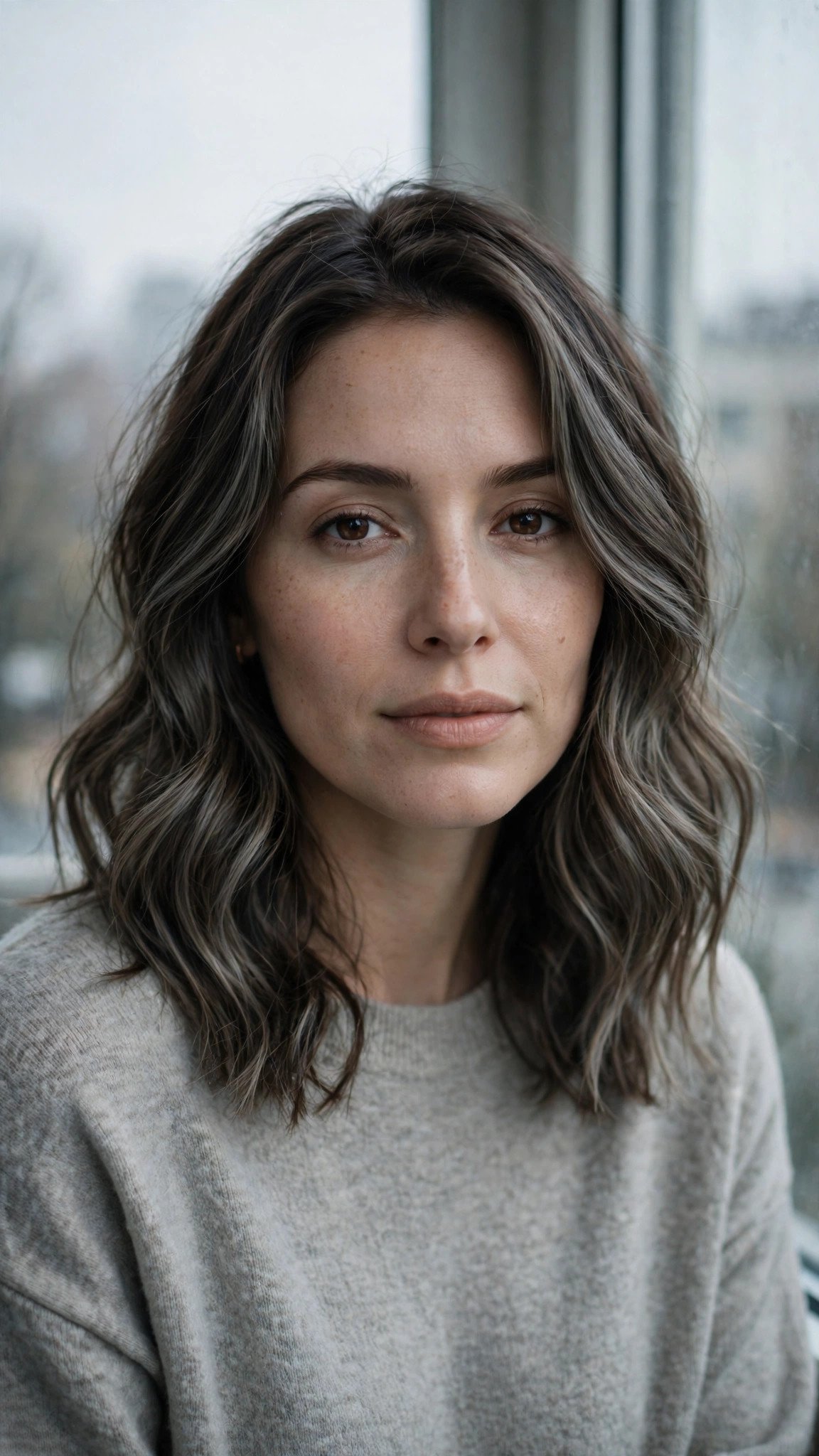
Not every brunette wants warmth, and ash brown balayage is the answer for those of us whose skin has cool undertones or who simply prefer a smoky, muted finish. Instead of caramel or honey, the lighter pieces are a cool taupe-brown, sometimes with the faintest hint of mushroom, painted through medium wavy hair so the waves show off the tonal shift. It looks modern, a little editorial, and completely different from the golden balayage you see everywhere.
Ask your stylist for cool ash brown balayage, one to two levels lighter than your base, with an ash toner to cancel any warmth that appears during lifting. Be honest about your hair history, because previously coloured or warm-toned hair fights ash more than virgin hair does. The placement should be soft and diffused, with the coolest pieces in the mid-lengths, so the overall effect is smoky dimension rather than grey streaks.
The mistake I made with ash balayage was washing it with a hot shower and a regular shampoo, and within three weeks the cool tone had faded to a warm, muddy brown. Ash is the hardest balayage tone to maintain, because warmth is always waiting underneath brown hair. A blue toning shampoo once a week, used sparingly, is the difference between keeping the cool finish and losing it.
Pro Tip: Book a toner refresh every six to eight weeks, which is sooner than warm balayage needs, and keep heat styling to a minimum. Cool water rinses really do help ash last longer. This look costs about $190–$320, and it grows out for three to four months, though the tone itself needs more frequent attention.
See ash brown hair ideas or cool-toned balayage for brunettes.
7. Toffee Ribbons on Long Curly Hair
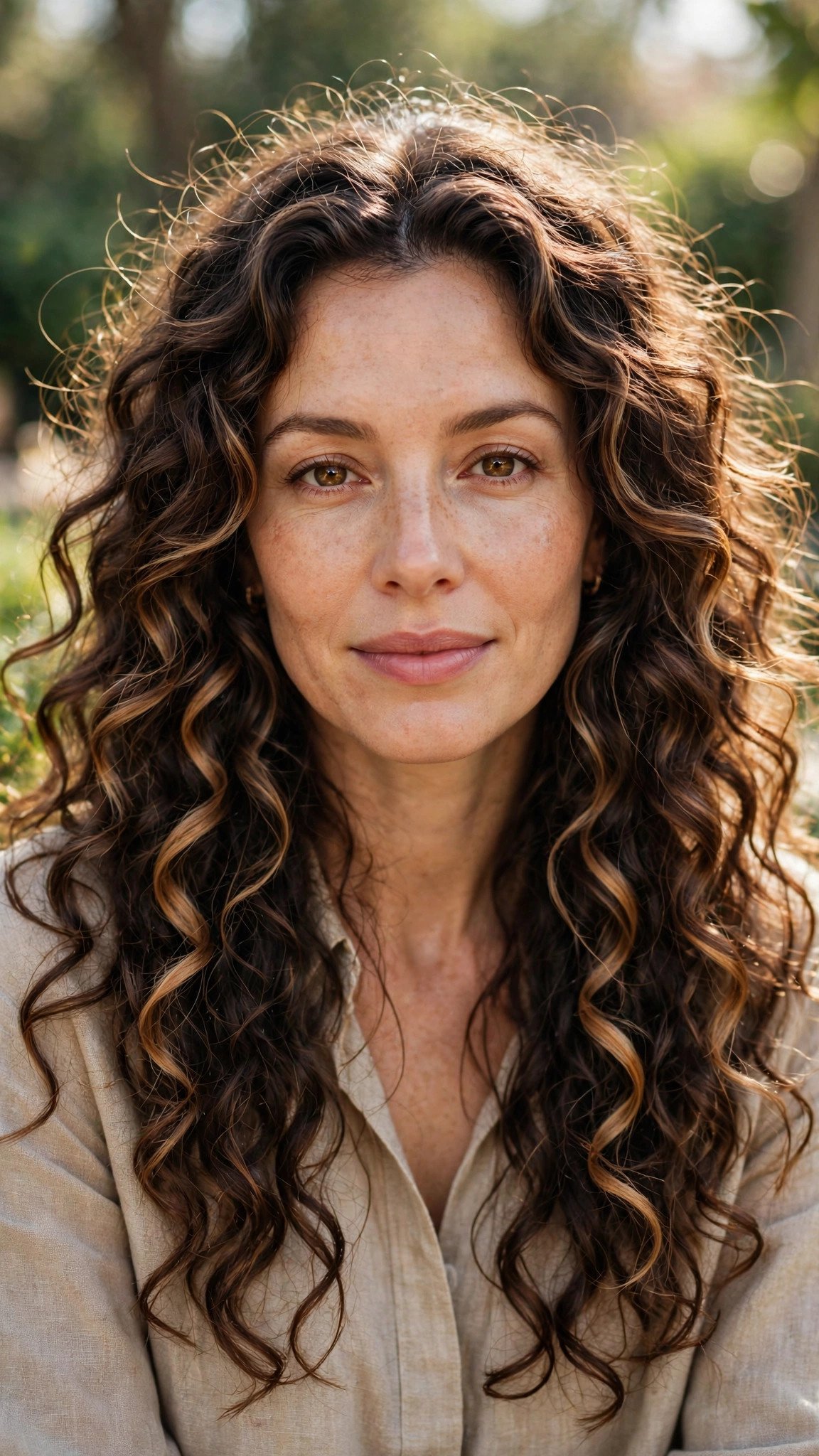
Curly hair and balayage were made for each other, because every curl is a tiny canvas that catches light differently. Toffee ribbons, painted in wide, soft pieces through long curls, create a ribbon effect that moves as you do, with warm toffee showing on the outer curves of each curl and dark brown hiding in the folds. The result looks completely natural, because it follows the shape your hair already makes.
Ask your stylist for balayage painted on dry, styled curls if possible, or at least for placement that follows your curl pattern rather than straight sections. Toffee is a warm, golden-brown shade, two levels lighter than your base, and the ribbons should be wider than babylights so they show up on thick curls. A curl-by-curl approach takes longer, so book extra time and ask for a gloss that will not weigh curls down.
The mistake I made with curly balayage was getting it painted on straightened hair, and when my curls sprang back, the colour landed in completely different places than planned. Some curls were all light, others all dark, and the effect was patchy. If your stylist wants to straighten your hair first, ask her to paint with your curl pattern in mind, or find a stylist who works with curly hair regularly, because placement is everything here.
Pro Tip: Use a curl cream and diffuse on low heat to keep the toffee ribbons defined, and refresh the gloss every ten weeks. Curly hair is naturally drier, so a deep mask is essential after lightening. This look costs about $200–$350, and it grows out beautifully for four to six months.
See balayage for curly hair or toffee hair colour ideas.
8. Subtle Copper Glow on Medium Wavy Hair

A subtle copper glow is balayage for brunettes who want warmth without going red. The copper is painted so softly through medium wavy hair that it reads as a warm, autumnal shimmer in sunlight and as rich brown indoors, so you can wear it all year. It suits warm and neutral skin tones beautifully, and it makes brown eyes look even warmer, which is a lovely bonus I did not expect the first time I tried it.
Ask your stylist for a copper-toned balayage, one to two levels lighter than your base, concentrated through the mid-lengths and ends with a few fine pieces around the face. The key word is subtle, so ask for a copper gloss rather than a copper dye, because a gloss adds tone without the commitment of a full red. If you are worried about going too orange, ask her to mix copper with caramel, which keeps the glow soft and wearable.
I once went too far with copper and ended up with hair that looked genuinely red in every photo, which was not what I wanted for work. A brown gloss fixed it, and taught me to start lighter with copper than I think I need. Copper builds easily, but it is much harder to tone down, so always ask for the softer version first and deepen it later if you love it.
Pro Tip: Copper fades fastest, so use colour-safe shampoo, wash less often, and use a copper-depositing conditioner every two weeks. That keeps the glow alive without a salon visit. This look costs about $170–$290, and it grows out for three to four months.
See copper balayage for brunettes or warm hair colour ideas.
9. Espresso-to-Caramel Blend on Long Wavy Hair

The espresso-to-caramel blend is the most dramatic look in this guide that still does not look dyed, because the change happens so gradually. Your roots stay deep espresso, almost black-brown, and the colour lightens in slow stages until the ends are a soft, milky caramel. On long wavy hair the gradient looks like a long exposure of sunlight, and it gives you the lightness of blonde ends without ever touching blonde at all.
Ask your stylist for a balayage melt, not an ombre, because a melt has no line at all. She should paint caramel through the ends, then use a mid-tone brown to bridge the espresso and the caramel, feathering each stage into the next. Bring photos of both the root colour and the end colour you want, because the middle tone is what makes or breaks this look. A gloss in a warm caramel shade will tie the whole beautiful blend together.
The mistake I made was asking for this look without the middle tone, and the jump from dark roots to light ends was so abrupt that it looked like grown-out dye. A good melt needs at least three tones, not two, and the stylist should spend as much time blending the middle section as she does painting the ends. If your appointment feels rushed, that blending step gets skipped, so book a longer session.
Pro Tip: This blend shows damage easily at the ends, so trim a centimetre every eight weeks and use a bond-repair treatment after colouring. The ends are lightest, and therefore most fragile. This look costs about $200–$340, and it grows out gracefully for four to six months.
See espresso balayage ideas or caramel melt hair colour ideas.
10. Mushroom Brown Dimension on Medium Straight Hair
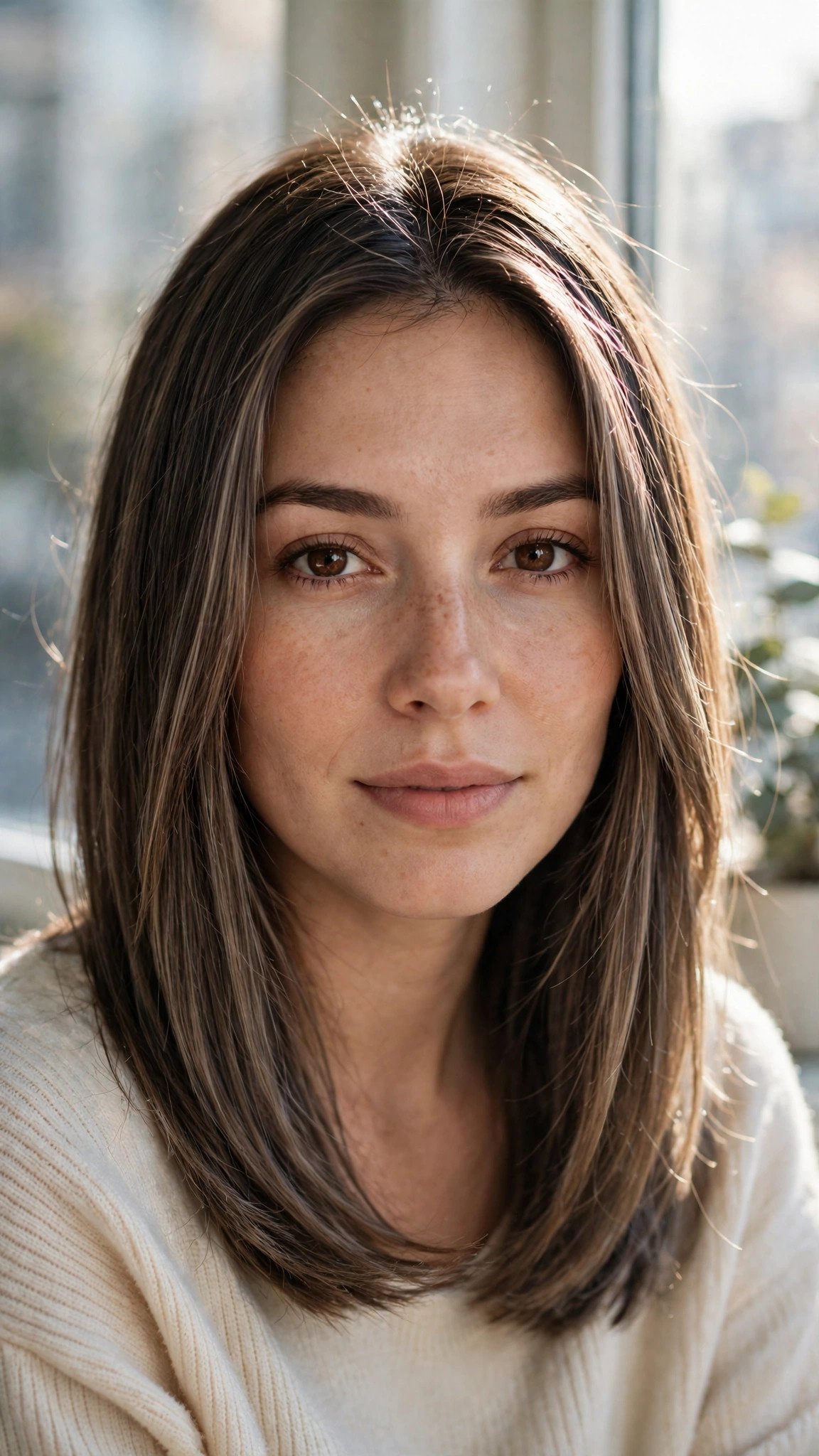
Mushroom brown is the cool, ashy cousin of regular brown balayage, and it is perfect for brunettes who find warm tones make their skin look flushed. The lighter pieces are a greyish taupe, like the underside of a mushroom, painted in soft, diffused ribbons through medium straight hair. It looks understated and expensive, and suits cool skin tones without any brassiness, even in bright daylight.
Ask your stylist for mushroom brown balayage, one level lighter than your base, with a cool ash toner and absolutely no gold in the formula. Straight hair shows placement clearly, so ask for very soft, feathered ribbons rather than bold pieces, and for the lightest colour to sit in the interior layers as well as on top. This is an advanced colour, so choose a stylist who has done mushroom brown before and can show you photos of her own work.
I once asked for mushroom brown and got a warm beige instead, because the stylist used a warm toner. The result was pretty, but it was not mushroom, and it taught me to use the exact words cool, ashy, and taupe in the consultation, and to ask what toner she plans to use. If she cannot name the toner, that is a sign to find someone more experienced with cool browns.
Pro Tip: Mushroom brown fades warm, so a blue toning shampoo once a week and a cool gloss every eight weeks are essential. Keep washes cool, short, and infrequent to protect the tone. This look costs about $190–$320, and it grows out for three to five months, though the cool tone needs regular refreshing.
See mushroom brown hair ideas or cool balayage for brunettes.
11. Butterscotch Highlights on Medium Layered Hair
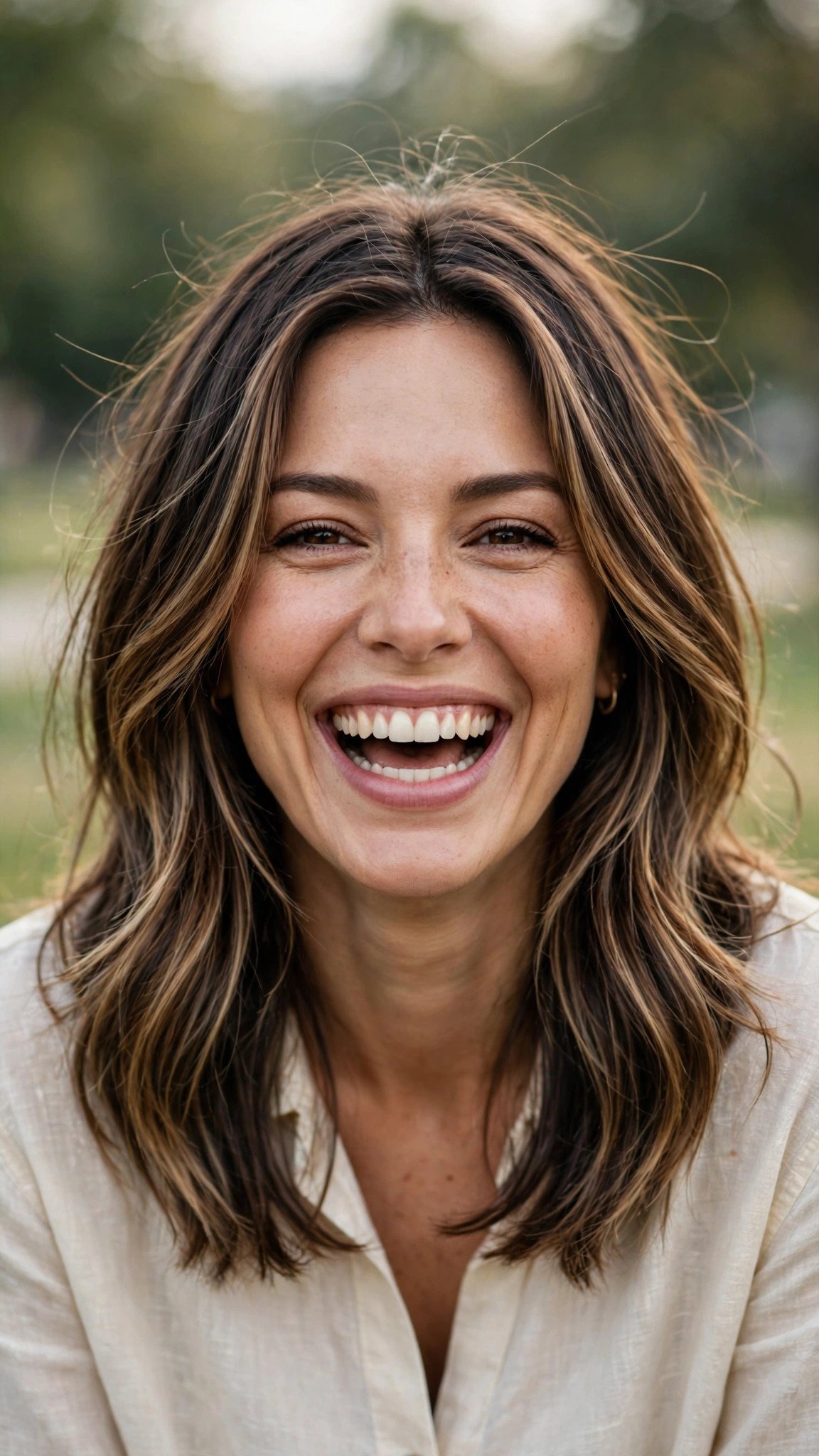
Butterscotch is caramel with a little extra butter, a warm golden-brown that looks delicious on medium layered hair. The layers are the secret here, because each layer catches a different ribbon of butterscotch, so your hair looks full of movement even when it is just hanging straight. It is a cheerful, sunny shade that works beautifully in spring and summer, but it is soft enough to wear all year, and the golden tone flatters warm skin beautifully in daylight, at brunch or at work, and in photos.
Ask your stylist for butterscotch balayage painted to follow your layers, with the lightest pieces on the ends of the top layers and softer ribbons underneath. The colour should be two levels lighter than your base, in a warm golden tone, and a gloss will keep it buttery rather than brassy. If your layers are choppy, ask for finer ribbons, because wide pieces can look stripey on short layers, while fine pieces blend into the movement.
The mistake I made with butterscotch was overdoing the lightness on the top layer, which made the underneath look dark by comparison and the whole cut look top-heavy. The fix was adding a few ribbons underneath at my next visit, which balanced everything. Always ask your stylist to paint the under-layers too, even if you think nobody sees them, because they show every time your hair moves.
Pro Tip: A round-brush blow-dry shows off butterscotch layers better than air-drying, because each layer’s curve catches light. Use a heat protectant and a light shine spray for a glossy finish. This look costs about $170–$290, and it grows out for three to four months.
See butterscotch hair colour or balayage for layered hair.
12. Cinnamon Spice Balayage on Long Wavy Hair
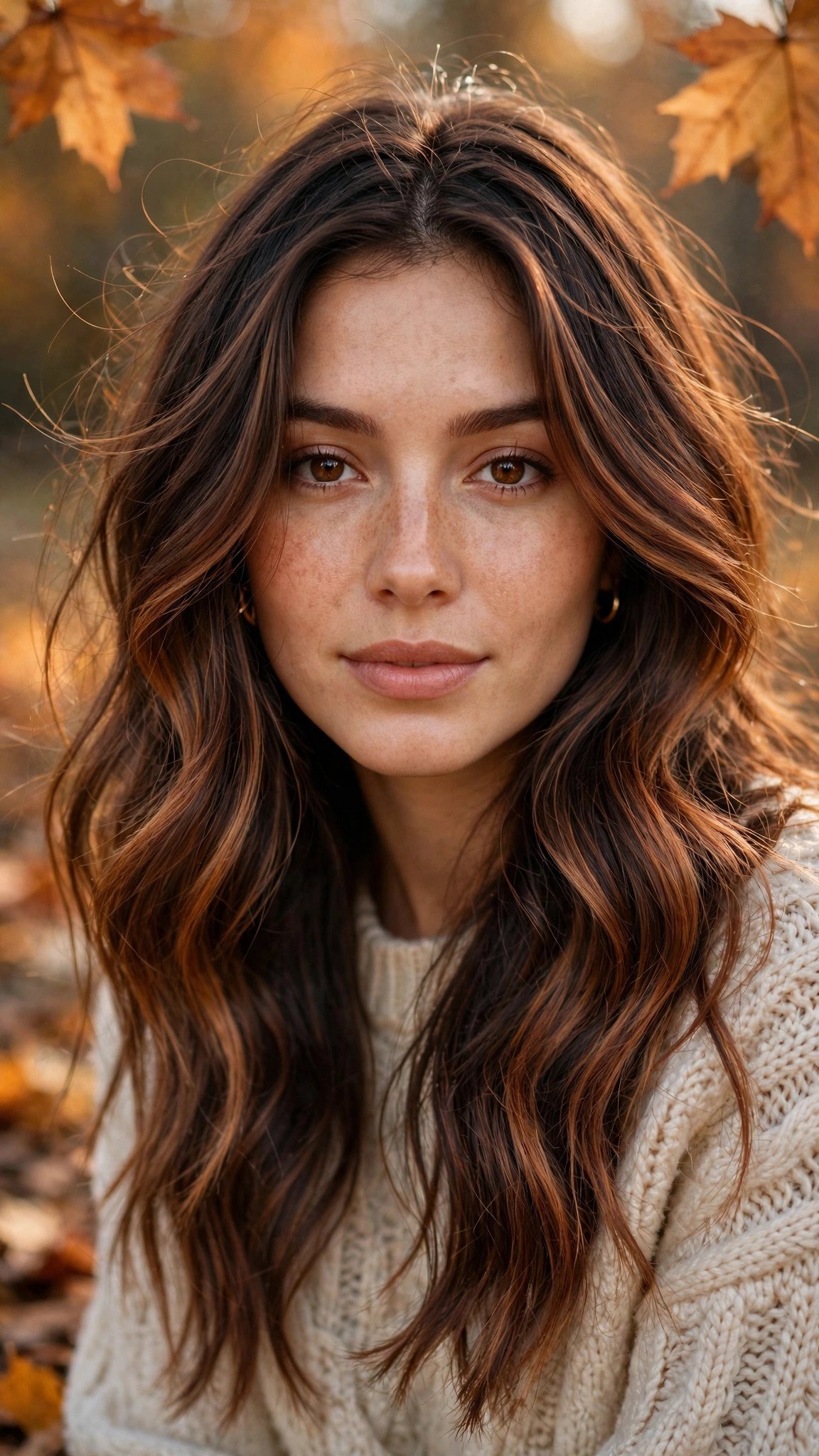
Cinnamon spice balayage is warm, rich, and a little bit spicy, like the difference between plain brown hair and brown hair with a dash of cinnamon stirred through it. The ribbons are a warm reddish-brown, painted through long wavy hair so the waves show the spice in every turn. It is the perfect autumn look, but it is soft enough that it never reads as red hair, just as brunette hair with a beautiful warm glow, and it is the cosiest colour in this guide.
Ask your stylist for a cinnamon balayage, one to two levels lighter than your base, with the colour concentrated through the mid-lengths and ends and a few fine pieces framing your face. Mix cinnamon with a brown base, not straight, so it stays spicy rather than turning copper. A warm gloss deepens the spice and adds shine; ask for one that leans brown rather than red.
I once asked for cinnamon and got a colour so red that my colleagues asked if I had dyed my hair red, which was the opposite of the subtle change I wanted. The lesson was to show a photo of cinnamon balayage specifically, not just say cinnamon, because the word means different things to different stylists. A photo removes the guesswork and keeps the spice at the level you actually want.
Pro Tip: Cinnamon fades faster than plain brown, so wash with cool water, use colour-safe products, and refresh with a cinnamon-toned gloss every eight weeks. A little fade is fine; it just becomes softer caramel. This look costs about $180–$300, and it grows out for three to four months.
See cinnamon hair colour for brunettes or autumn balayage ideas.
13. Sandy Brunette Sun-Kissed Balayage on Long Wavy Hair
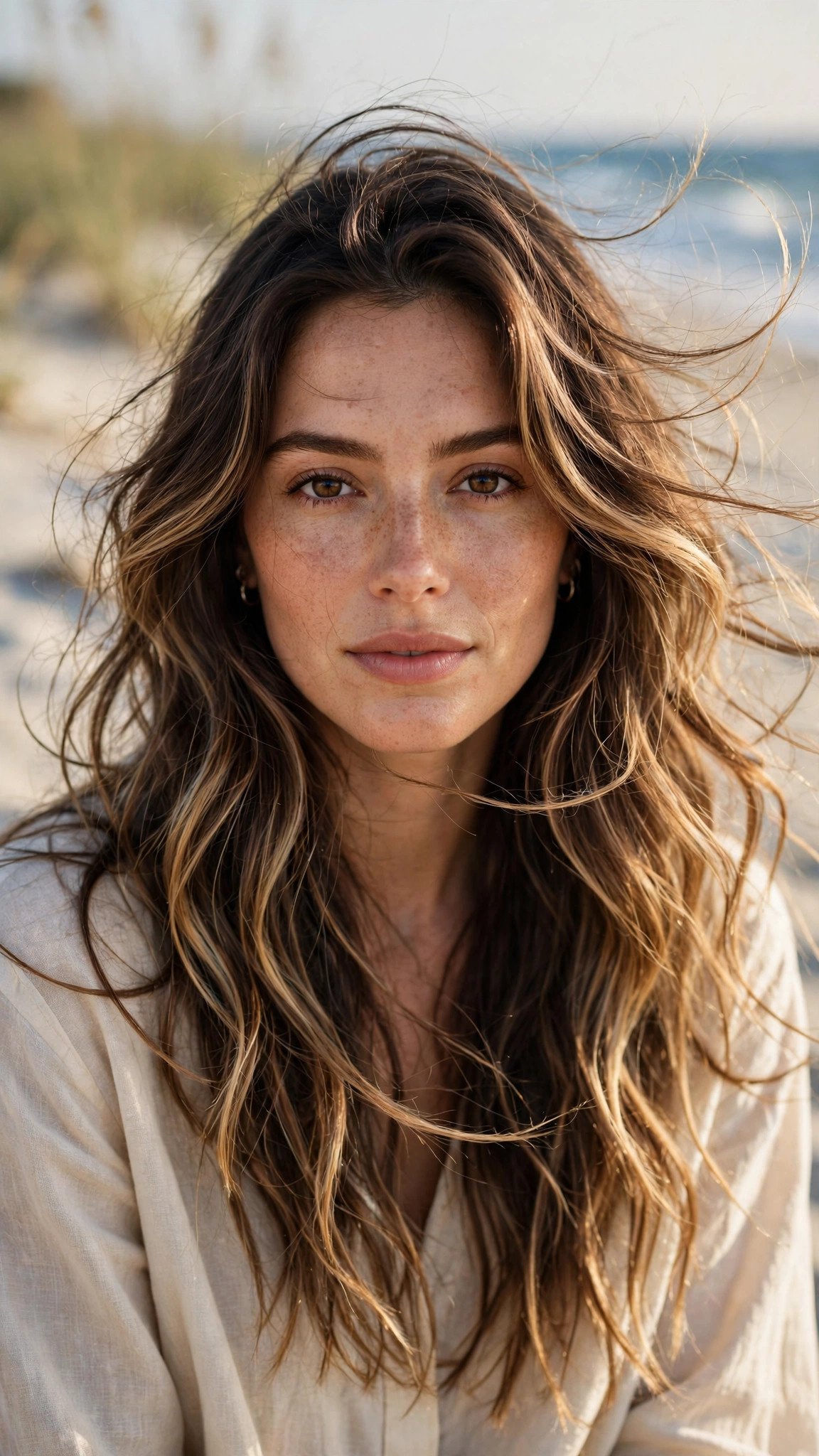
Sandy brunette balayage looks like you spent a month by the sea, even if you spent it at your desk. The lighter pieces are a soft, sandy beige-brown, painted through long wavy hair with a focus on the top layers where the sun would naturally hit. It is lighter and beachier than caramel, but still firmly brunette, which makes it the best choice if you want a summer feeling without going blonde.
Ask your stylist for sandy balayage, two levels lighter than your base, with a neutral to slightly warm toner so the sand does not turn grey or brassy. The placement should be heaviest on the crown and the ends, with softer ribbons underneath, mimicking the way sun lightens the top of your hair first. A gloss in a sandy beige will keep the colour soft, and salt spray styling will enhance the beachy texture, though it can dry hair out if overused.
The mistake I made with sandy balayage was choosing a tone that was too cool for my warm skin, and instead of looking sun-kissed I looked washed out. Sandy leans cool or warm, so hold the swatch next to your face in natural light before committing. If your skin is warm, choose a warm sand, and if it is cool, choose a neutral sand, because the undertone matters more than the lightness.
Pro Tip: Protect sandy balayage from the sun with a UV hair spray, because sunlight fades the sandy tone faster than any other shade here. A weekly mask keeps the ends soft after summer. This look costs about $180–$310, and it grows out for four to five months.
See sandy brunette hair ideas or sun-kissed balayage for brunettes.
14. Chocolate-Caramel Ribbon Bob
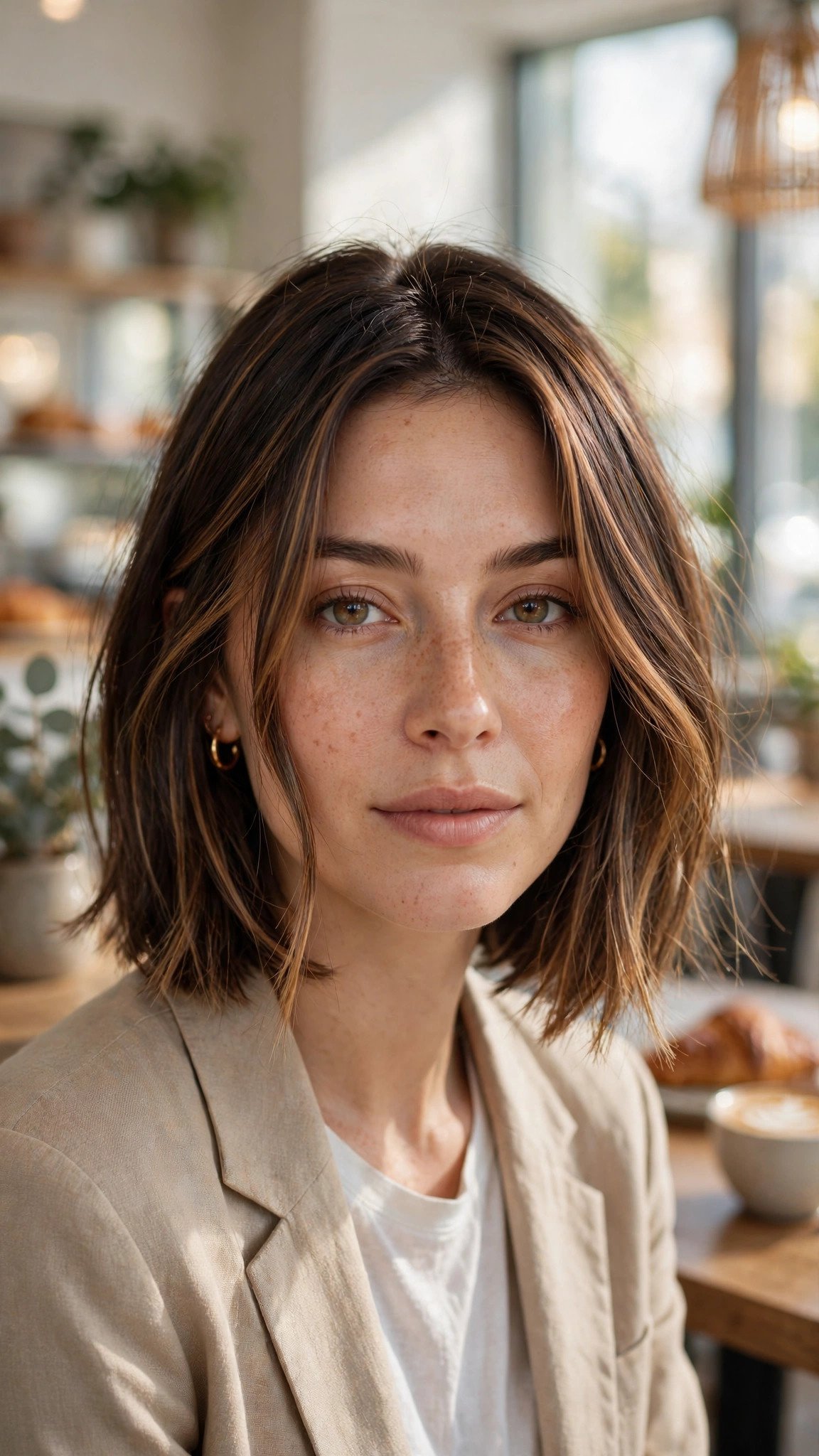
A chocolate-caramel ribbon bob is proof that short hair can carry balayage just as beautifully as long hair. The base stays a rich chocolate brown, and caramel ribbons are painted in wide, soft pieces that follow the curve of the bob, so the colour moves with the cut. It is polished enough for a date night, soft enough for every day, and makes a bob look intentional.
Ask your stylist for caramel ribbons on a chocolate base, two levels lighter, painted in pieces that are wider at the ends and feathered toward the roots. Because a bob has less length for blending, the feathering matters even more, so ask her to use a brush technique that diffuses the top of each ribbon. A gloss will blend the chocolate and caramel into one seamless shade, and a sleek blow-dry will show the ribbons at their best.
I once had a bob balayage painted too close to the roots, and the regrowth showed within weeks because there was no dark root to hide it. The fix was to ask for a root shadow at my next appointment, which is a darker gloss applied at the roots to soften the line. Now I always ask for the colour to start at least two inches from the root on a bob, because that distance is what makes the grow-out gentle.
Pro Tip: Use a flat iron to add a slight bend at the ends, which shows off the caramel ribbons, and use a shine serum sparingly so the bob looks glossy, not greasy. This look costs about $160–$260, and it grows out for three to four months.
See caramel bob ideas or balayage for short brunette hair.
15. Warm Honey Balayage on Long Straight Hair
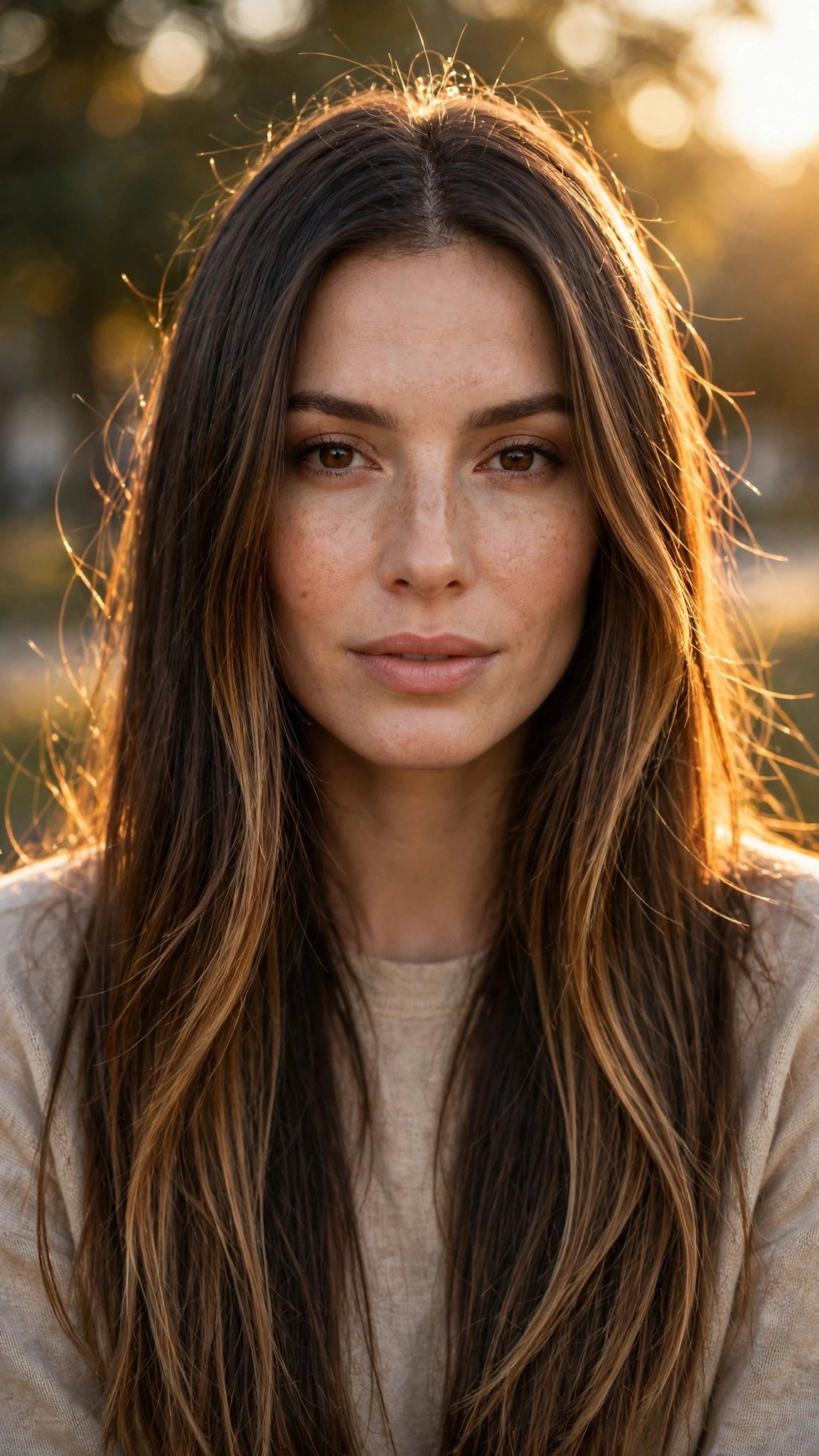
Warm honey balayage on long straight hair is the look I recommend when someone wants to feel like a different version of herself, but still herself. The honey is painted in long, soft ribbons from the mid-lengths down, so the straight fall shows a clean, glowing gradient, and the warmth brightens the whole face. It is ideal for a wedding guest, a holiday, or any occasion where you want your hair to look its best in photos.
Ask your stylist for warm honey balayage, two levels lighter than your base, with the ribbons painted in long, vertical sections that follow the way straight hair falls. The lightest pieces should be at the ends, with a gradual build-up, and a honey gloss will keep the tone golden rather than yellow. Because straight hair shows every line, ask for extra blending time, and do not rush the processing, since uneven lift is much more visible on straight hair than on waves.
The mistake I made with honey balayage was skipping the gloss, thinking the colour alone would be enough. Without a gloss, the honey looked flat and a little brassy in photos, and I regretted it for weeks. A gloss is not an upsell, it is the step that makes balayage look finished, and it is especially important on straight hair, where shine is the whole effect.
Pro Tip: A silk pillowcase and a weekly hair mask will keep honey balayage shiny and tangle-free, and a leave-in conditioner protects the ends from heat. This look costs about $190–$320, and it grows out for four to six months with a gloss refresh in between.
See honey balayage for long hair or warm blonde-brown hair ideas.
16. Soft Bronde Blend on Medium Wavy Hair
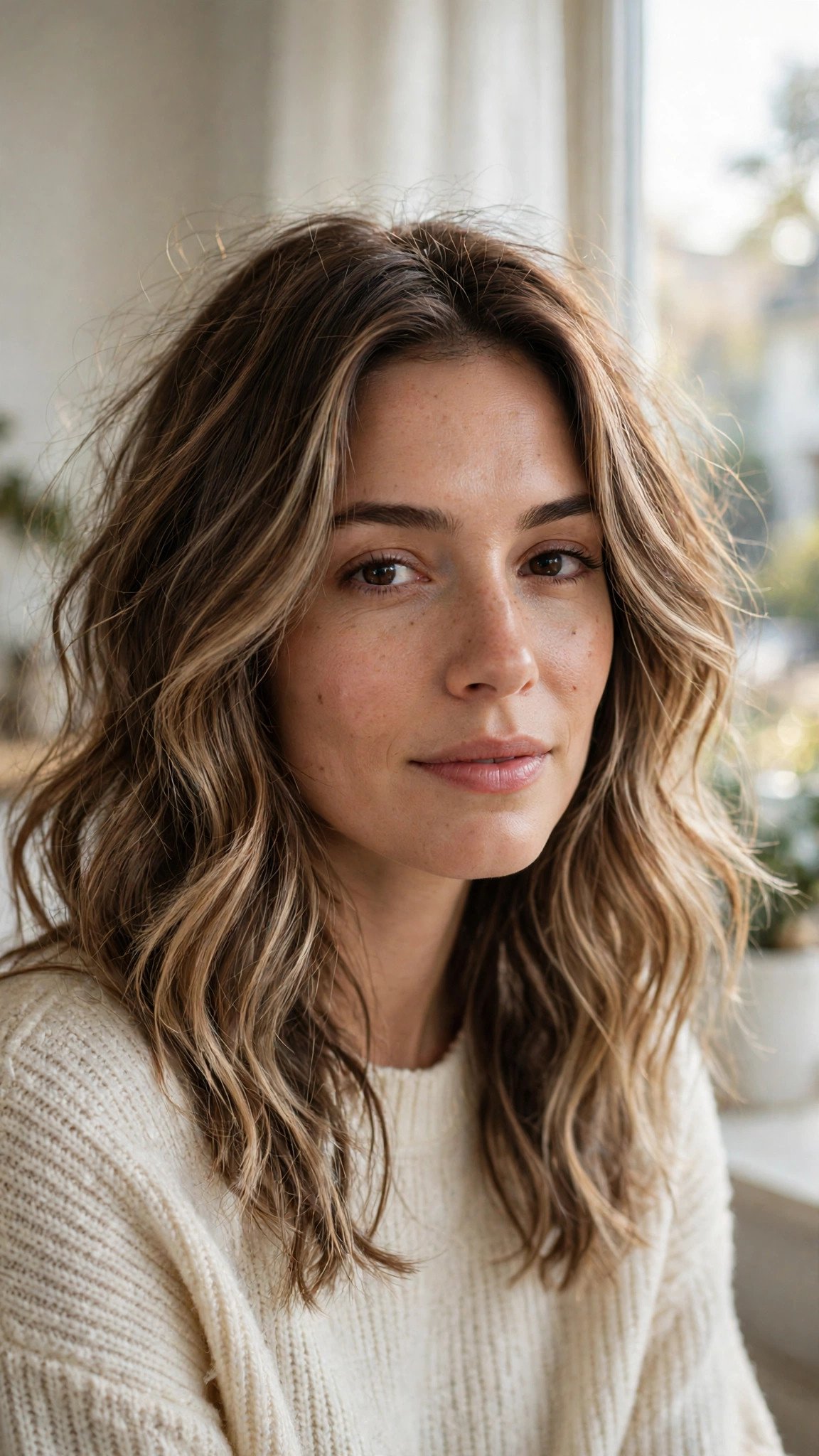
Bronde is the shade between brown and blonde, and a soft bronde blend is balayage for brunettes who want to go lighter without going blonde. The colour sits right on the borderline, a warm, light brown with golden undertones, painted through medium wavy hair so the waves show the blend. It looks like your natural colour, just a few shades lighter in the sun, and it is the most versatile look in this guide, suiting almost every skin tone and every season.
Ask your stylist for a bronde balayage, two to three levels lighter than your base, with a warm neutral toner that keeps the colour brown, not blonde. Placement should be soft and all-over, with no ribbon standing out, because bronde works as a wash of light. A gloss in a bronde shade will unify the colour, and it is worth asking for a slightly deeper root so the grow-out stays invisible.
I once asked for bronde and got a colour so light that strangers thought I was blonde, which was further than I wanted to go. The lesson was to ask for the darker end of bronde, and to tell my stylist that I still want to be read as a brunette. Bronde is a spectrum, and where you land on it matters, so be specific about staying on the brown side of the line.
Pro Tip: Bronde needs a purple shampoo used very sparingly, once every two weeks, to stop it turning brassy without making it ashy. A gloss every eight weeks keeps the blend soft. This look costs about $180–$310, and it grows out for four to five months.
See bronde hair ideas or brown-blonde balayage for brunettes.
17. Caramel Money Piece and Mid-Lengths on Long Wavy Hair
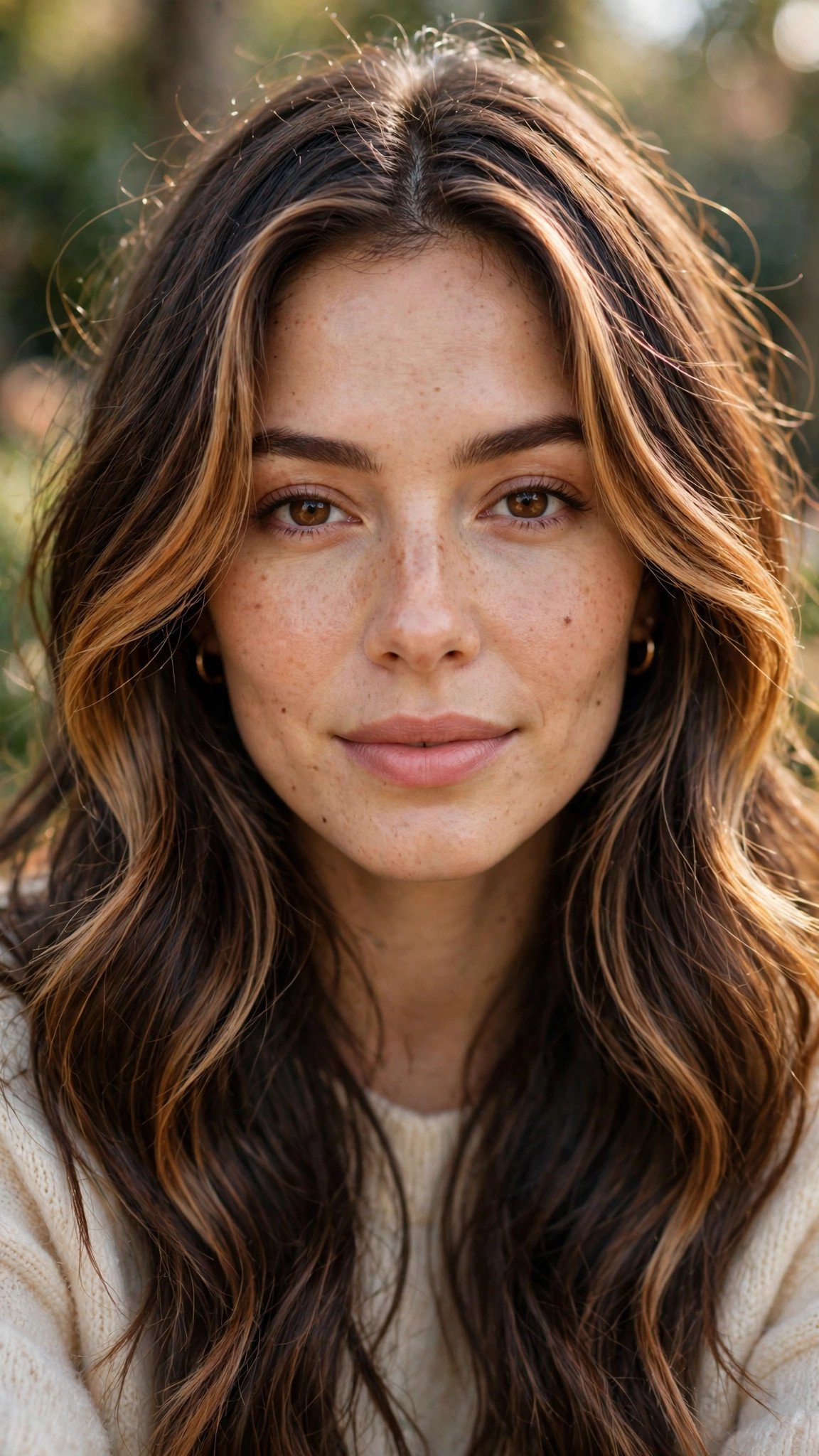
The money piece is the brightest ribbon in balayage, the face-framing section that acts like a highlight for your whole face, and pairing it with soft caramel through the mid-lengths gives you the best of both worlds. The money piece brightens your complexion instantly, while mid-length ribbons keep the rest of your hair from looking flat. On long wavy hair, the combination looks effortless, like the sun found your face first and your hair second.
Ask your stylist for a caramel money piece, two levels lighter than your base, painted in a fine, soft section right at the hairline, plus caramel ribbons through the mid-lengths that are one level lighter. The money piece should be the lightest part, but not by much, because a big contrast looks stripey. Ask her to feather the top of the money piece into your roots and keep the ribbons underneath softer.
The mistake I made was asking for a money piece that was too wide and too blonde, and it looked like a headband of light around my face. A money piece should be about an inch wide, not three, and it should be only slightly lighter than the rest of your balayage. If your stylist suggests going bold, ask for the subtle version first, because you can always brighten it at your next visit.
Pro Tip: Style the money piece with a loose wave away from your face, which shows the caramel at its best, and use a heat protectant every time. A gloss refresh will keep the money piece honeyed. This look costs about $170–$290, and it grows out for three to four months.
See money piece balayage ideas or caramel face-framing highlights.
18. Low-Maintenance Rooted Balayage on Long Wavy Hair
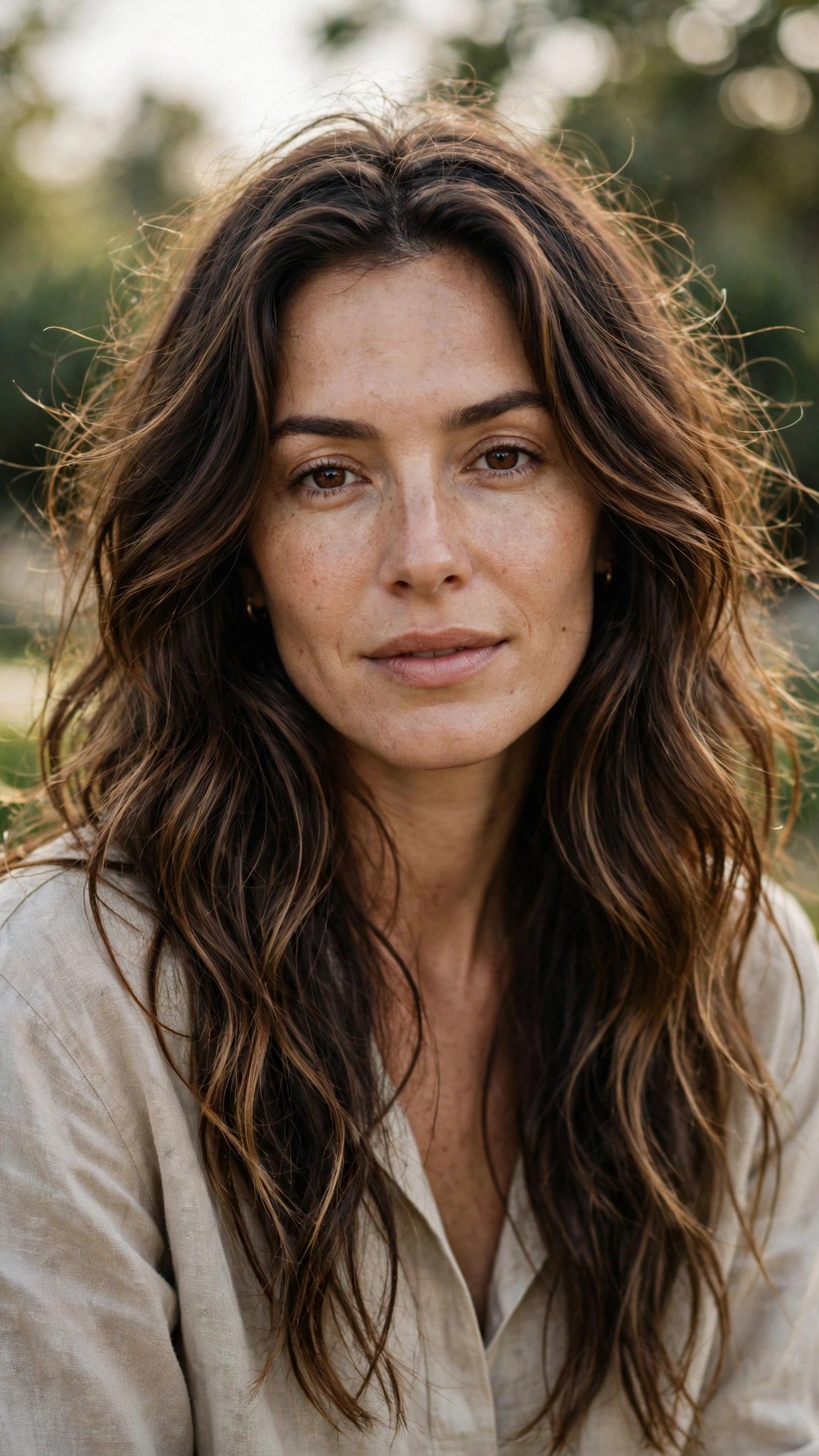
Low-maintenance rooted balayage is the look I recommend to every busy brunette, because it is designed to be forgotten about. Your roots stay your natural colour, sometimes deepened with a root shadow, and the balayage starts low, around the cheekbones or lower, so regrowth is invisible for months. It is the lived-in look that made balayage famous, and on long wavy hair it looks like you have always had dimension, without ever sitting in a salon chair for hours.
Ask your stylist for a rooted balayage with a root shadow in your natural shade, and caramel or honey ribbons starting low through the mid-lengths and ends. The key is the distance between your roots and the colour, so be clear that you want at least three inches of natural root showing. A gloss will blend the root shadow into the balayage, and the whole appointment should feel relaxed, because there is no precise line to maintain.
The mistake I made with rooted balayage was booking a touch-up too soon, out of habit from my old highlight routine. I went back after eight weeks, and my stylist told me honestly that nothing needed doing, which saved me money and saved my hair from unnecessary lightening. Rooted balayage is meant to be left alone, so only book a gloss when the tone fades, not when roots show.
Pro Tip: This is the cheapest balayage over a year, because you may only need one full appointment annually, plus a gloss every three months. Use a colour-safe shampoo and a mask, and let your natural roots do the work. This look costs about $180–$300, and it grows out for five to six months, the longest in this guide.
See low-maintenance balayage or lived-in hair colour for brunettes.
Getting Started With Soft Balayage for Brunettes
Start by picking one tone. Caramel, honey, and mocha are the most forgiving first shades, while ash and mushroom need more upkeep, so start warm. Bring three photos of the tone on hair like yours, because a photo says more than any colour name.
The most common beginner mistake is asking for colour that is too light, too soon. Two levels lighter looks natural, while four levels lighter in one session often turns brassy. The second mistake is skipping the gloss, which blends the ribbons and adds shine, so always book it.
Buy a colour-safe shampoo, a weekly mask, and a heat protectant first, for about $30–$50. Cool and copper tones need a weekly toning shampoo. A full balayage takes two to three hours and costs $150–$350; a gloss refresh takes 45 minutes and costs $40–$80.
Frequently Asked Questions
What is the best soft balayage for brunettes who have never coloured their hair?
A caramel melt or honey face-framing ribbons, one to two levels lighter than your base. Both look natural, grow out softly, and need a touch-up every three to four months. Start subtle, because you can always go lighter next time.
How much does soft balayage for brunettes cost?
A full balayage costs about $150–$350, while a gloss refresh costs $40–$80. Balayage grows out softly, so most brunettes spend less over a year than on highlights.
How long does soft balayage last on brown hair?
Soft balayage lasts three to six months before a full touch-up, with no hard regrowth line. Warm tones hold longest, while ash, mushroom, and copper fade faster and need a toner every six to eight weeks.
Will balayage damage my brunette hair?
Balayage is gentler than a full colour or highlights: only selected pieces are lightened and roots stay untouched. Some dryness is normal on lighter ends, so use a weekly mask and bond repair after colouring.
Can I get soft balayage on short hair or curly hair?
Yes. On a bob, ask for fine ribbons starting two inches from the root, like #3 or #14. On curly hair, ask for placement that follows your curl pattern, like #7.
A Few Final Thoughts
The best soft balayage for brunettes does not look dyed, and that is the whole point. Across these 18 looks, the pattern is simple: keep your dark roots, add light only where the sun would touch your hair, and finish with a gloss. Whether you choose honey around your face or a full caramel melt, your hair will look brighter. Pick one look and book a consultation.