
Fine hair on a toddler can look wispy one day and flat the next, and the wrong cut makes both worse. The right one gives thin strands body, hides a stubborn cowlick, and survives nap-hair, hats, and a surprising amount of applesauce. Below are 25 toddler boy haircuts for fine hair, each with the exact wording to use at the salon, how long it lasts, and the mistake to skip. Some need a trim every four weeks and some almost no upkeep, so there’s a cut for every kind of morning. Ready? Let’s explore all 25 of them.
Quick Answer: For most fine-haired toddlers, a scissor-cut short crop (about 1 inch on top) or a soft taper is the safest pick, because blunt ends make thin hair look thicker. Choose a buzz or uniform clipper cut if you want almost zero styling, and a side-swept fringe if you’re growing hair out. Plan a trim every 5-6 weeks for most of these.
Why Toddler Boy Haircuts for Fine Hair Are Worth Your Time
Fine hair describes the width of each strand, not how much hair your son has. A toddler can have plenty of hair that is still silky-thin, which is why it tends to lie flat, tangle at the nape, and show every cowlick. The cut matters more here than product does, because there’s very little hair texture to hide a poor trim.
The practical payoff is real. A blunt, well-shaped cut makes hair look denser within one appointment, and it cuts morning styling to under a minute. Shorter shapes also stay cleaner around mealtimes and sunscreen, which matters more with a two-year-old than you’d expect.
One lesser-known fact: toddler hair often changes texture between ages two and five. Fine, straight hair can turn wavy or noticeably thicker, so a cut that works now may need adjusting in a year. Don’t lock into one style for long.
This guide suits parents of babies on their first haircut, toddlers with cowlicks, and boys who sit still for about eight minutes at most. It’s less suited to hair that is patchy or falling out, because that’s a question for your pediatrician rather than a stylist.
At a Glance
- Blunt scissor cuts make fine toddler hair look fuller than thinned or heavily layered ones.
- Most cuts here need a trim every 4-6 weeks, and buzz cuts can stretch to 8.
- Water-based, fragrance-free products only, and a pea-sized amount at most.
- Cowlicks behave better when you keep the top 1-1.5 inches long and weighted.
- Salon prices for kids’ cuts usually run $15-$35, and many shops offer a free first haircut keepsake.
| Style | Best Face Shape | Hair Type | Maintenance | Length |
| Classic Short Crop | Oval, round | Straight | Every 5-6 weeks | 1 inch top |
| Soft Taper | Oval | Straight, wavy | Every 4-5 weeks | 1.5 inches top |
| Textured Fringe Crop | Round, square | Straight | Every 5 weeks | 1.5 inches top |
| Side-Part Comb Over | Oval, long | Straight | Every 4 weeks | 2 inches top |
| Low Skin Fade | Round, oval | Straight, wavy | Every 3-4 weeks | 1.5 inches top |
| #2 Buzz Cut | Oval, square | Any | Every 8 weeks | 1/4 inch |
| Short Caesar | Oval, long | Straight | Every 6 weeks | 3/4 inch fringe |
| French Crop | Oval, heart | Straight | Every 5 weeks | 1.5 inches top |
| Ivy League | Oval, square | Straight | Every 4-5 weeks | 2 inches top |
| Layered Mop Top | Round, oval | Straight, wavy | Every 8 weeks | 3 inches |
| Short Tousled Waves | Oval | Wavy | Every 6 weeks | 2 inches |
| Soft Ear-Length Cut | Oval, long | Straight | Every 8-10 weeks | 3-4 inches |
| Side-Swept Fringe | Round, oval | Straight | Every 6 weeks | 2-3 inches |
| Crown Cowlick Cut | Any | Straight, cowlick | Every 5 weeks | 1 inch |
| Uniform Clipper Cut | Any | Any | Every 6 weeks | 1/2 inch |
| Wisp-Trim First Cut | Any | Baby-fine | Once only | Under 1 inch |
| Summer Clip Cut | Oval, round | Straight | Every 4 weeks | 1/2 inch |
| Mini Quiff | Oval, long | Straight | Every 5 weeks | 2 inches |
| Disconnected Top | Oval | Straight | Every 4 weeks | 2 inches |
| Neat Surfer Cut | Long, oval | Straight, wavy | Every 8 weeks | 3-4 inches |
| Curtain Fringe | Oval, heart | Straight | Every 6 weeks | 3 inches |
| Short Mullet | Round, oval | Straight, wavy | Every 8 weeks | 2 inches + back |
| Soft Spiky Top | Round | Straight | Every 5 weeks | 1.5 inches |
| Round-Face Height Cut | Round | Straight | Every 4 weeks | 2 inches |
| Holiday Photo Trim | Any | Any | One visit | Varies |
1. Classic Short Crop: The Safest Toddler Boy Haircut for Fine Hair
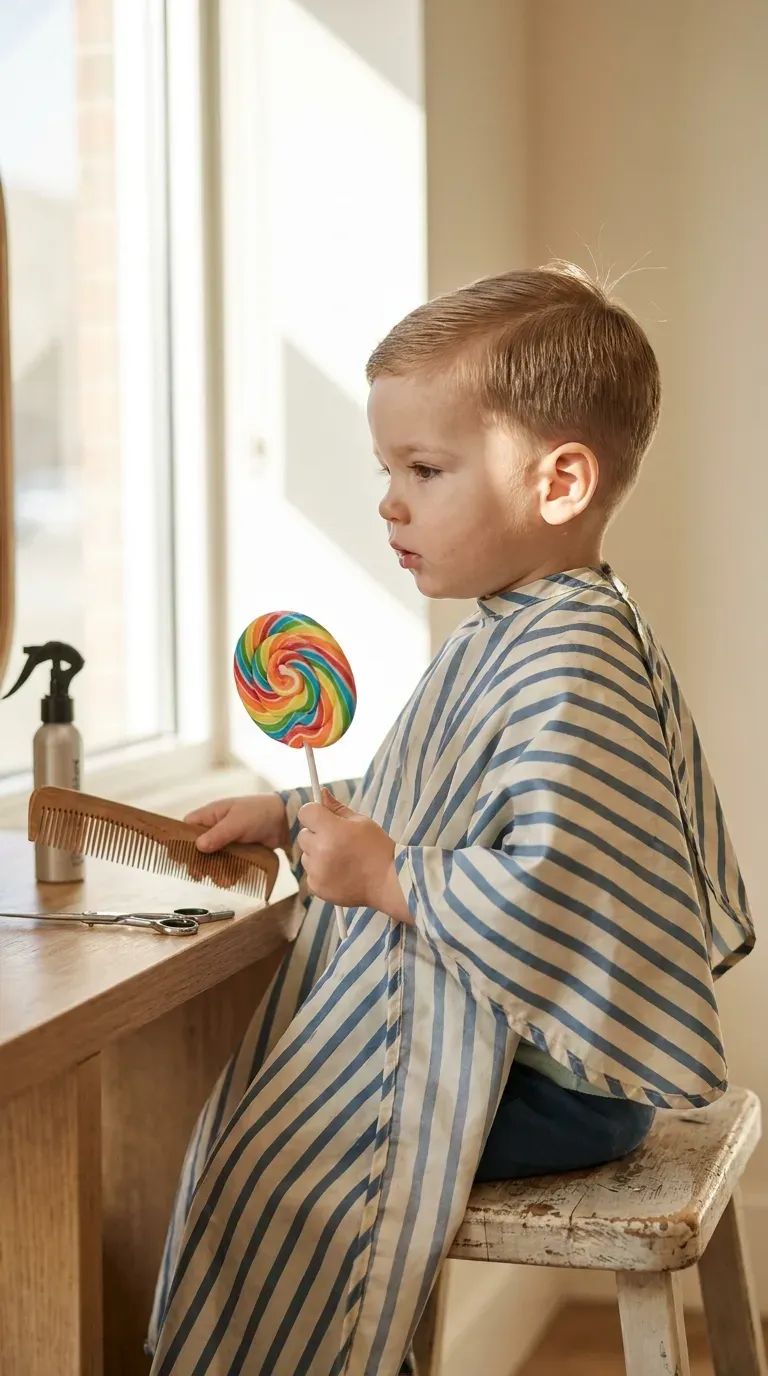
A scissor-cut crop leaves about 1 inch on top and slightly shorter sides, and it’s the easiest way to give thin strands some weight.
Ask for “scissor over comb, one inch on top, sides a half inch shorter, no thinning shears.” Thinning shears remove bulk that fine hair doesn’t have to spare. My nephew’s first crop looked wispy until the stylist squared off the ends, and the difference was visible in the mirror right away.
Expect a trim every 5-6 weeks and a price of $15-$25 at most kids’ salons. Dry hair with a towel pat rather than a rub, since friction frizzes thin strands.
Pro Tip: Book the appointment right after a nap, not before one. A calm toddler sits still for about ten minutes, and that’s enough time for a precise cut.
See more boys’ haircut ideas on our site, and GQ’s grooming section covers what to ask a barber. This cut rarely goes wrong, so start here.
2. Soft Taper With a Longer Top for Fine Hair

A taper keeps the sides and nape short but leaves about 1.5 inches on top, which gives fine hair a little height without bulk.
- Ask for: a number 3 or 4 guard fading into the top, blended by hand.
- Works best on: straight to slightly wavy hair.
- Avoid: a hard line at the temples, which looks stark on a toddler.
In practice, a taper grows out more gracefully than a crop because the shape stays even for about six weeks. Trim every 4-5 weeks if you want it sharp.
For fine hair, the longer top is the point. Cutting it too short removes the only weight the hair has. Read GQ’s grooming guides to learn how barbers describe tapers, and browse our short haircut ideas for more.
3. Textured Fringe Crop

This cut keeps the fringe about 1.5 inches long and slightly uneven, so a bit of movement shows without any product.
Ask your stylist for “point cutting on the fringe.” That technique chips into the ends so they sit softly, instead of lying in a flat line across a small forehead. It also hides a slightly crooked hairline.
I’ve found a pea-sized dab of water-based cream on damp hair is plenty, and anything heavier flattens fine strands within an hour. Trim every five weeks, usually around $20.
Pro Tip: Skip wax and gel on a toddler. They weigh fine hair down and can irritate small scalps, whereas a light leave-in spray gives the same lift.
Our easy toddler haircut ideas cover more fringe options, and Allure’s hair section explains texturizing. A messy fringe is the forgiving kind, which suits an active toddler.
4. Side-Part Comb Over for Neat Fine Hair
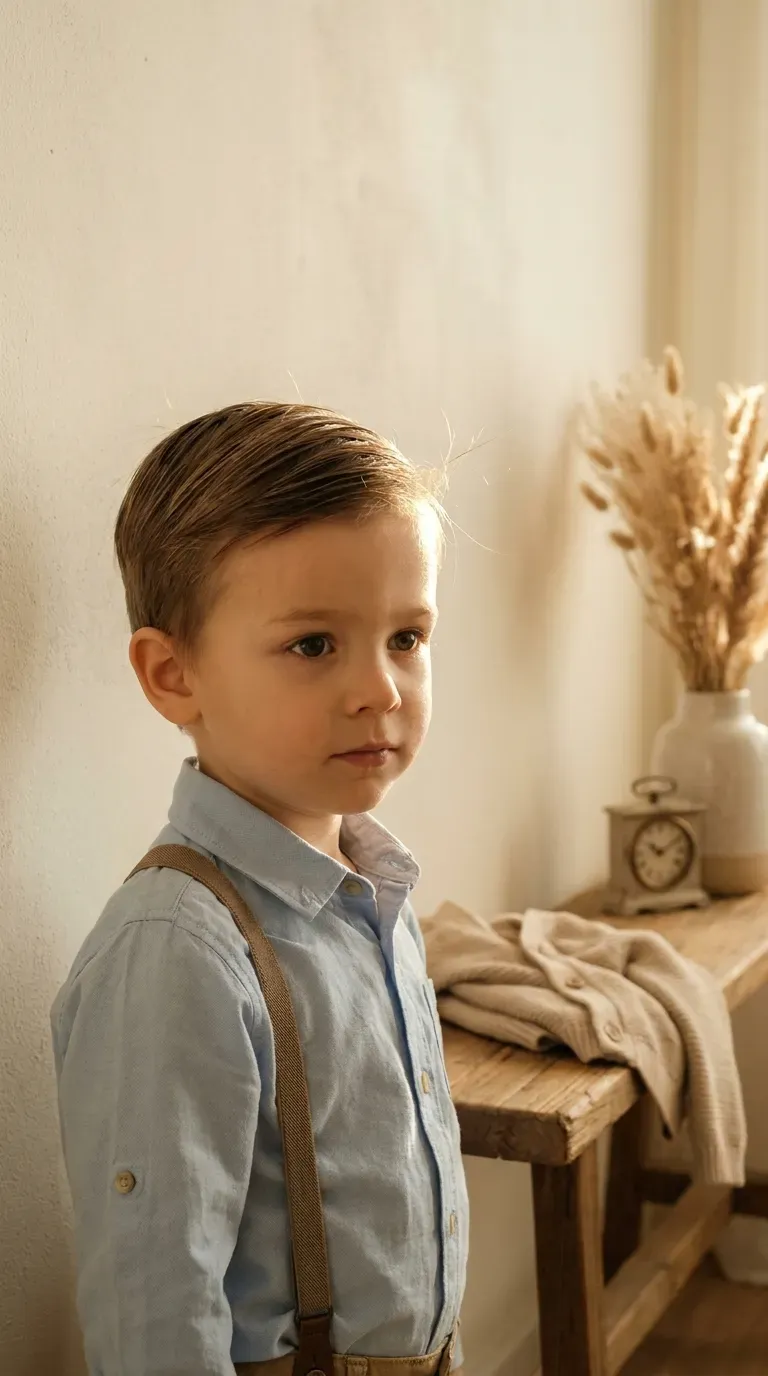
A side part with 2 inches on top and short sides is the dressed-up option, and it works at weddings and Sunday lunch alike.
The key is finding the natural part. Wet the hair, let it fall, and the line it makes on its own is where to cut. Forcing a part against the grain means it flops back within minutes, especially with fine hair that has little grip.
Use a wide-tooth comb on damp hair and a spray of water to set it, then let it dry. Trim every four weeks to keep the side lines clean.
Browse boys’ wedding hairstyle ideas on our site. Esquire’s grooming pages explain how parts frame the face. This cut takes thirty seconds a morning.
5. Low Skin Fade With a Blended Top

A low fade shaves the hair around the ears and nape to the skin, then blends into 1.5 inches on top. It reads sharp, but it’s gentler than it sounds on a toddler.
Ask for a “low skin fade, number 1 guard at the bottom, blended into a scissor-cut top.” Barbers who work with kids will go slowly and use quiet clippers, and I’d recommend asking whether they have a quiet pair.
Fades grow out faster on fine hair, so plan a trim every 3-4 weeks and expect $20-$30. The payoff is a very clean neckline that stays tidy.
Pro Tip: Fine hair shows scalp through short fades, so keep the top longer than you’d choose on thick hair. The extra length covers the contrast.
See our fade haircut guide for boys, and check GQ’s grooming pages for fade terminology. It’s a cut for a patient toddler, so test it on a calm day.
6. Number 2 Buzz Cut for Easy Mornings

A number 2 guard leaves about a quarter inch all over, and it removes every styling question.
- Best for: toddlers who hate brushes, and summer.
- Not ideal for: fine hair with a very pale scalp, since sunscreen is needed on the scalp.
- Upkeep: every 6-8 weeks, and home clippers cost about $25-$40.
At-home buzzing is doable if you use a guard and go against the grain, but test the clippers on your own arm for noise tolerance. A toddler who is scared of them will wiggle.
Fine hair looks sparser when buzzed short in strong light, so use a number 3 if you prefer a softer look. Our low maintenance haircuts for boys guide has more, and Allure on buzz cuts is a useful reference. No product, no comb, no fuss.
7. Short Caesar Cut With a Forward Fringe

The Caesar is cut short all over with a fringe of about three-quarters of an inch combed forward, and it hides a high forehead.
Ask for “even length with a short forward fringe, cut straight across.” Fine hair sits flat against the forehead naturally, so it needs no styling. In my experience this is the cut that looks best on day one and day thirty.
Trim every six weeks. If the fringe starts curling at the ends, that’s your cue, since fine hair curls under when it gets slightly too long.
Pro Tip: Cut the fringe when hair is dry on a toddler. Wet fine hair stretches, and it springs up shorter than planned once it dries.
Our toddler haircuts guide has similar options, and Esquire on grooming shows the Caesar on adults. A simple choice that barely needs thought.
8. French Crop With a Blunt Fringe

The French crop is short on the sides with a straight-across fringe about an inch long, and the clean line frames the face.
Ask for “short back and sides with a blunt, straight fringe, half an inch above the eyebrows.” The blunt edge makes fine hair look thick, since no thin tips show.
It suits oval and heart-shaped faces, and it’s a good bridge for a toddler growing out a buzz cut. I’d recommend it for kids with straight, flat hair rather than wavy, because waves break the clean line.
Trim every five weeks, about $18-$25. Our French crop ideas include more, and Vogue’s beauty section shows how this look appears in fashion shoots. A tidy shape for small foreheads.
9. Ivy League Cut for Straight Fine Hair

An Ivy League cut is a tapered side with a longer top, about 2 inches, that can be parted or brushed over.
It’s the stronger cousin of the comb over, and it works for photos. Ask for “scissor-cut top, taper the sides with scissors over the comb, leave the length at the front for a side part.” The scissor work avoids the harsh lines clippers can leave on thin hair.
I tried this on a three-year-old who normally refused combs, and a light spritz of water plus a soft brush calmed him down. It needs a trim every 4-5 weeks and costs $20-$30.
Pro Tip: Brush the top forward first, then sweep it to the side. That tiny step builds a base lift that lasts hours on fine strands.
See our preppy boys’ haircut ideas and Esquire’s grooming guide. It’s the polished option when you need him to look his best.
10. Layered Mop Top

A mop top has about 3 inches of soft length all over, with light layers around the crown to stop fine hair from lying flat.
- Ask for: “one-length with a few long layers, no short sections.”
- Works best: on straight or wavy fine hair.
- Avoid: heavy layering, which leaves thin ends and a stringy look.
A realistic timeline: expect 8 weeks between trims, and a bit more if you don’t mind the shaggy stage. The messy look is part of the appeal, and bedhead reads as intentional.
Detangle with a wide-tooth comb from the ends upward, since fine hair knots at the nape. Our long hairstyles for boys page has related ideas, and Byrdie’s hair articles cover detangling tools. It’s the cut for easy-going mornings.
11. Short Tousled Waves

Fine hair with a slight wave looks best when the cut is left a little undone, about 2 inches long all over.
Tell the stylist, “keep it soft, don’t cut too short, I want the waves to show.” Cutting too close turns waves into frizz on thin hair, and it takes months to grow back evenly. A toddler’s wave can disappear after a short cut, and I’ve seen it vanish entirely at 1/2 inch.
Air-dry after a bath, and scrunch with a towel. Trim every six weeks, around $20.
Pro Tip: Skip hair dryers on wavy fine hair, since heat straightens the wave and frizzes the ends. A towel scrunch keeps the pattern.
Find more in our wavy hair boys’ ideas, and Allure’s hair section has product reviews. A relaxed cut for a relaxed kid.
12. Soft Ear-Length Cut

This is the longest cut on the list that still reads as neat, with hair reaching the earlobe at about 3-4 inches.
Ask for “blunt cut at the earlobe with soft edges, no layers.” Blunt ends keep fine hair looking dense, and layering makes it look wispy. It suits straight hair best, and the shape frames an oval face well.
Plan a trim every 8-10 weeks, which is the longest gap on this list. Tie back long bits with a soft cloth band, never a rubber one, since those snag fine hair.
Our growing out hair guide for boys explains the awkward stage, and Harper’s Bazaar hair has style references. A cut that needs patience, not products.
13. Side-Swept Fringe for a Front Cowlick

A front cowlick pushes the hair up and away from the forehead, so working with it works better than cutting against it.
Ask for the fringe to be left about 2-3 inches and swept in the direction the hair already wants to go. A short fringe on a cowlick sticks straight up, and I’ve watched it ruin an otherwise good appointment.
Dampen the area before drying, then comb it sideways and let it set. Trim every six weeks, and tell the stylist about the cowlick at the start.
Pro Tip: Style the cowlick when hair is wet, not dry. Dry hair snaps back to its natural direction, but damp hair can be trained to stay.
See our cowlick haircut ideas and Byrdie on hair. Cowlicks are normal, and the right cut makes them look intentional.
14. Short Crown Cowlick Cut

A crown cowlick is the swirl at the back of the head, and short, even hair makes it nearly invisible.
- Length: about 1 inch all over, with the back no longer than the sides.
- Ask for: “clipper cut to a number 4 guard and a scissor-finished top.”
- Avoid: leaving the crown long, since the swirl then sticks up in a visible spiral.
I noticed the cowlick on my cousin’s son only after a cut that was too long, and a second trim fixed it in minutes. The shorter the hair, the less direction it has to show.
Trim every five weeks, around $15-$20. Our boys’ back-of-head haircut ideas cover this, and Allure’s hair advice is a helpful reference. A short fix with no styling.
15. Uniform Clipper Cut for Low Upkeep

A uniform clipper cut uses one guard, usually a number 4, giving about half an inch all over.
It’s one of the cheapest routes, since you can do it at home with a $30 clipper set. Run the clippers against the direction of growth, slowly, and start with a longer guard in case you misjudge. In practice, it takes about ten minutes, and you can stop whenever the toddler gets restless.
Fine hair at this length appears even and clean, because there’s no visible thinness at the ends. Trim every six weeks.
Pro Tip: Hold the toddler’s ear gently forward while you clip around it. Most nicks come from a sudden head turn, not from the clippers.
Our DIY boys’ haircut guide shows the process, and Esquire’s grooming section has tool advice. Fast, forgiving, and nearly mistake-proof.
16. Wisp-Trim First Haircut for Baby-Fine Hair
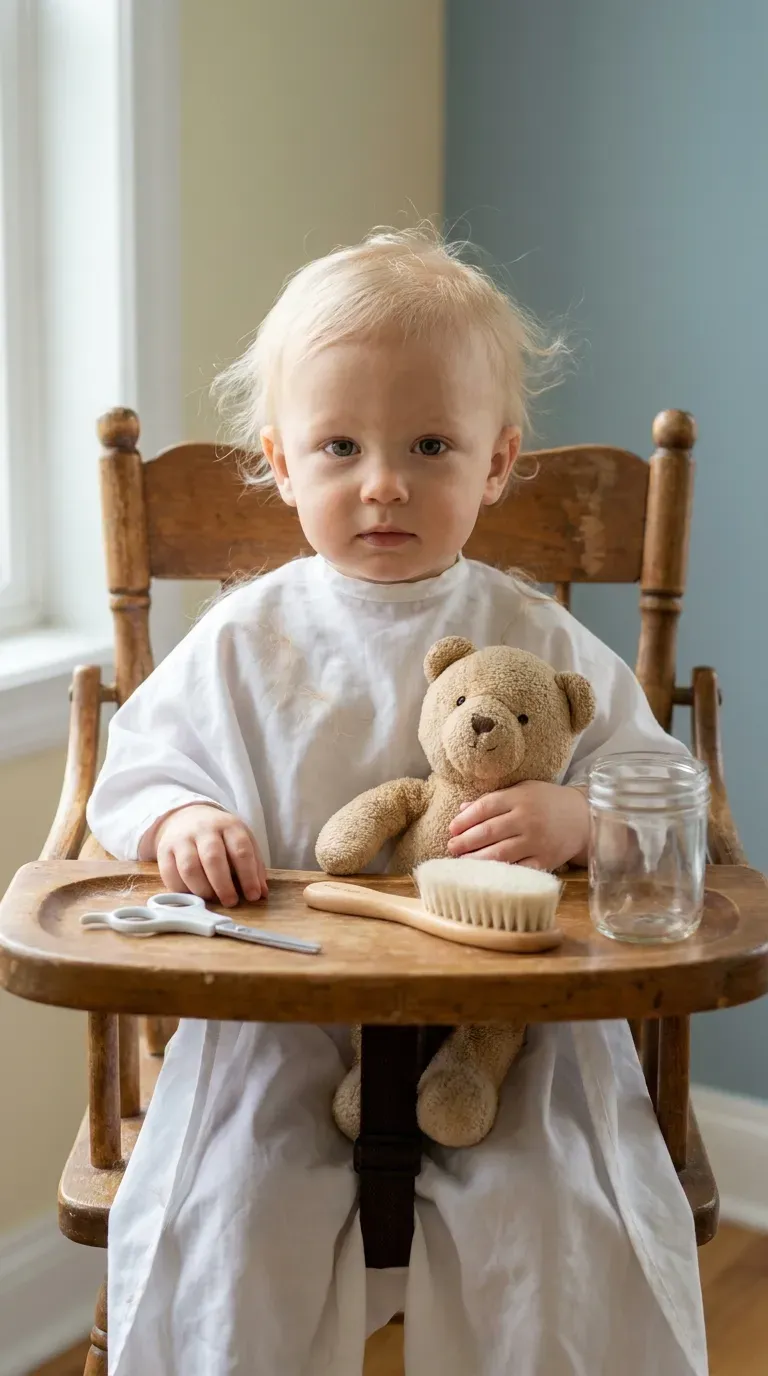
A first haircut for a baby with fine wisps is mainly a tidy-up, trimming the fringe and the hair over the ears.
Take off less than you think. About a quarter to half an inch is enough, because baby hair grows unevenly and cutting too short leaves bald-looking patches. Many parents save a curl in a small envelope.
Book a morning slot and bring a snack, since a one-year-old will last roughly five minutes. If the scalp has flaky patches that look like cradle cap, mention it to your pediatrician rather than the stylist.
Our baby boy first haircut ideas page has more details, and the American Academy of Dermatology covers scalp care basics. A small trim that marks a big milestone.
17. Lightweight Summer Clip Cut

A clip cut at about half an inch dries in minutes after a pool or sprinkler and stays off the neck in heat.
Ask for “number 4 on the sides and back, and a number 5 on top.” The slightly longer top protects the scalp a little and keeps fine hair from looking sparse. Pair it with a hat and a mineral sunscreen on the scalp if hair is very short.
Trim every four weeks if you want it crisp, about $15-$20. Chlorine makes fine hair brittle, so rinse with fresh water after swimming.
Pro Tip: Apply sunscreen to the part line and the nape before heading out. They’re the spots people miss, and a short cut exposes both.
See summer haircuts for boys on our site, and Allure’s sun and hair coverage is worth a read. Light, quick, and cool.
18. Mini Quiff With a Soft Lift
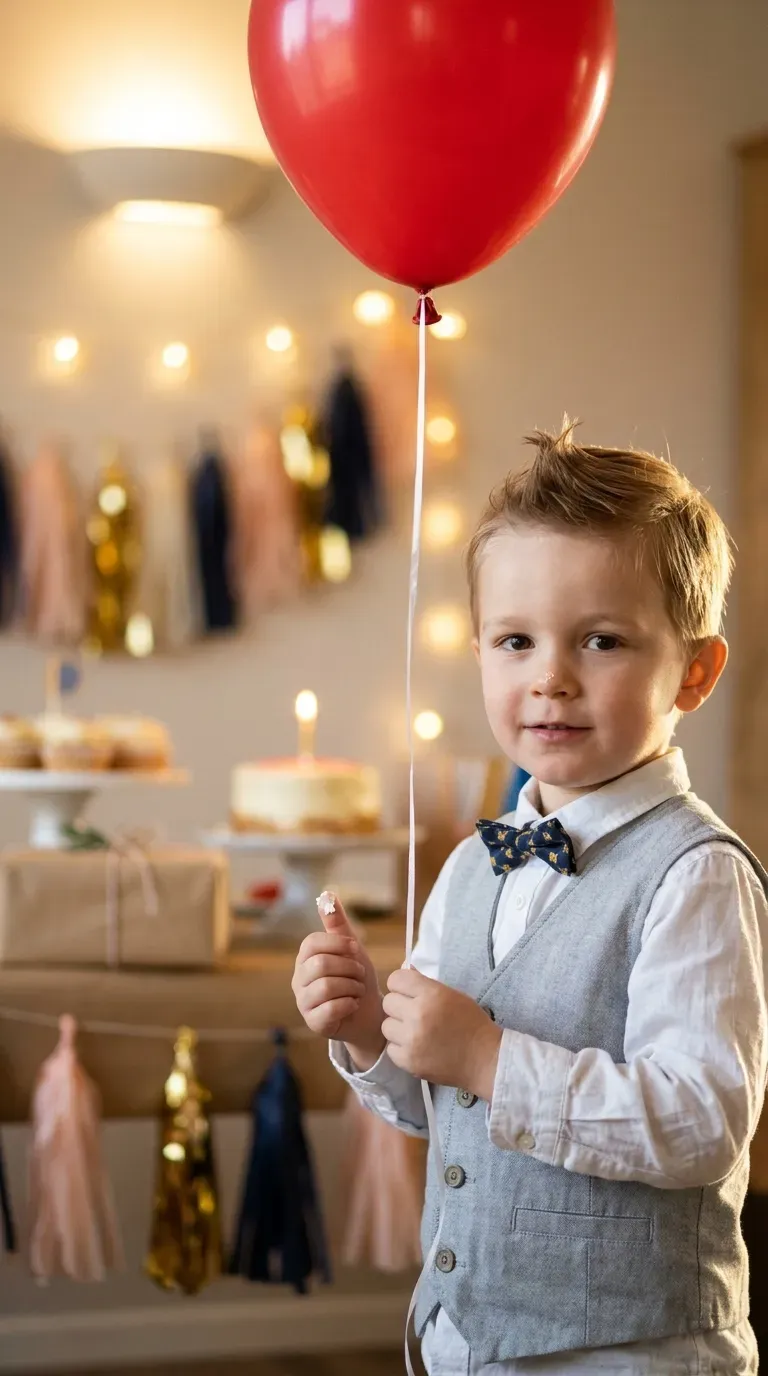
A quiff pushes the front hair up and back, about 2 inches long, with shorter sides to hold the shape.
- Ask for: “longer on top and shorter at the sides, cut so the front can lift.”
- Products: a pinch of sea-salt spray, not gel, which flattens and weighs down.
- Reality check: on very fine, slippery hair, the lift lasts about two hours.
It’s best for special days, such as birthdays or family photos, rather than daily wear. I’d keep a small comb in the bag for touch-ups, because toddler hair loses shape during play.
Trim every five weeks. Browse our party hairstyles for boys, and GQ’s style pages show quiff techniques. A fun look when you want a little extra height.
19. Disconnected Top With Short Sides

A disconnected top has visibly longer hair on the crown, about 2 inches, sitting above sides clipped to a number 2.
The contrast gives fine hair a defined shape. Ask for “a clear line between the top and the sides, no blending.” It reads as a deliberate choice, which flatters a toddler with thin hair and a round face.
It grows out less gracefully than a taper, so a trim every four weeks matters. Expect $20-$30. If your son hates clippers, choose a different cut, because the sides take the longest.
Our undercut ideas for boys go deeper, and Esquire’s grooming guide shows variations. It’s a cut with clear edges and a modern feel.
20. Neat Surfer Cut

The surfer cut lets hair reach about 3-4 inches in loose layers, tidied just at the neck and ears.
The word to use is “tidy” instead of “short.” Ask for the neckline and the area over the ears to be cleaned up and the length left alone. Fine hair at this length can look stringy, so a very light layering around the face adds shape.
Keep it clean with a gentle kids’ shampoo and a detangling spray, which prevents the nape tangles fine hair gets. Trim every eight weeks, which is the lowest frequency among the longer cuts.
Our boys’ surfer hairstyles article has more, and Byrdie’s hair coverage offers care tips. A relaxed cut for relaxed days.
21. Curtain Fringe for Fine Straight Hair

A curtain fringe parts in the center and falls to each side, about 3 inches long, and it frames the face softly.
Ask for “long fringe parted at the center, cut to cheekbone level, short at the back.” It works best on straight hair, because wavy hair doesn’t hold a clean part. Fine hair falls in a smooth line that suits it well.
The mistake to avoid is a fringe that sits over the eyes, which tires small eyes and annoys the toddler. Clip it back during play with a snap clip.
Trim every six weeks, about $20. Find more in our boys’ fringe ideas, and Elle’s hair section has style inspiration. A soft option for the toddler who doesn’t mind longer hair.
22. Short Mullet for Fine Hair

A modern mullet keeps the top and sides short, about 2 inches, and leaves slightly longer hair at the nape.
- Ask for: “short on top and sides, a little length at the back, soft and not pointed.”
- Best on: straight or wavy fine hair, which falls softly at the neck.
- Not ideal for: parents who want a classic look at family events.
The back length helps fine hair, since it adds visual weight that a very short cut can’t. I’d keep the back to about an inch over the collar, otherwise it tangles during naps.
Trim every eight weeks, roughly $20. Our trendy toddler haircuts include more, and Vogue’s beauty pages show the broader trend. A playful cut for a playful kid.
23. Soft Spiky Top for Round Faces

A soft spiky top adds height to the front, about 1.5 inches, which elongates a round face.
The sides stay short and tapered, so the face looks slimmer. Ask for “textured top, point-cut, short tapered sides.” Point cutting leaves tiny steps in the hair that stand without much product.
Water plus a drop of light cream shapes fine hair, and gel is not needed. I’d recommend styling on damp hair with fingers and letting it dry upright.
Pro Tip: Skip gel with alcohol listed high on the label. It dries fine hair and a toddler’s scalp, and rinsing it out takes extra time.
Trim every five weeks. See our haircuts for round-faced boys, and Allure’s hair tips. It’s a cute lift for rounder cheeks.
24. Round-Face Height Cut

For a round face, the aim is length on top and trim sides, so the head looks longer than wide.
Ask the stylist for “2 inches on top, sides cut close, no fringe across the forehead.” A flat fringe widens the face, whereas a swept-up or side-swept front elongates it. Fine hair needs a blunt cut on top to stand slightly, since feathered ends collapse.
Trim every four weeks, because sides lose their shape quickly. Cost is about $20-$25.
For a different shape, our toddler haircuts by face shape page can help, and Esquire’s grooming pages explain face shape cuts. It’s a flattering choice you’ll notice in photos.
25. Holiday Photo Trim With a Clean Neckline

- Timing: book the trim 4-7 days before the photo, not the day of.
- Ask for: a neckline cleaned up with a trimmer and the fringe tidied.
- Skip: any dramatic change, since a new look right before photos can leave a toddler fussy.
A fresh cut looks too sharp on day one, and a few days softens it. In practice, that window gives the best result, and it leaves time to fix any uneven spots.
Choose the cut your son already has and refresh it, which saves effort and keeps him comfortable. The cost is $15-$25.
Our holiday outfit ideas for boys pair with this, and Who What Wear’s hair coverage helps for photo prep. A simple refresh does the job.
Getting Started With Toddler Boy Haircuts for Fine Hair
The easiest first step is a consultation before the cut. Many kids’ salons will look at your son’s hair for free, and a stylist can tell in a minute whether his hair is fine, thin, or just light in color. Bring two or three photos of cuts you like, because “short” means different things to different people.
The most common beginner mistake is asking for thinning or heavy layering. Fine hair has little bulk to remove, so thinning makes it look sparse and see-through. Ask for blunt ends and scissor work, and skip the thinning shears.
Book one appointment before you buy anything. A good kids’ stylist beats any product, and the one item worth owning afterward is a soft-bristle baby brush, about $6-$10. Pick a fragrance-free kids’ shampoo as well.
For a realistic timeline, expect to see the right shape after the first visit and to settle on a favorite within two or three cuts. Fine hair grows about half an inch a month, so a trim every 5-6 weeks keeps most styles looking sharp. If you’re growing it out, plan on 4-6 months of awkward in-between lengths.
Frequently Asked Questions
What is the best haircut for a toddler boy with fine hair?
A scissor-cut short crop or a soft taper is the best choice for most toddlers with fine hair. Keep about 1 to 1.5 inches on top, because blunt ends make thin strands look fuller. Avoid thinning shears, which remove the little bulk fine hair has.
How often should I cut my toddler’s fine hair?
Trim every 5-6 weeks for most styles. Fades and tapers look best at 3-4 weeks, while a buzz cut can wait about 8. Fine hair grows around half an inch a month, so a shape fades in just over a month.
How can I make my toddler’s fine hair look thicker?
Ask for a blunt cut with no layers, and keep the length above the shoulders. Use a light, water-based leave-in product in a pea-sized amount. Heavy gels and waxes flatten fine hair, so skip them.
Should I cut my toddler’s hair at home or at a salon?
Both work, depending on the cut. A uniform clipper cut with a guard is doable at home if your toddler stays calm, but fades and fringes are better done by a stylist. Kids’ salons cost about $15-$35 and often handle wiggly children well.
What haircut hides a cowlick on a toddler?
A very short cut, about 1 inch, or a side-swept fringe that follows the direction of the cowlick. Cutting against the growth makes it stand up. Tell the stylist about the cowlick at the start of the appointment.
A Few Final Thoughts
Fine hair on a toddler isn’t a problem to solve, just a texture to work with. These 25 toddler boy haircuts for fine hair give you options from a quick buzz to a soft surfer length, and almost all of them rely on blunt ends and smart lengths instead of products. Pick one that fits your son’s patience and your morning routine, then adjust as his hair thickens and changes over the next year. A small change in cut can change how his hair sits for weeks, and the best test is how easily it handles an ordinary Tuesday. Choose one idea, take the photo to the salon, and see how it looks in the mirror.